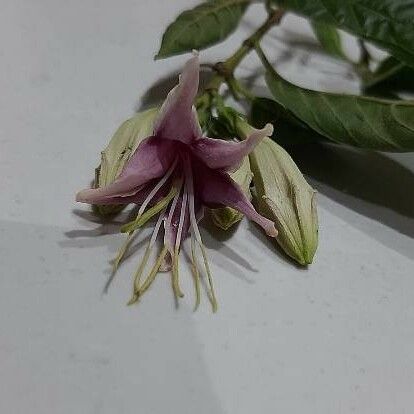
Plant Overview
Known as "Quina" or the "False Cinchona," Coutarea hexandra is a resilient beauty native to the tropical forests of Central and South America. Historically, it was a prized local alternative to the famous Cinchona tree, used by indigenous communities to treat fevers and chills due to its bitter, medicinal bark. Its elegant, trumpet-shaped flowers aren't just a sight for sore eyes; they are a beacon for hummingbirds and pollinators throughout the neotropics.
🔍 How to Identify
- 🌸 Trumpet Blooms: Look for stunning, funnel-shaped flowers that range from a delicate creamy-white to a deep violet-pink, typically featuring six distinct lobes at the opening.
- 🍃 Opposite Foliage: The leaves grow in perfectly opposite pairs along the branches; they are oval-shaped, glossy, and possess prominent veins that give them a textured look.
- 📦 Capsule Fruit: After flowering, the plant produces small, woody, oval-shaped capsules that split open to release winged seeds designed to catch the wind.
🏡 In Your Garden
- ☀️ Sun & Shade Balance: While it loves the tropical sun, it is surprisingly adaptable and can thrive in partial shade, making it an excellent understory filler for larger garden trees.
- 🦋 Pollinator Paradise: This plant is a "biological magnet." Because of its deep floral tubes, it specifically attracts long-tongued pollinators like hummingbirds and large butterflies, bringing movement and life to your outdoor space.
- 💧 Drainage is Key: It hates "wet feet." In its natural habitat, it often grows on slopes or in rocky soil, so ensure your garden spot has excellent drainage to prevent root rot.
⚠️ Safety & Toxicity
- 🩺 Medicinal Caution: While it has a long history in traditional medicine for treating malaria and digestive issues, the bark contains potent alkaloids. It should never be consumed as a "home remedy" without expert pharmacological guidance.
- 🐾 Pet Safety: There is limited data on its toxicity to domestic pets; however, due to its high alkaloid content, it is best to keep it away from dogs or cats who have a habit of chewing on woody stems.
- 👅 Bitter Defense: The plant has an incredibly bitter taste—a natural defense mechanism that usually prevents animals (and curious children) from eating enough to cause serious harm.
✨ Fun Fact
The specific epithet hexandra translates to "six stamens." This is a helpful botanical "ID card," as most of its close relatives in the coffee family (Rubiaceae) typically only have four or five stamens!

Detailed Care Instructions
To grow Coutarea hexandra, also known as redwood, follow these steps:
- Soil: Choose a well-draining potting mix or create a mix using equal parts of loam, peat moss, and perlite or sand.
- Pot selection: Choose a pot with drainage holes at the bottom to prevent waterlogging. Select a pot that is large enough to accommodate the plant's root system.
- Planting: Start with a healthy young plant or seeds. If using seeds, sow them on the surface of the soil and lightly press them in. Cover with a thin layer of soil, about 1/4 inch deep.
- Light: Place the plant in a location where it receives bright, indirect sunlight or partial shade. Avoid direct sunlight, as it may scorch the leaves.
- Temperature: The ideal temperature for Coutarea hexandra is between 60-75°F (15-24°C). Protect the plant from cold drafts or extreme temperature fluctuations.
- Watering: Keep the soil slightly moist but avoid overwatering, as it can lead to root rot. Water the plant when the top inch of soil feels dry. Allow excess water to drain from the pot.
- Humidity: Maintain moderate humidity levels around the plant. You can increase humidity by misting the leaves with water or placing a tray filled with water near the plant.
- Fertilization: Feed the plant with a balanced liquid fertilizer every two to four weeks during the growing season (spring and summer). Follow the manufacturer's instructions for proper dilution and application.
- Pruning: Trim any yellow, dead, or damaged leaves to maintain plant health and appearance. You can also prune to shape or control the size of the plant.
- Propagation: Coutarea hexandra can be propagated through stem cuttings. Take 4-6 inch long cuttings from a healthy plant, remove the lower leaves, and place them in a well-draining rooting medium. Keep the cuttings moist and in a warm environment until roots develop.
- Pest control: Monitor the plant for pests like aphids, spider mites, or mealybugs. If any are detected, use organic insecticides or wash the leaves with a gentle soap and water solution.
Remember to be patient as Coutarea hexandra can take time to establish and grow. With proper care and attention, it will gradually develop into a beautiful and healthy plant.
Coutarea Hexandra is a plant that requires regular watering to thrive. However, it's important to avoid over-watering as this can lead to root damage and other issues. To properly water this plant, it's important to monitor the soil moisture levels and only water when the top inch of soil is dry to the touch.
When watering, it's important to water deeply to ensure the water reaches the root system. This can be done by slowly pouring water onto the soil and allowing it to soak in rather than quickly dousing the plant from above. Additionally, it's important to avoid getting water on the foliage as this can lead to fungal diseases.
In terms of frequency, the watering needs of Coutarea Hexandra will vary depending on factors such as temperature, humidity, and soil type. During the summer months, it may need to be watered every 1-2 days, whereas in the winter it may only need to be watered once a week. It's important to always check the soil moisture levels before watering to avoid over or under-watering. Overall, proper watering is essential for the health and vitality of Coutarea Hexandra.
To fertilize this plant, use a balanced fertilizer with an N-P-K ratio of 10-10-10 or 20-20-20. Apply the fertilizer every 2-3 weeks during the growing season, which is typically in the spring and summer. Dilute the fertilizer according to the manufacturer's instructions before applying to avoid burning the plant's roots. Water the plant thoroughly after fertilizing to help the nutrients reach the roots. Avoid fertilizing during the dormant season, which is usually in the fall and winter.
Coutarea Hexandra plant thrives in well-draining soil with a slightly acidic pH level. A suitable soil mixture for this plant may consist of a combination of peat moss, perlite, and pine bark. This will provide a good balance of moisture retention and aeration for the plant's roots. It is important to avoid using heavy or compacted soils, as this can lead to root rot. Additionally, adding organic matter, such as compost or leaf mold, can help improve the nutrient content of the soil and promote healthy growth of the Coutarea Hexandra plant.
Coutarea Hexandra is a tropical plant that can be propagated by several methods. One way is by stem cuttings. To do this, select a healthy stem, about 6 inches in length, and cut it below a node. Remove the leaves from the lower part of the stem and dip the cutting in rooting hormone powder. Plant the cutting in a pot with well-draining soil and water thoroughly. Cover the pot and cutting with a plastic bag to create a humid environment. Place the pot in a warm, indirect light location and keep the soil moist but not waterlogged. In a few weeks, the cutting should root and start to produce new leaves.
Another way to propagate Coutarea Hexandra is by division. As the plant grows, it forms clumps. Divide the clumps every 2-3 years during early spring or late fall. Carefully remove the plant from the pot and gently separate the roots using a sterilized knife. Replant the divided clumps in separate pots with fresh soil and water thoroughly.
Lastly, Coutarea Hexandra can be propagated by seeds. Collect ripe seeds from the plant and wash them thoroughly. Soak the seeds in water for 24 hours to soften the seed coat. Plant the seeds in a pot with well-draining soil and cover lightly with soil. Keep the soil moist and place the pot in a warm, indirect light location. The seeds should germinate within 2-3 weeks.








