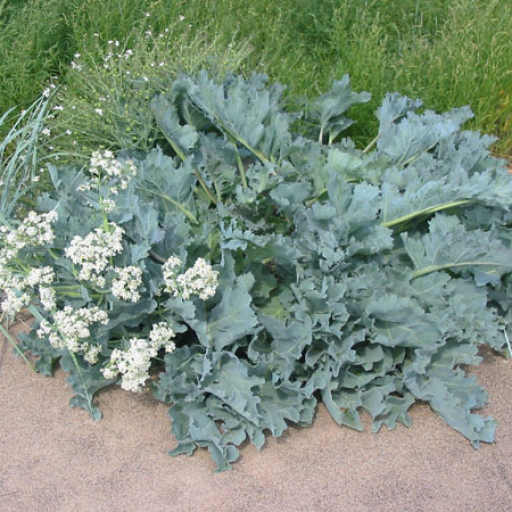
Plant Overview
Known as the "Sea Kale," this rugged coastal beauty was a prized Victorian delicacy, often grown in specialized forcing pots to yield tender, pale shoots. Originally found clinging to the pebbly shorelines of Europe and the North Sea, it has transitioned from a wild survivor to a striking ornamental plant for modern gardens. With its dramatic, architectural foliage and cloud-like blooms, it brings a touch of the seaside to even the most landlocked landscape.
🔍 How to Identify
- 🌊 Foliage: Large, waxy, blue-grey (glaucous) leaves with deeply ruffled or "cabbagy" edges that look like frozen waves.
- ☁️ Flowers: Tiny, four-petaled white blossoms that erupt in dense, honey-scented clusters during the early summer months.
- 🏗️ Growth Habit: A mounding, herbaceous perennial that forms a sturdy, structural clump, eventually reaching about 2-3 feet in width.
🏡 In Your Garden
- 🏖️ Drainage is Key: While it thrives in the wild on shingle and sand, in a garden setting it demands excellent drainage; it will struggle or rot if left in heavy, waterlogged clay.
- ⚓ The Taproot Factor: Plan its location carefully! It develops a long, deep taproot that allows it to find moisture in dry sand, but this makes transplanting an established plant almost impossible.
- 🧂 Salt Tolerance: This is a "halophyte," meaning it is incredibly resistant to salt spray, making it one of the best choices for exposed coastal gardens or sandy soils.
⚠️ Safety & Toxicity
- 🍽️ Status: Generally safe and famously edible for humans.
- 🐶 Details: While the young blanched shoots are a gourmet treat for people, it is non-toxic to cats and dogs. However, like many cruciferous plants (cabbage family), consuming large quantities can occasionally cause mild gas or digestive upset in pets.
✨ Fun Fact
Thomas Jefferson was a huge fan of Sea Kale; he first planted it at Monticello in 1809 and considered it one of the most essential vegetables for a well-stocked garden, comparing its flavor to a mix of asparagus and celery.

Detailed Care Instructions
To grow Crambe Maritima, also known as sea kale, follow these steps:
- Climate: Ensure that you are in a suitable climate for growing sea kale, which is typically USDA hardiness zones 4-7. Sea kale prefers cool, maritime climates, similar to its natural habitat.
- Soil: Sea kale thrives in well-draining, sandy or loamy soil with a pH between 6.5-7.5. Add organic matter, such as compost, to improve soil fertility and water retention.
- Location: Choose a sunny or partially shaded spot in your garden with good air circulation. Sea kale can tolerate some shade but grows best in full sun.
- Planting: Sea kale can be grown from seeds or propagated by root cuttings or divisions. If starting from seeds, sow them ¼ to ½ inch deep in the soil in early spring or fall. Keep the soil consistently moist for germination. If using root cuttings or divisions, plant them at the same depth as they were originally growing.
- Care: Water sea kale regularly, especially during dry periods. Mulching around the plants can help retain moisture and suppress weed growth. Adequate irrigation is essential during the establishment phase, but once established, sea kale is relatively drought-tolerant.
- Pruning and Maintenance: Remove any dead or damaged leaves or stems as they appear to maintain plant health. In the first year, it's advisable to remove the flower buds to encourage strong root growth, but subsequent years can allow the plant to produce flowers and seeds.
- Harvesting: Sea kale leaves can be harvested starting from the second year after planting. Harvest only a few leaves from each plant to allow for continued growth. Cut off the leaves at the base, leaving some stem intact.
- Winter care: Sea kale is fairly hardy, but in colder regions, it's recommended to apply a layer of mulch around the base of the plant in late fall to offer protection during winter.
By following these guidelines, you should be able to successfully grow Crambe Maritima in your garden.

Place in a bright room that is sun drenched almost all day. Or directly in a south-facing window.

To properly water this plant, ensure that the soil is evenly moist but not waterlogged. Water deeply once a week, allowing the top inch of soil to dry out slightly between waterings. It is important to not let the soil completely dry out for extended periods of time, as this can stress and damage the plant. However, overwatering can also cause root rot and damage to the plant, so be sure to provide proper drainage and avoid waterlogging. In general, it is important to monitor the plant's soil moisture regularly and adjust watering frequency as necessary based on factors such as climate, temperature, and humidity levels.
To fertilize this plant, mix a balanced fertilizer into the soil around the base of the plant in the early spring. Use caution not to over-fertilize, as this can cause wilting or burned leaves. Additionally, you may add a layer of compost or organic material to the soil to help improve the plant's overall health. Water the plant immediately after fertilizing. Finally, avoid fertilizing too late in the season, as this can encourage growth that is vulnerable to frost and disease.
Crambe Maritima prefers a well-draining and fertile soil that is high in organic matter. The soil should be slightly alkaline with a pH range of 7.5 to 8.5. It thrives in sandy loam or loamy soil that is rich in nutrients and minerals. Clay soils should be avoided as they can cause waterlogging and root suffocation. Additionally, it is best to ensure that the soil is not compacted and allows for good aeration and water drainage. Prior to planting, adding compost or other organic matter to the soil can aid in improving the soil structure, fertility, and moisture retention capabilities.
To propagate this plant, you will need to collect seeds from mature plants. Once you have gathered the seeds, you should sow them in a well-draining soil mixture either in pots or directly in the ground. Keep the soil moist but not waterlogged and ensure that the seeds are receiving enough sunlight. After a few weeks, seedlings should begin to emerge. You may want to thin them out to ensure they have enough room to grow properly. When the seedlings reach a certain size, you can transplant them into larger pots if needed or directly into the ground. Ensure that the soil is well-draining and that the plant is receiving enough sunlight. With proper care, your new Crambe Maritima plants should establish and grow into healthy specimens.








