Plant Overview
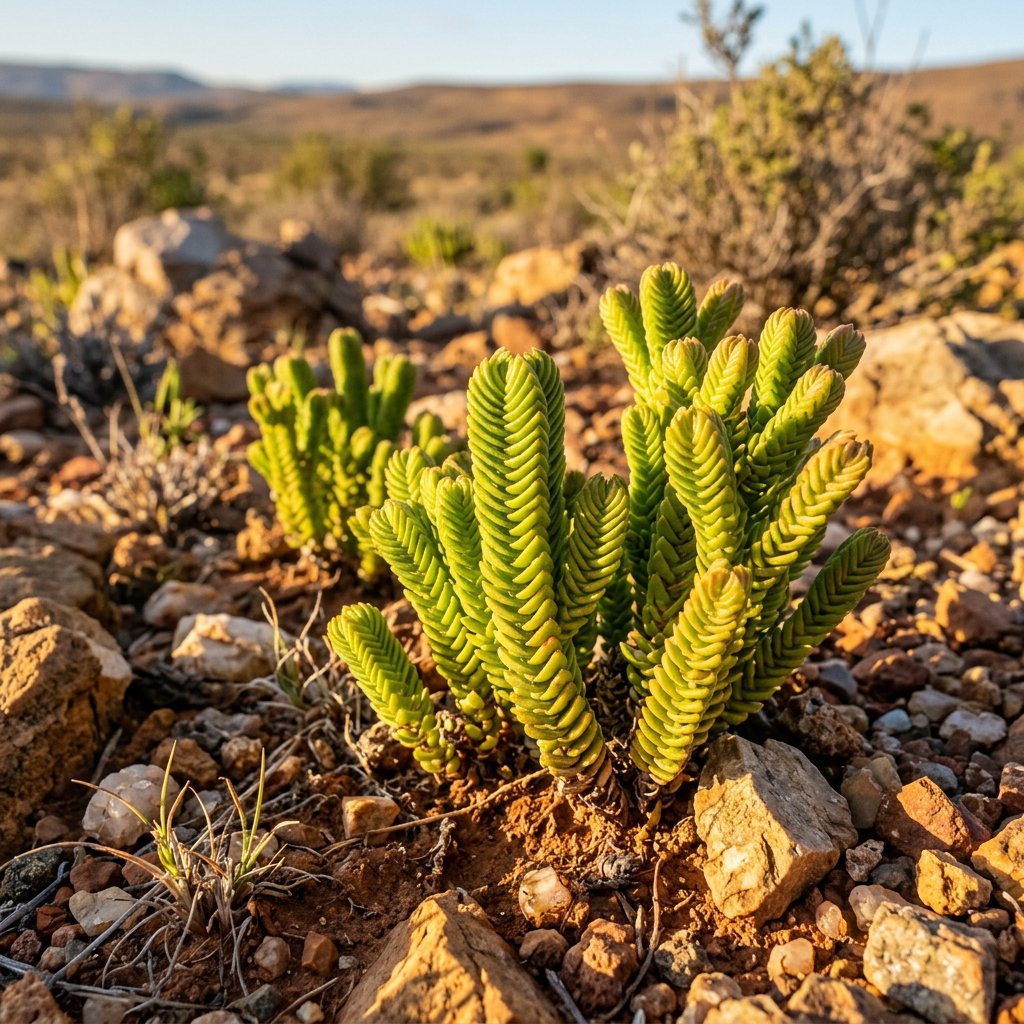
Often called the Watch Chain or Lizard's Tail, Crassula muscosa is a quirky, architectural succulent that looks like it belongs in an underwater coral reef or a prehistoric miniature forest. Native to South Africa and Namibia, it grows in dense, branching clusters that perfectly mimic the intricate links of a jewelry chain. It’s a favorite for "fairy gardens" because of its uncanny resemblance to a tiny, geometric pine tree.
🔍 How to Identify
- 🌿 The Foliage: Tiny, scale-like triangular leaves are packed so tightly along the stem that the wood is completely hidden. This creates a distinct four-angled, square-ish shape when viewed from above.
- 🏗️ Growth Habit: It starts with upright, stiff stems that eventually begin to trail or "scramble" over the edges of pots as they grow longer.
- 🌼 The Blooms: In spring and summer, it produces microscopic, yellowish-green flowers nestled directly between the leaves. They are so small they often go unnoticed until you catch their surprisingly pungent, musky scent.
🏡 In Your Garden
- 🧩 The "Zipper" Fragility: The stems are quite brittle and can snap off with a simple bump. However, this is the plant's clever survival strategy; every broken segment has the potential to sprout roots and start a brand-new colony wherever it lands.
- ☀️ Light & Texture: To keep the "links" of the chain tight and compact, it needs very bright, indirect light. In shady spots, the plant becomes "leggy," and the leaves spread apart, losing the iconic zipper look.
- 🏜️ Drainage is Key: Because the leaves are so densely packed, they can trap moisture. It requires a very gritty, fast-draining soil mix to prevent the stems from rotting at the base.
⚠️ Safety & Toxicity
- 🐾 Pet Warning: Crassula muscosa is considered toxic to cats and dogs. If ingested, it can cause vomiting, depression, and a lack of coordination.
- 👶 Human Safety: It is generally safe for humans to touch, though it is not edible. Always keep it on higher shelves out of reach of curious nibblers.
✨ Fun Fact
- 🕰️ A Case of Mismatched Names: The species name muscosa is Latin for "moss-like." While it looks like a moss or a fern, it is actually a drought-hardy succulent closely related to the famous Jade Plant!

Detailed Care Instructions
| Color | Yellow Green To Brown Blossoms |
| Soil Ph | 5.5–6.0 |
| Humidity | Normal |
| Lighting | Full Sun |
| Toxicity | Toxic |
| Soil Type | Well-Drained Sandy And Rocky Soil |
| Bloom Time | Autumn, Spring, And Summer |
| Difficulty | Medium |
| Plant Type | Perennial Succulent |
| Mature Size | 6–12 Inches High And 7–10 Inches Wide |
| Native Area | Namibia And The South African |
| Temperature | 18°C - 25°C |
| Sun Exposure | Partial Sun |
| Hardiness Zones | 9-11 |
To grow a Crassula muscosa (also known as Crassula lycopodioides or watch chain plant), follow these steps:
- Choose a suitable location: Crassula muscosa prefers bright, indirect sunlight. Avoid placing it in full sun as it can scorch the leaves.
- Select a well-draining pot or container: Use a pot with drainage holes to prevent waterlogging, as excessive moisture can cause root rot.
- Prepare the soil: Use a succulent or cactus potting mix, which provides adequate drainage. Alternatively, you can mix regular potting soil with coarse sand or perlite to improve drainage.
- Plant the cutting: Crassula muscosa is primarily propagated through stem cuttings. Take a stem cutting, about 4-6 inches long, and remove the lower leaves. Allow the cutting to dry for a few days before planting.
- Plant the cutting in the soil: Insert the dried end of the stem cutting into the soil, burying it about an inch deep. Make sure the soil is firmly packed around the cutting to provide stability.
- Watering: Water the plant sparingly, allowing the soil to dry out almost completely between watering sessions. Overwatering can lead to root rot. Crassula muscosa is a drought-tolerant plant and prefers to stay slightly dry.
- Fertilizing: Use a balanced, diluted succulent fertilizer during the growing season (spring and summer) to promote healthy growth. Follow the package instructions for dosage and frequency.
- Pruning: To maintain a compact and neat appearance, prune any leggy or damaged stems. You can also pinch off the tips of the stems to encourage branching.
- Repotting: As the plant grows, it may outgrow its container. Repot it in a larger container to accommodate the increased root size. This is typically done every 2-3 years in spring.
- Propagation: You can propagate more Crassula muscosa plants by taking stem cuttings and following the same planting process as described in step 4.
Remember to provide adequate airflow and avoid overly humid conditions, as Crassula muscosa is prone to rot and fungal diseases in excessively moist environments. With proper care and attention, your Crassula muscosa plant will thrive and grow over time.

Place in a bright room that is sun drenched almost all day. Or directly in a south-facing window.

To water this specific plant, it is important to use a watering can or a spray bottle. It is recommended to water the soil at the base of the plant, ensuring that the entire root system is thoroughly saturated. It is important not to overwater the plant, as this can lead to root rot and other issues. It is also important to let the soil dry out slightly between watering sessions, as the plant does not require constant moisture. In general, it is recommended to water the plant once every week or two, depending on the conditions in the growing environment.
To fertilize this plant, use a balanced fertilizer with equal amounts of nitrogen, phosphorus, and potassium. Dilute the fertilizer to half strength and apply it once every four weeks during the growing season. Avoid fertilizing during the winter months, as the plant is dormant during this time. Water the plant thoroughly before applying the fertilizer to prevent any potential root damage.
The best type of soil to use with this plant is a well-draining soil mix that is slightly acidic with a pH range of 6.0 to 7.0. The soil should have good water retention capacity and be rich in organic matter to provide adequate nutrients to the roots. It is recommended to use a mineral-based soil mix such as pumice, perlite, or coarse sand mixed with peat moss, coco coir, and a small amount of organic fertilizer. The soil should be loose and airy, allowing for proper root growth and development. It is important to avoid using heavy soils or those that contain too much clay, as they can retain excess moisture and lead to root rot. Additionally, the plant prefers a well-drained growing environment, so it is important to ensure that the soil is well-draining and that excess water is allowed to drain away quickly.
Propagation of this plant can be done through a variety of methods. One common way is to take stem cuttings that are approximately 3-4 inches in length. These cuttings can be planted in well-draining soil and kept moist until they develop roots. Another method involves taking leaf cuttings, which are pieces of the plant's leaves that are cut and placed in soil. These cuttings should also be kept moist until they develop roots and begin to grow.
Once new plants have been successfully propagated, they should be planted in their own pots with well-draining soil. These plants do well in bright, indirect light and thrive in warmer temperatures. Regular watering is necessary, but it is important to avoid overwatering as this can lead to root rot. With proper care, these propagated plants can grow into healthy, vibrant specimens that will continue to propagate and provide enjoyment for many years to come.
Common pests of the watch-chain include Mealybugs. Make a habit of checking your watch-chain frequently for pests so that any infestations can be caught and managed early.








