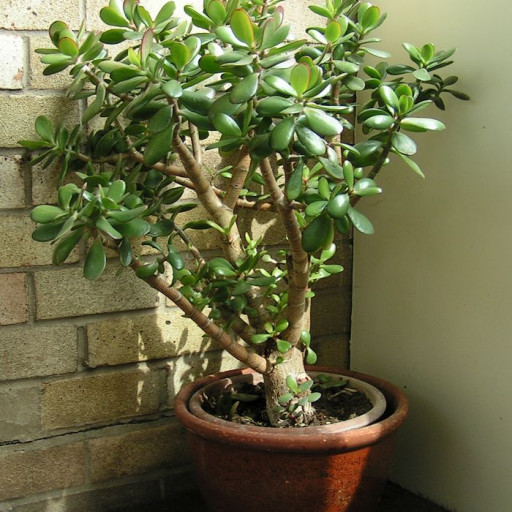
Plant Overview
Commonly known as the Jade Plant, "Money Tree," or "Friendship Tree," Crassula ovata is a beloved succulent that carries a heavy weight of tradition. In many cultures, particularly within the practice of Feng Shui, it is believed to bring good luck and financial prosperity to its owner. This South African native is famous for its longevity, often being passed down through generations as a living family heirloom.
🔍 How to Identify
- 🍃 Fleshy Foliage: The leaves are thick, smooth, and teardrop-shaped, storing water to help the plant survive long droughts.
- 🌳 Tree-like Structure: As the plant matures, its soft green stems transition into thick, woody brown trunks, giving it a miniature bonsai-like appearance.
- 🎨 Suntanned Edges: While typically a deep jade green, the leaf margins will often turn a bright, vivid red when the plant is exposed to high amounts of direct sunlight.
- 🌸 Starry Blooms: Though rare in indoor settings, mature plants can produce clusters of tiny, star-shaped white or pale pink flowers during the winter months.
🏡 In Your Garden & Home
- ☀️ Light Stress is Good: The Jade plant "communicates" its light intake through its color. If the leaves are purely green, it’s happy, but those red tips indicate it’s getting the maximum sun it can handle—perfect for a south-facing windowsill.
- 💧 The "Touch Test": Because it is a succulent, the Jade plant is prone to root rot if kept in soggy soil. Instead of a schedule, wait for the leaves to feel slightly soft or wrinkled before watering deeply; this mimics its natural desert environment.
- 🪵 Weight Management: As it grows, the top becomes very heavy with water-filled leaves. It is best to use a heavy ceramic or terracotta pot to prevent the plant from tipping over as it matures into a "mini-tree."
⚠️ Safety & Toxicity
- 🐾 Toxic to Pets: Crassula ovata is considered toxic to cats, dogs, and horses. If ingested, it can cause vomiting, lethargy, and a lack of coordination.
- 👶 Mild for Humans: While not usually life-threatening to humans, the sap can cause minor skin irritation for those with sensitive skin, and the leaves should not be eaten by children as they can cause stomach upset.
✨ Fun Fact
The Jade plant is one of the most resilient plants on Earth; a single leaf that falls onto the soil has the power to sprout roots and grow into an entirely new tree! This ease of propagation is why it is often called the "Friendship Tree," as cuttings are frequently shared among neighbors.

Detailed Care Instructions
| Color | White |
| Soil Ph | Neutral To Slightly Acidic |
| Humidity | Dry |
| Lighting | Full Sun |
| Toxicity | Poisonous |
| Soil Type | Well-Drained, Loamy Potting Mix |
| Bloom Time | Spring And Summer |
| Difficulty | Easy |
| Plant Type | Perennial Evergreen |
| Native Area | South Africa |
| Temperature | 15°C - 30°C |
| Sun Exposure | Full Sun |
| Hardiness Zones | 9 To 12 |
To grow a Crassula Ovata plant, also known as a Jade plant, you can follow these steps:
- Choose a suitable location: Jade plants prefer bright, indirect sunlight. Find a spot near a window where the plant will receive several hours of sunlight each day.
- Select the right container: Use a well-draining pot with adequate drainage holes to prevent waterlogging and root rot.
- Soil: Use a mix of well-draining soil, such as cactus or succulent soil. You can also add perlite or sand to improve drainage.
- Watering: Water the Jade plant when the top inch of soil feels dry. Avoid overwatering as it can lead to root rot. During the winter months, reduce watering frequency.
- Fertilizer: Feed the Jade plant with a balanced, diluted houseplant fertilizer during the growing season (spring and summer). Follow the instructions on the fertilizer label for proper dosage.
- Temperature and humidity: Crassula Ovata plants prefer average room temperatures between 65-75°F (18-24°C). They can tolerate some fluctuations but should be protected from extreme cold or heat. As for humidity, they thrive in normal household humidity levels.
- Pruning: Prune your plant to promote bushier growth. Remove dead or damaged leaves, and pinch back the stems to encourage branching.
- Repotting: As Jade plants grow, they may require repotting every 2-3 years. Upgrade to a slightly larger pot during the spring, using fresh soil and ensuring proper drainage.
- Propagation: Jade plants are easy to propagate. Take stem cuttings or leaf cuttings, allow them to callus for a few days, and then plant them in well-draining soil. Keep the soil moderately moist until the new plant establishes roots.
- Pests and diseases: Jade plants are generally resistant to pests and diseases. However, you should keep an eye out for common houseplant pests like aphids, mealybugs, or spider mites. Treat them promptly using suitable insecticides or natural remedies.
With proper care and attention to these steps, your Crassula Ovata plant should grow and thrive.

Place in a bright room that is sun drenched almost all day. Or directly in a south-facing window.

The watering schedule for this plant should depend on the soil moisture level. It is better to water this plant when the soil is completely dry. When watering, pour water on the plant until it runs through the bottom of the pot. It is recommended to keep the plant in well-draining soil to prevent root rot. Overwatering should be avoided as it can lead to roots rot and damage to the plant. The frequency of watering should be reduced during the winter months when the plant is dormant.
To fertilize this plant, you should mix a balanced water-soluble fertilizer at half strength and apply it once a month during the growing season. Do not fertilize during the dormant period of the plant. Be sure to water the plant before and after fertilizing to prevent chemical burn.
The soil to use with the plant should have good drainage and be well-aerated. It is important to avoid soil that is too compact or dense, as this can cause water to become trapped in the soil, which can lead to root rot. A good soil mix for this plant could include a combination of sand, perlite, and peat moss. Sand and perlite will improve drainage, while peat moss will help the soil hold moisture and provide some nutrients to the plant. It is important to avoid using soil mixes that contain large amounts of organic matter, such as compost or manure, as this can lead to the soil becoming too dense and compact. The best soil for this plant will have a pH range of 6 to 7, which is slightly acidic to neutral.
To propagate this plant, take several healthy cuttings from the main stem. Allow the cuttings to dry out for a few days so that the wounds can heal. In a small container filled with well-draining potting soil, plant the cuttings about an inch deep. Water the soil and place the container in a bright but indirect light. The cuttings should root within a few weeks. Once new growth appears, move the plants to a larger pot or into the garden, if desired. It's important to note that this plant prefers well-draining soil and can be susceptible to root rot if overwatered.
Common pests of the jade plant include Mealybugs. Make a habit of checking your jade plant frequently for pests so that any infestations can be caught and managed early.








