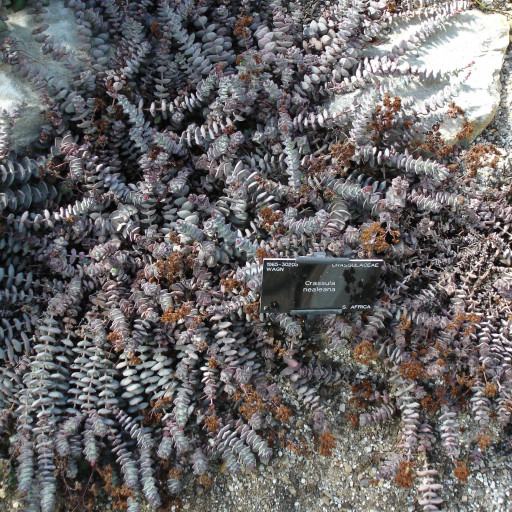
Plant Overview
Known affectionately as the "String of Buttons" or the "Necklace Vine," this charming South African succulent looks like a series of geometric beads threaded onto a central wire. It is a favorite for vertical interest in succulent arrangements, often mimicking the appearance of ancient stone pagodas or intricate tribal jewelry.
🔍 How to Identify
- 🍃 Leaf Shape: Triangular, thick, and fleshy leaves that grow in opposing pairs, creating a stacked, "button-like" appearance.
- 📏 The Stem: The central stem appears to pass directly through the center of the leaves, giving them a "perforated" look.
- 🎨 Coloration: Primarily pale green or grey-green, but when "stressed" by sunlight or cool temperatures, the leaf margins turn a vibrant rose-pink or deep red.
🏡 In Your Garden
- ☀️ Light & Color: To keep the "buttons" tightly stacked and maintain those famous rosy edges, provide plenty of bright, indirect light; in low light, the plant will stretch out and lose its compact charm.
- 💧 Water Strategy: Like most succulents, it stores a reservoir in its leaves. It thrives on neglect and prefers the "soak and dry" method—only water when the soil feels completely dry to the touch.
- ✂️ Easy Propagation: This plant is a beginner's dream for propagation; simply snip a section of the "string," let the cut end dry for a few days, and tuck it into the soil to start a new plant.
⚠️ Safety & Toxicity
- 🐾 Status: Generally non-toxic to humans, but considered mildly toxic to pets.
- 🐱 Details: If ingested by cats or dogs, it can cause minor digestive upset, including vomiting or lethargy. It is best kept on high shelves or hanging baskets away from curious nibblers.
✨ Fun Fact
The species name perforata is Latin for "bored through," referring to the fascinating optical illusion that the central stem has been punched directly through the middle of the leaves!

Detailed Care Instructions
| Color | Yellow |
| Soil Ph | 6.0 |
| Humidity | Dry |
| Lighting | Full Sun |
| Toxicity | Toxic |
| Soil Type | Cactus Or Succulent Mix, Or A Well-Draining Homemade Soil, Sand, And/Or Loam Mix |
| Bloom Time | Any Time Of Year |
| Difficulty | Easy |
| Plant Type | Perennial |
| Hibernation | Cold Period |
| Mature Size | 1-2 Feet In Height, 2-3 Feet Width |
| Native Area | South Africa |
| Temperature | 15°C - 30°C |
| Sun Exposure | Full Sun Or Partial Shade |
| Hardiness Zones | 9-11 |
To grow Crassula Perforata (also known as String of Buttons or Necklace Vine), you can follow these steps:
- Choose a suitable container: Select a well-draining pot or container that has drainage holes at the bottom. It can be a clay pot, terracotta pot, or any other container that allows excess water to escape.
- Soil requirements: Use a well-draining succulent or cactus soil mix. You can also create your own mix by combining equal parts of regular potting soil, sand, and perlite or pumice to improve drainage.
- Planting: Gently remove the plant from its nursery container and loosen the root ball. Place it in the new container, ensuring the top of the root ball is level with or slightly above the soil level. Fill the container with the prepared soil mix and gently tamp it down around the roots.
- Light requirements: Crassula Perforata prefers bright, indirect sunlight. Place the plant near a window that receives adequate light but avoid direct sunlight, as it can scorch the leaves.
- Watering: Water the plant thoroughly when the top inch of soil feels dry. Allow the soil to dry out between waterings to prevent overwatering, which can lead to root rot. Generally, this plant requires less water during the winter months.
- Temperature and humidity: This plant thrives best in temperatures between 65-80°F (18-27°C). It can tolerate a slight drop in temperature during the winter, but protect it from frost and extreme cold. Average household humidity levels are generally suitable.
- Fertilization: Feed the plant with a diluted, balanced liquid fertilizer once every month during the growing season (spring and summer).
- Propagation: Crassula Perforata can be propagated through stem cuttings. Take a healthy cutting, let it dry for a day or two, and then plant it in a well-draining soil mix. Keep the soil lightly moist until roots form.
- Pruning: If desired, you can trim back leggy or overgrown stems to promote bushier growth. Prune with clean, sharp scissors or pruning shears.
- Pests and diseases: Watch out for common succulent pests like mealybugs and spider mites. Treat infestations with neem oil, insecticidal soap, or a suitable pesticide according to the instructions.
Remember to observe your plant closely and adjust care accordingly. Crassula Perforata is a relatively easy succulent to grow and can be an attractive addition to your indoor or outdoor collection.

Place in a bright room that is sun drenched almost all day. Or directly in a south-facing window.

Watering a plant belonging to the genus Crassula that has perforated leaves can be done by thoroughly saturating the soil when the top inch of the soil feels dry to the touch. It is important to make sure the water drains out of the pot's drainage holes to prevent waterlogged soil and root rot. This plant prefers well-draining soil and can tolerate periods of drought, so it is essential not to overwater. It is recommended to reduce watering in the winter months when growth slows down. Additionally, avoid getting water on the leaves to prevent fungal diseases.
To fertilize this plant, use a well-balanced fertilizer with equal amounts of nitrogen, phosphorus, and potassium. Avoid using high-nitrogen fertilizers as they can promote excessive leaf growth at the expense of flowering. Apply the fertilizer every two weeks during the growing season (spring and summer) and reduce the frequency to once a month during the dormant season (fall and winter). Dilute the fertilizer according to the manufacturer's instructions before applying it to the soil. Avoid getting the fertilizer on the leaves or stem as it can burn them. Water the plant before and after fertilizing to prevent fertilizer burn and help the nutrients reach the roots.
When selecting soil for this particular plant, it is important to choose a well-draining mixture that retains moisture without becoming waterlogged. A recommended mixture would be two parts coarse sand or grit and one part peat-free compost or soil. It is also advised to add perlite or vermiculite to the mix to improve drainage further. The pH of the soil should be slightly acidic to neutral (between 6.0 and 7.0).
To propagate this plant, take a healthy stem cutting that is at least 2 inches long. Remove the lower leaves from the stem and let it dry for a few days, until the cut end has calloused over. Then, plant the stem cutting in well-draining soil and water it lightly. Keep the soil moist but not overly wet, and place the plant in a bright, indirect location. The cutting should root and begin to grow within a few weeks.
Common pests of the string of buttons include Mealybugs. Make a habit of checking your string of buttons frequently for pests so that any infestations can be caught and managed early.








