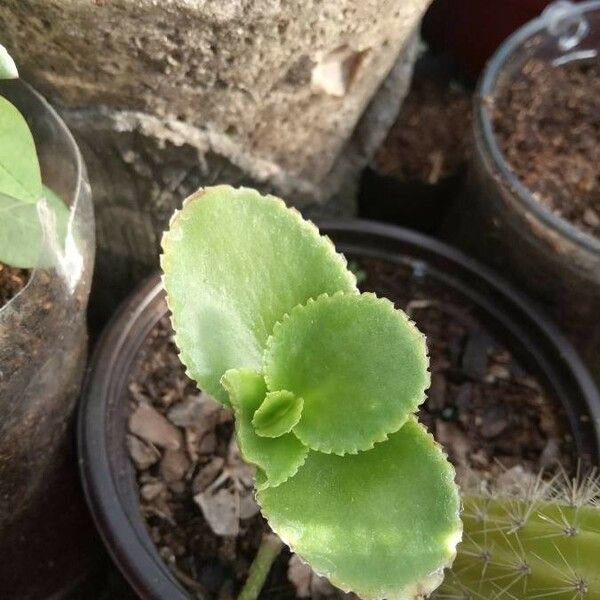
Plant Overview
Known affectionately as the Trailing Jade, Crassula sarmentosa is a scrambling beauty from the sun-drenched rocky slopes of South Africa. Unlike its upright, tree-like cousins, this succulent acts like a living waterfall, cascading down pots with a vibrant display of colors. It is a master of transformation, shifting its hues from deep forest green to fiery crimson depending on its access to the sun.
🔍 How to Identify
- 🍃 Serrated Leaves: Look closely at the edges; unlike the smooth common Jade, these leaves have distinct, tiny "saw-tooth" serrations along the margins.
- 🌈 Color-Changing Margins: The glossy, ovate leaves usually feature a thin border that blushes bright red or pink when the plant is "stressed" by sunlight or cool weather.
- 🌸 Winter Stars: In the cooler months, the plant produces airy clusters of small, star-shaped flowers that transition from white to a delicate pale pink.
🏡 In Your Garden
- 🧗 The Scrambling Habit: This plant loves to "travel." In its native habitat, it uses its long, reddish stems to scramble over rocks and through other shrubs, making it an excellent choice for hanging baskets or as a "spiller" in succulent arrangements.
- ☀️ Light Sensitivity: If your plant stays solid green, it’s telling you it wants more light. To achieve the iconic red edges, move it to a brighter spot, but avoid sudden transitions to direct noon sun, which can "sunburn" the leaves.
- 🪴 Drought Mimicry: Because it evolved in rocky crevices, it hates "wet feet." Use a gritty, sandy potting mix and wait until the leaves feel slightly soft to the touch before watering again.
⚠️ Safety & Toxicity
- 🐾 Mildly Toxic: Like many members of the Crassulaceae family, this plant is considered toxic to cats, dogs, and horses.
- 🤢 The Risk: If ingested, it can cause gastrointestinal upset, lethargy, and a lack of coordination in pets. It is best kept on high shelves or in hanging planters out of reach of curious nibblers.
✨ Fun Fact
- 📜 Latin Roots: The species name sarmentosa comes from the Latin word sarmentosus, meaning "producing runners." This perfectly describes its eager-to-please growth habit and how easily it can be propagated from just a single stem cutting!

Detailed Care Instructions
| Soil Ph | Neutral To Acidic |
| Humidity | Dry |
| Lighting | Full Sun |
| Soil Type | Moist But Well-Drained |
| Bloom Time | Spring, Summer |
| Difficulty | Easy |
| Plant Type | Broadleaf Perennial Evergreen |
| Mature Size | Height: 0,5 - 11 In. |
| Native Area | South Africa |
| Temperature | 20°C - 26°C |
| Sun Exposure | Full Sun, Partial Shade |
| Hardiness Zones | 9-12 |
To grow a Crassula Sarmentosa plant, also known as the String of Buttons plant, follow these steps:
- Choose a suitable pot: Select a small to medium-sized pot with drainage holes. It should be deep enough for the roots to grow and wide enough to accommodate the spreading nature of the plant.
- Soil mixture: Crassula Sarmentosa prefers well-draining soil. Create a mixture comprising equal parts of succulent/cactus potting mix and perlite or coarse sand to enhance drainage.
- Planting: Fill the pot with the soil mixture and make a small hole in the center. Gently place the plant in the hole and backfill with soil, ensuring the roots are covered but the base of the plant is above the soil level.
- Watering: Water the plant thoroughly after planting, allowing the excess water to drain out. Crassula Sarmentosa is a succulent, so it prefers infrequent but deep watering. Water only when the top inch of soil is completely dry, and avoid overwatering as it can lead to root rot.
- Light: Place the plant in a location that receives bright, indirect sunlight for at least 4-6 hours a day. South or west-facing windows are ideal, as long as the plant is not exposed to intense, direct sunlight, which can scorch the leaves.
- Temperature and humidity: Crassula Sarmentosa prefers temperatures between 65-75°F (18-24°C) during the day and slightly cooler temperatures at night. It can tolerate lower temperatures in winter but protect it from frost. They also prefer moderate humidity levels.
- Fertilization: Feed your Crassula Sarmentosa with a balanced, water-soluble succulent fertilizer every 2-4 weeks during the growing season (spring and summer). Dilute the fertilizer as per the instructions on the package.
- Pruning and propagation: Crassula Sarmentosa tends to grow long, trailing stems. Pruning can help maintain a compact shape and encourage bushier growth. You can also propagate new plants by taking stem cuttings and placing them in well-draining soil or water until roots develop.
- Pests and diseases: Crassula Sarmentosa is generally pest-resistant. However, keep an eye out for mealybugs, aphids, or spider mites. Treat any infestations promptly with a suitable insecticide spray or by wiping the leaves with a mixture of water and mild soap.
- Rotate the plant: Every few weeks, turn the pot to ensure all sides of the plant receive equal sunlight. This will help prevent the plant from leaning towards the light source.
By following these guidelines, you can successfully grow and care for a Crassula Sarmentosa plant.

Place in a bright room that is sun drenched almost all day. Or directly in a south-facing window.

To water this type of plant, you should let the top inch of soil dry out before watering. When watering, gently pour water onto the soil around the base of the plant, taking care not to get water on the leaves. Avoid overwatering, as this can lead to root rot. It is also important to use well-draining soil to ensure proper drainage and prevent water from sitting in the pot.
To fertilize this plant, you should use a balanced, water-soluble fertilizer twice a month during the growing season (spring and summer). Use half the recommended dosage and dilute it in water before applying it to moist soil. Avoid fertilizing during the winter months as the plant goes dormant.
Crassula sarmentosa thrives in well-draining soil that is rich in organic matter. The soil should be slightly acidic and have a pH level between 6.0 and 7.0. It is recommended to use a mixture of sand, perlite, and peat moss to create a well-draining and nutrient-rich soil mix. Additionally, adding a slow-release fertilizer to the soil mix can provide necessary nutrients for the plant's growth. It is important to allow the soil to dry out slightly between waterings to prevent overwatering, which can lead to root rot.
To propagate this plant, you can take stem cuttings with a sharp, clean pair of scissors or pruning shears. Cut the stem just below a node, which is where leaves or roots emerge from the stem. Remove any leaves or branches from the lower half of the cutting.
Dip the cut end of the stem into rooting hormone powder, which will encourage the development of new roots. Plant the cutting into a well-draining soil mixture, and water lightly. Place the cutting in a bright location, but out of direct sunlight.
Keep the soil moist but not wet, and avoid overwatering. After a few weeks, the cutting should start to develop roots and new growth. Once the plant has established roots and grown to a suitable size, it can be transplanted into a larger pot or planted in the garden.
Common pests of the jade-tree include Mealybugs. Make a habit of checking your jade-tree frequently for pests so that any infestations can be caught and managed early.








