Plant Overview
Deep in the swampy lowlands of the Southern United States, the Western Mayhaw (Crataegus opaca) is celebrated as the "Ruby of the Bayou." Unlike most hawthorns that fruit in autumn, this resilient tree yields its tart, brilliant red berries in late spring, earning its "May-haw" nickname. For generations, Southerners have braved the wetlands (and the occasional alligator) to harvest these fruits for what many consider the finest jelly in the world.
🔍 How to Identify
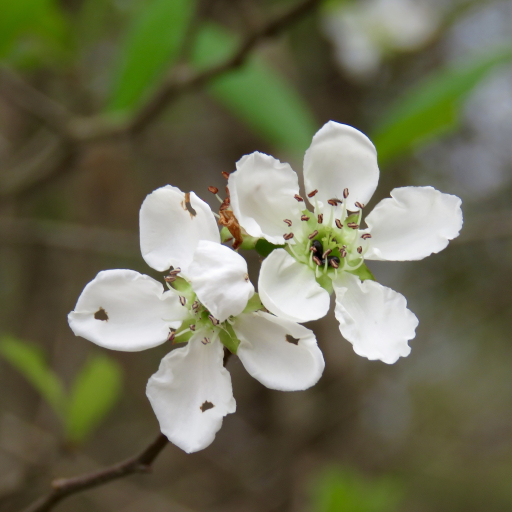
- 🌸 Early Blossoms: In late February or March, the tree covers itself in delicate white to pale pink flowers, often appearing before the leaves fully unfurl.
- 🍎 Miniature "Apples": The fruit looks like a tiny, shiny red apple or a large cranberry, hanging in small clusters and ripening to a soft, fragrant state by May.
- ⚔️ Defensive Thorns: Like most members of the Hawthorn family, the branches are armed with sharp, sturdy thorns that can grow up to an inch long.
🏡 In Your Garden
- 💧 The "Wet Feet" Specialist: While most fruit trees demand perfect drainage, the Western Mayhaw thrives in soggy, heavy clay or low-lying areas that stay damp. It is the perfect solution for that "problem spot" in your yard where water tends to sit.
- 🦋 Wildlife Magnet: This tree is a high-value ecological asset; the early spring nectar supports emerging bees and butterflies, while the dense, thorny canopy provides a safe nesting site for songbirds protected from predators.
⚠️ Safety & Toxicity
- 🌵 Physical Hazard: The primary danger of the Mayhaw is its thorns. They are sharp enough to puncture skin or garden gloves, so wear heavy-duty protection when pruning.
- 🐾 Pet & Child Safety: The flesh of the fruit is safe and edible, but like apples and cherries, the seeds contain small amounts of cyanogenic glycosides. While a few swallowed seeds are rarely harmful, they should not be crushed or consumed in large quantities by pets or children.
✨ Fun Fact
In parts of Louisiana and Georgia, Mayhaw harvesting is a high-tech affair—because the berries drop into the water when ripe, locals often use boats and fine-mesh nets to "skim" the berries off the surface of the swamps!

Detailed Care Instructions
To grow Crataegus opaca, also known as the American hawthorn or the eastern hawthorn, you can follow these steps:
- Choose the right location: Crataegus opaca prefers full sun to partial shade. Select a spot in your garden or yard that receives at least six hours of direct sunlight per day. Ensure that the soil is fertile, well-draining, and slightly acidic (pH 5.5-7).
- Prepare the soil: Before planting, amend the soil with organic matter such as compost or well-rotted manure to enhance its fertility and drainage. Remove any weeds or grass from the planting area.
- Planting: Dig a hole that is wide and deep enough to accommodate the root ball of the Crataegus opaca plant. Place the plant in the hole, making sure that the top of the root ball is level with or slightly above the soil surface. Backfill the hole with the soil, gently firming it around the roots. Water the plant thoroughly after planting to settle the soil.
- Watering: Crataegus opaca plants require regular watering, especially during the first year after planting to establish a strong root system. Water the plant deeply once or twice a week, providing enough moisture to keep the soil evenly moist but not waterlogged. Reduce watering during periods of heavy rainfall.
- Mulching: Apply a layer of organic mulch around the base of the plant, leaving a gap around the stem to prevent moisture-related issues. Mulch helps to retain moisture, suppress weed growth, and regulate soil temperature.
- Pruning: Prune Crataegus opaca plants in late winter or early spring before new growth begins. Remove any dead, damaged, or diseased branches. Shape the plant by selectively cutting back branches to maintain a desirable size and shape.
- Fertilizing: Apply a balanced slow-release fertilizer formulated for woody plants in early spring. Follow the manufacturer's instructions for application rates. Avoid over-fertilizing, as it can lead to excessive growth and weak branches.
- Pest and disease control: Monitor your Crataegus opaca plant regularly for pests such as aphids, spider mites, or hawthorn lace bugs. If any infestation occurs, use an appropriate insecticide or consider organic pest control methods. Watch out for diseases like leaf spot or fire blight, and promptly remove and dispose of any infected foliage or branches.
- Pollination: Crataegus opaca plants require cross-pollination for fruit production. Consider planting at least two different cultivars or varieties within close proximity to ensure proper pollination.
- Maintenance: In subsequent years, continue to provide the plant with sufficient water, occasional fertilizer, and regular pruning to maintain a healthy and attractive Crataegus opaca plant.
Remember to consult local gardening guides or experts for specific advice tailored to your region, as the requirements for growing Crataegus opaca may vary depending on your location.

Place in a bright room that is sun drenched almost all day. Or directly in a south-facing window.

Crataegus Opaca is a type of plant that requires adequate watering for healthy growth. It is essential to ensure that the plant receives the right amount of water to avoid over or under watering. The best way to water this plant is to provide it with deep watering once a week during the growing season, ensuring the water reaches the roots.
To water the plant, you may use a watering can or a garden hose with a gentle nozzle to avoid damaging the plant's foliage or flowers. It is recommended to water the plant in the morning or late afternoon to avoid water evaporation during the hotter parts of the day.
Avoid watering the plant when the temperature is hot or when the weather is very windy. Also, ensure that the soil is moist but not waterlogged, which may cause root rot and other diseases. You may check the soil moisture regularly by feeling the soil's texture with your fingers.
During the winter months, when the plant is dormant, it requires less water. Only water the plant when the soil is dry to the touch.
Overall, Crataegus Opaca needs consistent and adequate watering to thrive and remain healthy.
To fertilize this plant, apply a well-balanced, slow-release fertilizer in early spring just as new growth appears and again in early summer. Follow the package instructions for the appropriate amount to use based on the size of the plant. Water thoroughly after each application. Avoid fertilizing in fall or winter as this could encourage late-season growth that is vulnerable to frost damage.
The recommended type of soil for the Crataegus Opaca plant is a well-draining soil that is rich in organic matter. The soil pH should be slightly acidic to neutral, with a range of 6.0 to 7.5. The plant prefers a soil that is moist but well-drained and does not tolerate waterlogged conditions. It is also important for the soil to be free of heavy clay and compacted soil, which can restrict root growth. A mixture of loam, sand, and peat moss is ideal for this plant. Additionally, the plant should be grown in full sun to partial shade, depending on the climate in which it is being grown.
Crataegus Opaca plants can be propagated through both sexual and asexual means.
Sexual propagation involves collecting and planting the seeds of the plant. The best time to collect the seeds is in the fall when the fruit is ripe. The seeds should be cleaned, dried, and then stratified (stored in a cool, moist place) for several months before being planted in the spring.
Asexual propagation can be done through various methods such as layering, grafting, or cutting. Layering is done by bending a low-hanging branch down to the ground, making a small incision in the bark, and burying the branch under soil. Once the branch starts to root, it can be severed from the parent plant and transplanted. Grafting involves attaching a scion (a branch from the desired plant) onto a rootstock from a related plant. Cutting involves taking a stem cutting and rooting it in water or soil.
Regardless of the propagation method used, it is important to make sure the new plants are placed in a well-draining soil and receive adequate water and sunlight.








