Plant Overview
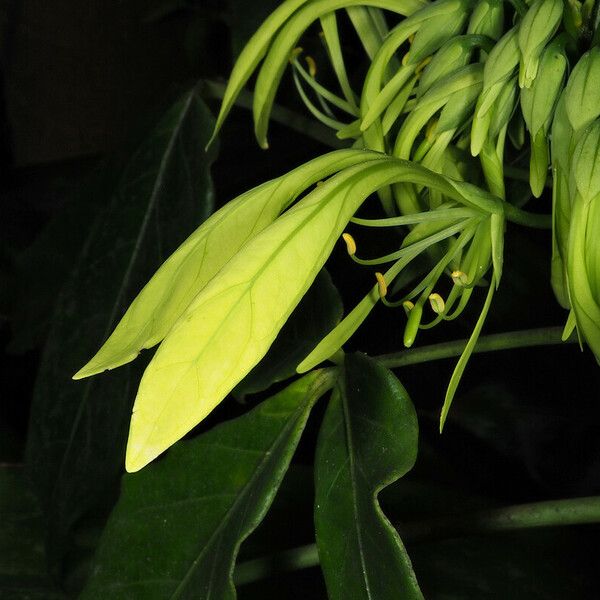
Known as the "Spider Tree" or "Three-leaved Caper," Crateva unilocularis is a botanical showstopper native to the lush wetlands of South and Southeast Asia. In full bloom, the tree transforms into a misty cloud of cream and purple, looking as though a thousand delicate, long-legged spiders have settled upon its branches. It is a tree deeply rooted in tradition, often found standing guard near ancient temples or lining tranquil riverbanks.
🔍 How to Identify
- 🍃 Trifoliate Leaves: The foliage is distinct; each leaf stalk branches into three separate, lance-shaped leaflets that have a glossy, vibrant green sheen.
- 🌸 Ethereal Blooms: The flowers feature four yellowish-white petals, but the real stars are the long, wispy purple stamens that extend far beyond the petals, creating a "spidery" appearance.
- 🍐 Globose Fruit: Following the floral display, the tree produces rounded, grayish-brown fruits with a rough texture that contain several seeds embedded in a mealy pulp.
🏡 In Your Garden
- 💧 The "Water Baby": This species naturally thrives along streams and floodplains. In a garden setting, it is the perfect candidate for low-lying areas that retain moisture, as it possesses a high tolerance for "wet feet" that would cause root rot in other trees.
- 🌳 Deciduous Cycle: Do not be alarmed if the tree suddenly drops its leaves. It typically sheds its foliage just before the flowering season, allowing the spectacular blooms to take center stage on the bare branches.
- 🌿 Spiritual Sentinel: In its native regions, it is often planted for its medicinal bark and its spiritual significance, believed to bring a sense of calm and protection to the landscape.
⚠️ Safety & Toxicity
- 🐾 Pet & Child Caution: While the tree is largely ornamental, the bark and seeds contain alkaloids and saponins. These can cause stomach upset if ingested, so it is best to keep curious pets and toddlers away from fallen fruits or chewed bark.
- 🧤 Pruning Care: The sap is generally considered low-risk, but sensitive individuals may experience mild skin irritation. It is always a good idea to wear gloves when pruning or handling broken branches.
✨ Fun Fact
🕷️ Ancient Artistry: The genus name Crateva was chosen to honor Crateuas, a Greek physician and botanist from the 1st century BC who is credited with creating the very first illustrated "herbal" (a book of plants), making this tree a living tribute to the history of botanical art!

Detailed Care Instructions

Place in a bright room that is sun drenched almost all day. Or directly in a south-facing window.

When the top few inches of soil dry out, water your plants. If the top few inches of soil are still moist, do not water your plant. Wait a few days, then poke your finger into the soil to see if anything has changed. Overwatering poses a disease risk, such as the development of fungal diseases in the roots. These plants have adaptations in there leaves that allow them to survive in low water supply.








