Plant Overview
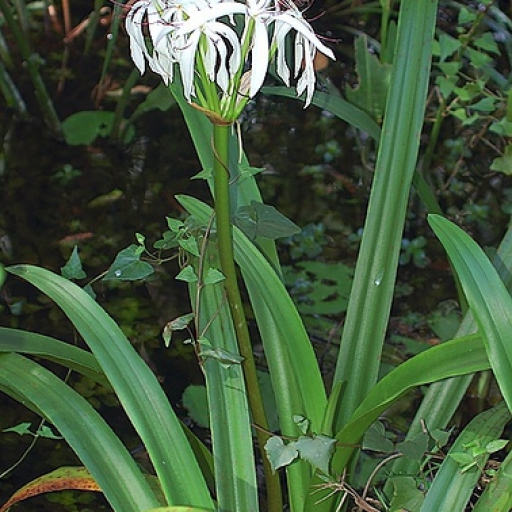
Often called the "Swamp Lily" or "Seven Sisters," this elegant aquatic perennial looks like a burst of white stars floating over dark marsh waters. Native to the wetlands and coastal prairies of the southeastern United States, it has long been a symbol of wild, untouched southern beauty. Its hauntingly beautiful fragrance and spider-like petals make it a favorite for those looking to add a touch of the "everglades" to their water features.
🔍 How to Identify
- 🌸 The Bloom: Six long, slender white petals that curve gracefully outward, creating a delicate, starburst or spider-like shape.
- 🍃 Strap-like Leaves: Deep green, leathery leaves that grow in thick, arching clumps directly from the base, often reaching up to 3 feet in length.
- 🎨 Contrast Stamens: Long, reddish-purple filaments (the stalks in the center of the flower) topped with golden pollen, providing a striking contrast against the snowy white petals.
🏡 In Your Garden
- 💧 The "Wet Feet" Rule: This isn't your average garden bulb; it is a true wetland plant. It thrives in boggy soil, pond edges, or even shallow standing water where other plants might rot.
- 🪴 Patience is Key: It possesses a large, deep bulb and a sensitive root system. It famously hates being transplanted; if you move it, don't be surprised if the plant "sulks" and refuses to bloom for a year or two while it resettles.
⚠️ Safety & Toxicity
- 🚫 Toxic Status: Poisonous if ingested.
- 🐾 Who is at Risk: The entire plant—especially the bulb—contains lycorine and other alkaloids. It is toxic to dogs, cats, and horses. Ingestion can lead to severe stomach upset, drooling, and in large quantities, more serious neurological symptoms.
- 🧤 Skin Sensitivity: While not usually a major irritant, the sap can cause mild skin redness in sensitive individuals, so wearing gloves during division is a smart move.
✨ Fun Fact
The nickname "Seven Sisters" comes from a Southern folk observation that these lilies frequently produce clusters of exactly seven blossoms on a single stalk, appearing like a small family standing together in the marsh.

Detailed Care Instructions
To grow Crinum Americanum plants, also known as Southern Swamp Lily or Seven Sisters, follow these steps:
- Choose a suitable location: Crinum Americanum plants thrive in full sun to partial shade. They prefer moist soil, preferably near bodies of water such as ponds or swamps.
- Prepare the soil: Ensure the soil is well-draining and rich in organic matter. Crinum Americanum plants prefer slightly acidic soil, so you may need to amend the soil using peat moss or compost if your soil is too alkaline.
- Planting: Dig holes in the prepared soil that are approximately twice the width of the root ball of the plant. Place the plant into the hole, making sure it is at the same depth it was previously growing. Fill the hole with soil and firm it gently around the plant.
- Watering: Crinum Americanum plants require regular watering to keep the soil consistently moist. They can tolerate occasional flooding, as they are native to swampy areas. However, avoid overwatering, as it can lead to root rot.
- Mulching: Apply a layer of organic mulch, such as wood chips or shredded leaves, around the base of the plant to help retain moisture and suppress weed growth.
- Fertilizing: Crinum Americanum plants do not require excessive fertilization. However, you can apply a balanced, slow-release fertilizer in spring and again in midsummer to promote healthy growth.
- Pruning: Remove any dead or damaged leaves or flowers as needed. In fall, you can cut back the foliage to the ground to prepare the plant for winter dormancy.
- Winter care: While Crinum Americanum plants are generally hardy, if you live in a region with harsh winters, provide some protection by covering the plants with a layer of mulch or using plant covers.
- Propagation: Crinum Americanum plants can be propagated through division. Every few years, lift the plant out of the ground and carefully separate the bulb clusters, making sure each division has its own roots and leaves. Replant the divisions in suitable locations.
- Pest and disease control: Crinum Americanum plants are generally pest and disease-resistant. However, keep an eye out for common garden pests such as aphids or snails. Use organic pest control methods as necessary.
Following these steps should help you successfully grow and enjoy the beautiful Crinum Americanum plant in your garden.

Place in a bright room that is sun drenched almost all day. Or directly in a south-facing window.

To adequately water this plant, it is best to thoroughly saturate the soil and then allow it to mostly dry out before watering again. It is essential not to let the soil become too dry or too saturated since this can damage the plant's roots. When watering, it is best to avoid watering the leaves or flowers directly but instead aim for the soil near the base of the plant. This plant prefers consistently moist but well-drained soil. It is also recommended to water in the morning or evening, avoiding the hottest part of the day to prevent water evaporating too quickly.
To properly fertilize the Crinum Americanum plant, follow these instructions:
- Choose a balanced fertilizer with equal proportions of nitrogen (N), phosphorus (P), and potassium (K). Look for a slow-release granular fertilizer specifically formulated for flowering plants.
- Begin fertilizing in early spring when new growth appears. Apply the fertilizer every 4-6 weeks throughout the growing season, from spring to fall. Avoid fertilizing during winter months.
- Dilute the fertilizer according to the package instructions, usually around 1 tablespoon per gallon of water.
- Water the plant thoroughly before applying the fertilizer to prevent any potential root burn.
- Slowly pour the diluted fertilizer solution around the base of the plant, ensuring that the entire root zone gets moistened. Avoid splashing the leaves or flowers with the fertilizer solution.
- After fertilizing, water the plant again to help distribute the nutrients evenly and prevent any potential fertilizer burn.
- Monitor the plant's response to the fertilizer. If the leaves start to turn yellow or the plant seems unhealthy, reduce the frequency of fertilizing or switch to a more diluted mix.
Remember, always follow the instructions on the fertilizer packaging for specific guidelines and adjust the fertilizing schedule as needed based on the plant's condition and growth.
Crinum Americanum requires a specific type of soil to thrive. It prefers soil that is rich in nutrients, well-draining, and slightly acidic with a pH range of 6.0 to 6.8. It is best to use a mixture of loamy and sandy soil, as this will provide the right balance of drainage and moisture retention. It is also important to avoid soil that is heavy in clay or compacted, as this can hinder root growth and lead to waterlogging. Additionally, adding organic matter, such as compost or leaf mulch, can help improve the soil structure and provide beneficial nutrients for the plant. Overall, selecting the right soil is crucial for the health and vitality of Crinum Americanum.
Propagation of Crinum Americanum plant can be done through various methods. One common method is through bulb division. Here's a step-by-step guide on how to propagate Crinum Americanum:
- Select a mature and healthy Crinum Americanum plant with multiple bulbs. Ensure that the plant has been well cared for and is free from any diseases or pests.
- Prepare a suitable planting area or container for the new plants. It should have well-draining soil or a mixture of soil and sand to promote root growth.
- Carefully dig around the base of the plant to expose the bulbs. Take extra caution not to damage the bulbs or the root system.
- Gently separate the bulbs from each other by using your hands or a sharp, clean tool such as a knife. Ensure that each division has its own set of roots.
- Trim any damaged or rotten roots on the separated bulbs. This will help prevent any potential infections or diseases from spreading.
- Allow the bulbs to dry out slightly for a day or two before planting. This will help them to callus over and reduce the chance of rotting.
- Plant the divided bulbs in the prepared soil or container. Place them at a depth of about 4-6 inches, ensuring that the pointed ends are facing upwards.
- Water the newly planted bulbs thoroughly, ensuring that the soil is evenly moist. However, avoid overwatering as it can lead to rotting.
- Provide the propagated bulbs with ample sunlight, preferably in a location that receives partial shade. This will help stimulate growth and ensure healthy development.
- Regularly monitor and maintain the moisture level of the soil. Water only when the top inch of soil feels dry to the touch.
- It's important to note that newly divided Crinum Americanum plants may take some time to establish and start producing flowers. Be patient and continue providing appropriate care.
By following these steps, you can successfully propagate Crinum Americanum and enjoy the beauty of these plants in your garden or indoor space.








