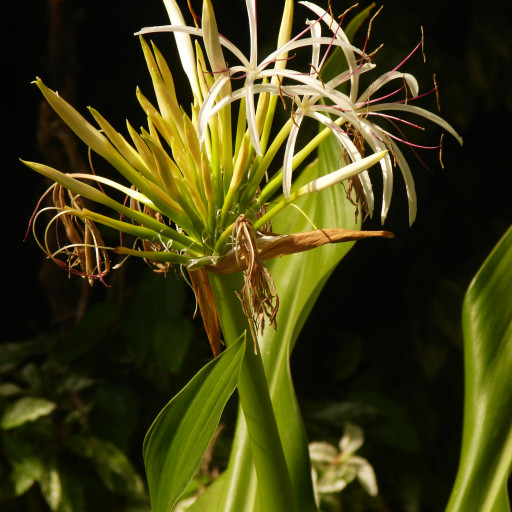
Plant Overview
Known as the Poison Bulb or the Grand Crinum Lily, this tropical giant is the king of coastal gardens. With its massive, architectural foliage and starburst-like white blooms, it looks like something plucked straight from a prehistoric jungle. While it’s a favorite for beachside landscaping due to its incredible salt tolerance, it carries a "don't touch" reputation that matches its bold appearance.
🔍 How to Identify
- 🍃 The Leaves: Massive, strap-shaped bright green leaves that grow in a spiral rosette. They are thick, fleshy, and can reach up to 5 feet in length, creating a dramatic fountain-like shape.
- 🌸 The Flowers: Clusters of fragrant white blossoms sit atop a thick central stalk. Each flower has six long, recurved petals that look like elegant spider legs, accented by striking purple-to-pink filaments.
- 🧅 The Bulb: It grows from one of the largest bulbs in the plant world. The bulb often develops a thick "neck" that sits partially above the soil line, looking almost like a small tree trunk.
🏡 In Your Garden
- ⚓ Coastal Hero: This plant is a "halophyte," meaning it thrives in salty air and sandy soil where most other plants would wither. It’s the perfect choice for oceanfront properties or poolside containers.
- 🏗️ Commitment Issues: Because it grows such a massive, deep root system and a heavy bulb, the Grand Crinum hates being transplanted. Once you've chosen a spot for it, try not to move it, or you risk several seasons of "sulking" without blooms.
⚠️ Safety & Toxicity
- 🚫 Status: High Toxicity.
- 🐾 Details: As the name "Poison Bulb" suggests, all parts of the plant contain lycorine and other alkaloids. It is highly toxic to dogs, cats, and humans if ingested, causing severe stomach upset and heart rhythm issues. Wear gloves when pruning, as the sap can cause skin irritation for those with sensitive skin.
✨ Fun Fact
- 📜 Ancient Medicine: Despite its toxicity, Crinum asiaticum has a long history in traditional medicine; in some cultures, the warmed leaves were historically used as a topical wrap to treat bone fractures and swelling—though modern science warns to keep it out of the medicine cabinet!

Detailed Care Instructions
| Humidity | Normal |
| Lighting | Part Sun |
| Difficulty | Medium |
| Hibernation | Cold Period |
| Hardiness Zones | 9 - 11 |
To grow Crinum Asiaticum plant, also known as the Poison Bulb or Giant Crinum Lily, follow these steps:
- Choose a suitable location: The plant prefers full sun or partial shade, and grows well in well-draining soil. It can tolerate a wide range of soil types but prefers slightly acidic to neutral soil.
- Prepare the soil: Amend the soil with organic matter such as compost or well-rotted manure to improve drainage and provide nutrients. Crinum Asiaticum plants prefer rich, fertile soil.
- Planting: Dig a hole twice as wide and deep as the plant's root ball. Place the plant in the hole, ensuring that the crown is level with or slightly above the soil surface. Backfill the hole with soil and gently tamp it down to remove air pockets.
- Watering: Water the plant thoroughly after planting to settle the soil. Water consistently to keep the soil evenly moist but not soggy. Crinum Asiaticum plants thrive in moist conditions but can tolerate periods of drought once established.
- Mulching: Apply a layer of mulch around the plant to retain moisture, suppress weed growth, and regulate soil temperature. Avoid piling the mulch against the plant's stem to prevent rotting.
- Fertilizing: Feed the plant with a balanced slow-release fertilizer in early spring and again in mid-summer to promote healthy growth and abundant blooms. Follow the instructions on the fertilizer packaging for the correct dosage.
- Pruning: Remove any dead or damaged leaves to maintain the plant's appearance and prevent disease. In winter or early spring, cut back the plant to remove any dead or dying foliage.
- Propagation: Crinum Asiaticum plants can be propagated through bulb division. Dig up the plant after it has finished flowering, carefully separate the bulbs, and replant them individually.
- Pests and diseases: Monitor the plant for common pests such as aphids, snails, or slugs. Treat any infestations immediately using appropriate pest control methods. Crinum Asiaticum is generally resistant to diseases but can be affected by fungal infections in overly wet conditions.
- Overwintering: In areas with frost, protect the plant during winter by covering it with a layer of mulch or bringing it indoors. Crinum Asiaticum is native to warm tropical regions and may not tolerate freezing temperatures.
By following these steps, you can successfully grow Crinum Asiaticum and enjoy its beautiful flowers.

Place in a bright room that is sun drenched almost all day. Or directly in a south-facing window.

Crinum Asiaticum plant requires watering once or twice a week, depending on the weather and soil condition. The soil around the plant should always be moist, but never waterlogged. The best time to water the plant is early in the morning or in the evening, when the temperature is cooler and the sun is not shining down on the plant. When watering, make sure the water reaches all parts of the plant, including the roots. Overwatering should be avoided as it can lead to root rot.
The Crinum Asiaticum plant should be fertilized every two to three weeks using a balanced liquid fertilizer during the growing season. The fertilizer should be diluted according to the package instructions and applied to the soil around the base of the plant. It is important not to over-fertilize as this can lead to burnt leaves. During the dormant season, fertilizer should be applied less frequently or not at all.
Crinum Asiaticum plants prefer a well-draining soil with a slightly acidic to neutral pH level. It should be rich in organic matter, such as compost or well-rotted manure, to promote healthy growth and blooms. Avoid using heavy soils that retain water as it can lead to root rot and other fungal diseases. A good soil mix for this plant could consist of a blend of peat moss, perlite or vermiculite, and sand or grit to improve drainage. Additionally, adding a slow-release fertilizer to the soil mix can provide essential nutrients for the plant's growth and flowering.
To propagate this plant, you will need to carefully remove the offsets or bulbils that develop at the base of the adult plant. These bulbils can be gently pulled away from the parent plant and placed in a soil mixture that is well-draining and nutrient-rich.
Before planting, it is important to clean the bulbils and remove any dead or damaged tissue. You may also want to dust the cut ends with a rooting hormone to encourage growth.
Once planted, the bulbils should be kept moist and away from direct sunlight until they have developed strong roots. This can take several weeks, so patience is key.
After the new plants have established themselves, they can be transplanted into larger pots or directly into the garden. With proper care, they should grow into full-sized Crinum Asiaticum plants over time.








