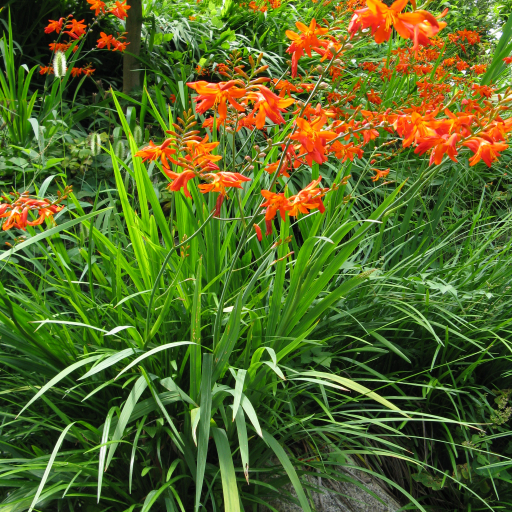
Plant Overview
Often called "Falling Stars" or simply "Montbretia," this vibrant hybrid is a masterpiece of late-summer color. Created in France in the 1880s by crossing two South African species, it has since traveled the globe, becoming a staple in cottage gardens for its fiery, trumpet-shaped blooms. It is celebrated for its rugged "plant it and forget it" nature, though its ability to spread rapidly has earned it a reputation for being a bit of a garden rebel.
🔍 How to Identify
- ⚔️ The Foliage: Long, sword-shaped leaves that grow in a fan-like vertical spray, often looking like a clump of tall grass or a miniature Iris.
- 🔥 The Flowers: Bright orange to reddish-orange funnel-shaped blossoms that grow in two rows along elegant, arching "zig-zag" stems.
- 📿 The Base: If you dig slightly, you’ll find "corms" (bulb-like structures) that often grow in vertical chains, one on top of the other.
🏡 In Your Garden
- 🌱 Growth Habit: This plant spreads via underground runners and corms. While this makes it great for filling empty spaces, it can become invasive in mild, damp climates (like the UK or Pacific Northwest) if not kept in check.
- ☀️ Sun & Drainage: It thrives in full sun to partial shade. The most important factor for its survival is drainage; while it loves a drink in the summer, the corms are prone to rotting if they sit in soggy, frozen soil during the winter.
- ✂️ Maintenance: Because it grows from a crowded "corm colony," you may notice fewer flowers after a few years. Simply dig them up and divide the clumps in early spring to rejuvenate their blooming power.
⚠️ Safety & Toxicity
- 🟢 Status: Generally non-toxic to humans and pets, but with a caveat.
- 🐕 Details: While not considered poisonous like many lilies, ingesting any part of the plant can cause mild digestive upset in curious cats or dogs. It is best treated as an ornamental-only guest in your garden.
✨ Fun Fact
The name Crocosmia comes from the Greek words krokos (saffron) and osme (smell). If you take the dried flowers and place them in warm water, they emit a distinct, spicy aroma very similar to expensive saffron!

Detailed Care Instructions
| Color | Orange-Red |
| Soil Ph | Neutral; Ph 6.5-7.5 |
| Invasive | Weed |
| Lighting | Full Sun |
| Toxicity | Toxic |
| Soil Type | Average With Good Drainage |
| Bloom Time | Mid-Summer |
| Plant Type | Perennial Bulb |
| Mature Size | 1 Ft. Tall |
| Native Area | South Africa |
| Sun Exposure | Full Sun To Partial Shade |
| Hardiness Zones | 5-9 |
To grow Crocosmia × Crocosmiiflora (also known as montbretia), follow these steps:
- Choose a suitable planting location: Crocosmia plants thrive in full sun to partial shade. Select a spot in your garden that receives at least 6 hours of direct sunlight per day. Ensure the soil is well-draining to prevent waterlogging.
- Prepare the soil: Crocosmia prefers well-draining soil, rich in organic matter. Enhance the soil quality by adding compost or well-rotted manure before planting. This will improve drainage and provide essential nutrients.
- Planting: Crocosmia corms should be planted in spring, after the danger of frost has passed. Dig a hole around 4-6 inches deep and place the corms with their pointed end facing up. Space them about 8-12 inches apart to allow for proper growth. Cover the corms with soil, gently firming it around them.
- Watering: After planting, water the corms thoroughly to encourage root development. Keep the soil consistently moist during the growing season, but avoid overwatering, as it can lead to rotting. Decrease watering frequency once the foliage starts to die back in late summer.
- Fertilization: Apply a balanced slow-release fertilizer or a liquid fertilizer formulated for flowering plants in early spring. Follow the instructions on the package for the correct dosage. This will promote healthy growth and abundant blooms.
- Mulching: Mulch around the plants to conserve moisture, suppress weeds, and regulate soil temperature. Apply a layer of organic mulch, such as wood chips or straw, but avoid placing it directly on top of the corms.
- Maintenance: Remove faded flowers regularly to prevent seed formation and encourage prolonged blooming. In colder climates, protect the corms from winter frost by covering the planting area with a layer of straw or compost.
- Division: Crocosmia plants tend to multiply rapidly. Every 3 to 4 years, divide the corms in early spring or fall to prevent overcrowding. Lift the corms gently, separate them into smaller clumps, and replant them at the appropriate spacing.
By following these steps, you should be able to grow healthy and vibrant Crocosmia × Crocosmiiflora plants in your garden.

Place in a bright room that is sun drenched almost all day. Or directly in a south-facing window.

Crocosmia x Crocosmiiflora is a perennial plant that requires regular watering to thrive. When watering the plant, it is important to water deeply, ensuring that the soil is completely saturated. This can be done by using a garden hose or watering can with a spout, and directing the water at the base of the plant. Try to avoid getting water on the leaves, as this can cause fungal diseases.
The frequency of watering will depend on a number of factors, including the weather, soil type and drainage, and the size of the plant. As a general rule, Crocosmia x Crocosmiiflora should be watered once or twice a week in dry weather, but less frequently in wet conditions.
To ensure that the plant gets enough water, it is important to monitor the soil moisture level. This can be done by inserting a finger into the soil, or by using a soil moisture meter. If the soil feels dry to the touch, it is time to water.
In addition to regular watering, Crocosmia x Crocosmiiflora can benefit from occasional fertilization. A balanced fertilizer, such as a 10-10-10 or 20-20-20 blend, can be applied every two to three weeks during the growing season to promote healthy growth and blooming.
Overall, proper watering and fertilization are essential for the success of Crocosmia x Crocosmiiflora. With the right care, this beautiful plant can thrive and provide colorful blooms year after year.
To fertilize this plant, use a slow-release fertilizer with balanced N-P-K ratios. Apply the fertilizer in late winter to early spring when new growth emerges. Avoid applying fertilizer during the summer months as this can cause excessive growth and weaken the plant. Apply the fertilizer evenly around the base of the plant and water thoroughly after application. Monitor the plant's growth and adjust the fertilization schedule and amount as needed.
Crocosmia × Crocosmiiflora plants prefer well-draining soil that is rich in organic matter. A mix of sandy soil and compost is ideal for cultivating this plant. The ideal pH range for optimal growth is between 6.0 to 7.0. It is important to avoid heavy clay soils or any soil with poor drainage, as this can cause root rot and other issues for the plant. Additionally, adding a layer of mulch around the base of the plant can help to retain soil moisture and provide additional nutrients to the plant.
To propagate this plant, you will need to wait until the plant has finished blooming and has entered its dormant period, which typically occurs in autumn. At this point, you can gently dig up the plant and carefully separate the bulbs from one another.
Each bulb should have its own set of roots and shoots. You can then replant these bulbs in a well-draining soil mix, being sure to position each bulb so that the top of the bulb is just slightly below the soil surface.
Water the newly planted bulbs and keep the soil consistently moist throughout the winter months, as this is when the plant will begin to establish new roots. In the spring, new shoots should begin to emerge from the soil.
To encourage the growth of new bulbs and increase the overall size of the plant, you can fertilize the plant periodically with a balanced fertilizer. The plant will typically bloom in late summer or early fall.
Common pests of the montbretia include Spider mites, aphids, thrips, snails. Make a habit of checking your montbretia frequently for pests so that any infestations can be caught and managed early.








