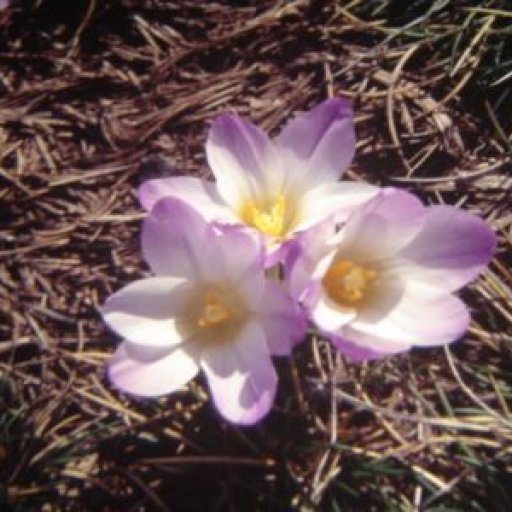
Plant Overview
Known as the "Spanish Alpine Crocus," Crocus carpetanus is a resilient mountain dweller native to the high, rocky peaks of central Spain and Portugal. Unlike the common garden varieties that decorate suburban lawns, this wild beauty is a specialist of the heights, often seen pushing its delicate petals through the edge of retreating snowdrifts in the Sierras. It carries a sense of ancient history, named after the Carpetani—a pre-Roman tribe that once roamed the Spanish central plateau.
🔍 How to Identify
- 🌸 The Bloom: Features star-shaped or funnel-shaped flowers ranging from pale lilac to white, often decorated with intricate, dark purple veining on the outer petals.
- 🤍 The Stigma: Unlike many crocuses with fiery orange centers, this species has a distinctive, pale whitish or soft yellow stigma that is deeply divided.
- 🍃 The Foliage: The leaves are narrow and grass-like, but uniquely, they often lack the prominent silver-white central stripe found in most other crocus species, appearing more uniformly green.
🏡 In Your Garden
- ⛰️ Alpine Aspirations: Because it originates from rocky, high-altitude slopes, it demands "sharp" drainage. It thrives in rock gardens or gravel beds where water never sits around the corm.
- ☀️ The Summer Siesta: This plant follows a Mediterranean mountain cycle. It needs a dry, warm period during its summer dormancy to mimic its native habitat; otherwise, the corm may rot in damp, rich garden soil.
- 🌬️ Tough as Nails: It is exceptionally cold-hardy and actually prefers a cold winter to trigger a healthy spring bloom, making it a great choice for enthusiasts in cooler climates.
⚠️ Safety & Toxicity
- 🐾 Mildly Toxic: While not as lethal as the "Autumn Crocus" (Colchicum), all true Crocus species contain alkaloids that can cause digestive upset if eaten.
- 👶 Keep Away from Pets: Ingestion can lead to vomiting, drooling, or diarrhea in cats and dogs. It is best placed in areas where curious pets or toddlers won't be tempted to "sample" the spring greenery.
✨ Fun Fact
The name carpetanus isn't just a botanical descriptor—it’s a geographical one! It refers specifically to the Sistema Central mountains in Spain, anciently known as the Carpetanian Mountains. Finding this plant in the wild is often a sign that you have reached a pristine, high-altitude ecosystem.

Detailed Care Instructions








