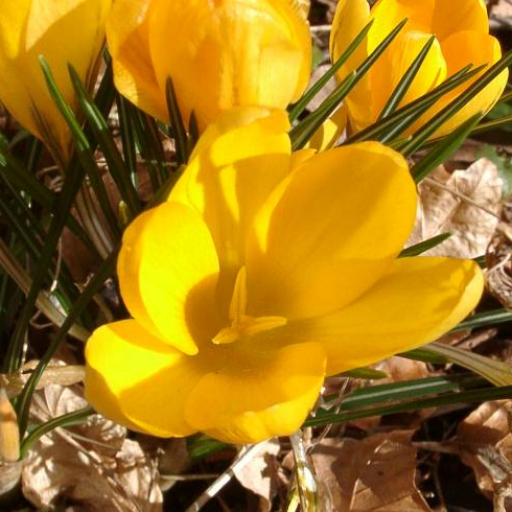
Plant Overview
Often called the "Snow Crocus," this tiny herald of spring is famous for its bravery, frequently pushing its way through a blanket of frozen snow to signal the end of winter. Native to the sun-drenched, rocky slopes of the Balkans and Turkey, it is a resilient little gem that brings a burst of buttery warmth to an otherwise grey landscape. Its name literally translates from Greek as "golden flower," a fitting tribute to its glowing, luminous petals.
🔍 How to Identify
- 🌼 The Blooms: Small, goblet-shaped flowers that open wide into a star shape when the sun hits them. While the wild species is golden-yellow, many garden varieties feature "feathering"—delicate purple or bronze streaks on the outside of the petals.
- 🌿 The Foliage: Very narrow, grass-like leaves that emerge with or shortly after the flowers. Each leaf features a distinct, shimmering silver-white stripe running down the center.
- 📏 Compact Stature: This is a "specie" crocus, meaning it is smaller and more delicate in appearance than the giant Dutch hybrids, rarely exceeding three to four inches in height.
🏡 In Your Garden
- 🏔️ The Rock Garden Star: Because of their diminutive size, these plants are easily lost in large perennial borders. They perform best in rock gardens, troughs, or "tapestry lawns" where they can be appreciated at eye level or in mass drifts.
- 🐿️ The Squirrel Struggle: Unlike daffodils, crocus corms (bulbs) are a favorite snack for squirrels and voles. If you find your bulbs being dug up, try planting them beneath a thin layer of crushed gravel or mixing them with "bitter" bulbs like Alliums to deter hungry visitors.
⚠️ Safety & Toxicity
- 🐾 Pet Safety: While Crocus chrysanthus is not the "Deadly Autumn Crocus" (Colchicum), it can still cause mild stomach upset, drooling, or vomiting if ingested by cats or dogs in large quantities.
- 👶 Garden Safety: The plant is generally non-irritating to the skin, but the small corms can be a choking hazard for curious toddlers who might be tempted to dig them up during planting season.
✨ Fun Fact
Because they bloom so early, these flowers provide an "Early Bird Special" for the ecosystem. They are one of the most critical first food sources for queen bees emerging from hibernation in late winter when almost nothing else is in bloom.

Detailed Care Instructions
| Humidity | Dry |
| Lighting | Full Sun |
| Difficulty | Easy |
| Hibernation | Cold Period |
| Hardiness Zones | 3 - 8 |
To grow Crocus Chrysanthus plants successfully, here are some tips:
- Plant the bulbs in well-draining soil in a sunny or partially shaded location. Crocus Chrysanthus prefers a full sun to partial shade.
- Plant the bulbs in the fall, ideally in September or October, before the ground freezes.
- Dig a hole that is 3-4 inches deep and place the bulb with the pointed end facing up. Space the bulbs about 3-4 inches apart.
- Water the bulbs well after planting to help them establish roots.
- Fertilize the soil with a balanced fertilizer in the spring as the plant begins to grow.
- Mulch around the base of the plants to help retain moisture and control weeds.
- After the flowers bloom, allow the foliage to die back naturally before cutting it back. This will help the bulb store energy for the next growing season.
- Crocus Chrysanthus plants are generally low maintenance and do not require frequent watering once established.
With proper care and maintenance, Crocus Chrysanthus plants should thrive and produce beautiful bright yellow flowers in the spring.

Place in a bright room that is sun drenched almost all day. Or directly in a south-facing window.

Crocus Chrysanthus should be watered consistently throughout the growing season, especially during periods of dry weather. It is important to water the plant at the base to avoid getting the corms wet, as this can cause them to rot. Watering in the morning is ideal, as it allows the plant to absorb moisture during the day and reduces the risk of fungal diseases. Make sure the soil is well-draining to prevent waterlogging, as this can also cause the corms to rot. Avoid overhead watering, as this can lead to fungal issues and damage the delicate flowers. Be sure to adjust the watering schedule based on weather conditions and the needs of the plant.
To fertilize Crocus Chrysanthus plants, apply a balanced fertilizer (such as a 10-10-10 or 20-20-20) at the beginning of the growing season before new growth appears. Use a diluted solution according to the instructions on the packaging, and avoid applying fertilizer directly to the plant leaves or stems. Water the plant thoroughly after fertilizing to help the nutrients penetrate the soil and reach the roots. Repeat this fertilization process once or twice during the growing season to help promote healthy growth and flowering.
Crocus Chrysanthus plants thrive in well-draining soils that are rich in organic matter. A mix of sandy loam soil with added compost or peat moss is ideal for these plants. The pH level should be slightly acidic to neutral, around 6.0 to 7.0, to promote healthy growth and blooming. It is important to ensure that the soil is loose and airy to allow for proper root development and water drainage. Additionally, adding a layer of mulch on top of the soil can help retain moisture and regulate soil temperature, which is beneficial for the overall health of the plant.
Crocus Chrysanthus can be propagated through division or seed sowing. To propagate the plant through division, carefully dig up the plant in the fall, separate the corms and replant them in a new location with well-draining soil and full sun. Water the newly planted corms regularly to establish roots.
To propagate through seed sowing, collect the seeds from the plant after the flowers have faded in late spring or early summer. Sow the seeds in a tray filled with well-draining soil, cover lightly with soil and keep in a warm, bright location. Keep the soil consistently moist but not waterlogged. Germination may take a few weeks to a few months, so be patient.
Once the seeds have germinated, you can transplant the seedlings into individual pots or directly into the garden. Make sure to keep the young plants well-watered and protected from harsh weather conditions. With proper care, Crocus Chrysanthus will establish and bloom for many years to come.








