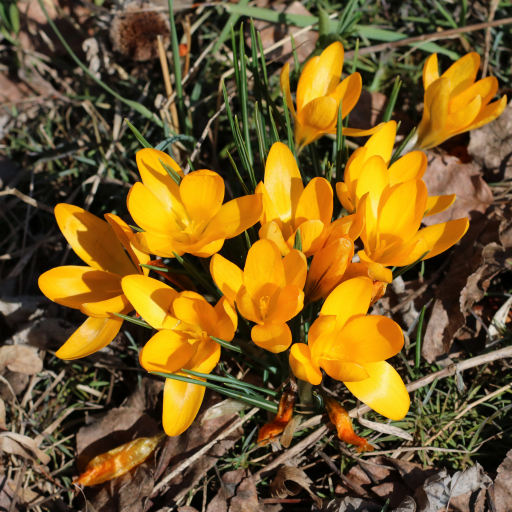
Plant Overview
Known as the "Dutch Yellow Crocus" or "Yellow Giant," Crocus flavus is one of the most cheerful heralds of the late winter garden. Originating from the rocky hillsides of the Balkans and Turkey, this sun-drenched flower is famous for its ability to punch through the frost, offering one of the first reliable sources of nectar for early-waking bees.
🔍 How to Identify
- 🌼 The Blooms: Features brilliant, egg-yolk yellow to vibrant orange petals that form a classic goblet shape. Unlike some wild species, the flowers of Crocus flavus are notably large and fragrant.
- 🌿 The Foliage: Look for narrow, grass-like leaves that are dark green with a distinctive, shimmering silver stripe running down the center of each blade.
- 🌱 The Stature: This is a low-growing beauty, usually reaching only 3–4 inches in height, making it look like a scattered handful of gold coins when planted in a lawn.
🏡 In Your Garden
- 🌞 Sun-Seeker: While it can handle light shade, this crocus is a true "heliotropic" plant; its petals will physically fold inward during cloudy weather or at night to protect its pollen, reopening only when the sun kisses them.
- 🌍 Naturalizing Specialist: Because it grows from a "corm" (a bulb-like underground stem), it is excellent for naturalizing. If left undisturbed in well-draining soil, it will slowly multiply and create a dense golden carpet over the years.
- 🐝 Ecological Hero: Since it blooms while most other plants are still dormant, it serves as a vital "fast food station" for queen bees and early pollinators emerging from hibernation.
⚠️ Safety & Toxicity
- 🐾 Mildly Toxic: Generally considered safe for humans to handle, but the plant contains alkaloids that can cause stomach upset, drooling, or vomiting in cats and dogs if the corms are dug up and eaten.
- 🚫 The "False Friend": Never confuse this spring bloomer with the Colchicum (Autumn Crocus), which is highly toxic. Crocus flavus has only three stamens, whereas the dangerous Colchicum has six.
✨ Fun Fact
Despite being called the "Dutch Yellow," this plant isn't originally from the Netherlands! It earned the name because Dutch horticulturists in the 17th century were the first to cultivate and hybridize the wild Turkish species into the robust, giant-flowered version we love today.

Detailed Care Instructions
| Humidity | Normal |
| Lighting | Full Sun |
| Toxicity | Poisonous |
| Difficulty | Medium |
| Hibernation | Cold Period |
| Hardiness Zones | 5A - 8B |
To grow Crocus flavus, also known as the yellow crocus, you can follow these steps:
- Climate and Location: Yellow crocus plants prefer a well-drained, sunny spot in your garden. They can tolerate some shade but perform best in full sun. Ideally, your climate should have a cold winter (USDA hardiness zones 3-8).
- Soil Preparation: Prepare the soil by removing any weeds or grass, and loosen it up with a garden fork or tiller. Yellow crocus plants thrive in well-draining soil with good organic matter. If your soil is heavy or clay-like, you can improve it by adding compost or well-rotted manure.
- Planting: Plant the crocus bulbs in early fall (around September or October) just before the first frost. You may also plant them in early spring, although fall planting tends to be more successful. Dig holes about three inches deep and six inches apart.
- Bulb Placement: Place the bulbs in the holes with the pointed side facing upwards. Space them out evenly to allow for growth and expansion. Cover the holes with soil and gently firm it down.
- Watering: After planting, water the bulbs thoroughly to help them settle and establish roots. Yellow crocus plants do not require regular watering but appreciate moisture during their growing season.
- Fertilization: Apply a general-purpose bulb fertilizer or bone meal to the soil during planting. This will provide essential nutrients for the crocus plants to grow. Avoid over-fertilizing, as it may result in lush foliage but fewer flowers.
- Care and Maintenance: Once planted, yellow crocus plants do not require much attention. However, it is important to keep the area weed-free, especially during the growing season. Mulching around the plants can help suppress weeds and retain soil moisture.
- Dormancy: After blooming, the foliage will gradually die back. Allow the leaves to die naturally as they provide energy for the bulbs to store and produce flowers next year. Avoid cutting the foliage until it has completely withered.
- Propagation: Yellow crocus plants can also be propagated by dividing the bulbs. Every three to four years, when the foliage has withered, carefully dig up the bulbs, separate them, and replant in a new location.
- Protection: In extremely cold climates, you can protect the bulbs by applying a layer of mulch over the planting area. This will insulate them from severe temperatures and ensure their survival.
By following these steps, you can successfully grow Crocus flavus plants and enjoy their bright yellow blooms in spring.

Place in a window with dappled sun or a spot in the middle of a room. Or directly in a window facing west or east.

To properly water this plant, you should check the soil moisture using a moisture meter or by sticking your finger about an inch into the soil. If the soil feels dry, it is time to give it water. When watering, pour water onto the soil slowly and thoroughly until it starts to run out of the drainage holes at the bottom of the container. Make sure not to let the plant sit in standing water. Instead, wait until the excess water drains away, then replace the container back onto its saucer. Watering frequency will depend on factors such as the climate, humidity, and amount of sunlight the plant receives. It is best to maintain a consistent watering schedule, while also allowing the soil to dry out slightly between waterings.
To fertilize this plant, begin by choosing a balanced slow-release fertilizer that is high in phosphorus and potassium. Begin fertilizing the plant in early spring, just as it begins to emerge from dormancy. Avoid fertilizing the plant in the summer months, as this can lead to excessive foliage growth and reduced flower production. Instead, resume fertilizing in the fall, just before the plant goes dormant again. Be sure to follow the instructions on your chosen fertilizer, as over-fertilizing can damage the plant.
The best soil to use for Crocus Flavus plant would be a well-draining and slightly acidic soil mix that is rich in organic matter. The soil should be loose and friable, with good aeration and water retention abilities. It is important to avoid soils that are too heavy or compacted, as these can impede root growth and lead to waterlogging. A soil pH of around 6.0 to 7.0 is ideal for this plant species. Additionally, adding a layer of mulch around the base of the plant can help to keep the soil moist and cool while also preventing weed growth.
To propagate this plant, begin by selecting healthy and matured bulbs. Carefully separate the bulbs into smaller clumps, ensuring that each clump has at least one healthy bulb. Plant the clumps of bulbs in well-draining soil in a sunny location. Ensure that the soil is kept moist but not waterlogged. During the growing season, fertilize the plants with a balanced fertilizer every 2-3 weeks. After the blooming period has ended, allow the foliage to die back naturally. Once the bulbs have gone dormant, they can be dug up and divided again for propagation.








