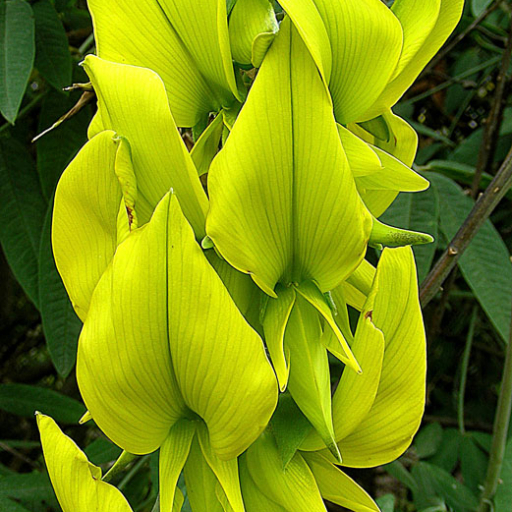
Plant Overview
Often called the Australian Birdflower or simply the Birdflower, this striking shrub is a master of botanical mimicry. It looks as though a flock of bright yellow hummingbirds has decided to perch simultaneously on its slender branches. While it’s a favorite in warm-climate gardens for its whimsical beauty, it is also a hardy survivor known as a "rattlepod" due to the distinct musical sound its dried seed pods make in the wind.
🔍 How to Identify
- 🐤 The "Birds": The most iconic feature is the bright yellow, pea-shaped flowers. Each bloom is shaped like a small bird hanging by its "beak," often featuring delicate greenish-brown veins that look like feathers.
- ☘️ Leaf Structure: The foliage is trifoliate, meaning each leaf is made up of three distinct, smooth oval leaflets with a soft, grayish-green hue.
- 🫛 The Pods: As the flowers fade, they produce smooth, inflated cylindrical pods. When these dry out, the seeds inside detach and rattle against the inner walls.
🏡 In Your Garden
- 🏜️ Sun & Soil: This plant is a sun-worshipper. It thrives in sandy, well-draining soils and is remarkably drought-tolerant once its deep taproot is established. Because of this long taproot, it "hates" being transplanted; once it's in the ground, it prefers to stay there.
- ✂️ Pruning Strategy: It is a fast grower and can become "leggy" or sparse if left to its own devices. Light pruning after a flowering flush encourages a bushier shape and leads to more "birds" in the next blooming cycle.
⚠️ Safety & Toxicity
- 🚫 Harmful if Eaten: Like many members of the Crotalaria genus, this plant contains pyrrolizidine alkaloids, which are toxic to the liver if ingested.
- 🐾 Pets & Livestock: It is particularly dangerous to horses, cattle, and curious dogs. Ensure it is planted in an area where pets or livestock cannot graze on the foliage or the tempting, pea-like seed pods.
✨ Fun Fact
- 🥁 The Castanet Plant: The genus name Crotalaria is derived from the Greek word krotalon, which means "castanet" or "rattle." It shares this linguistic root with the Crotalus (Rattlesnake) genus!

Detailed Care Instructions
To grow Crotalaria Laburnifolia, also known as rattlebox, follow these steps:
- Climate and soil suitability: Crotalaria Laburnifolia prefers warm tropical or subtropical climates. It is adaptable to a range of soil types but prefers well-drained sandy or loamy soil.
- Seed selection and preparation: Obtain good quality seeds from a reputable source. Soak the seeds in warm water for 24 hours to soften the hard seed coat, which will aid in germination.
- Germination: Sow the soaked seeds about 1/4 to 1/2 inch deep in individual pots or directly in the ground. Provide consistent moisture by watering regularly. Germination usually occurs within 7-10 days.
- Transplanting: Once the seedlings have grown to a height of 4-6 inches, you can transplant them to their permanent location. Space them about 12-18 inches apart.
- Sunlight and water: Crotalaria Laburnifolia thrives in full sun, so ensure they receive at least 6-8 hours of sunlight per day. Water regularly, especially during dry periods, but avoid overwatering, as it can cause root rot.
- Fertilization: Apply a balanced slow-release fertilizer during the growing season to promote healthy growth. Follow the manufacturer's instructions for dosage and frequency.
- Support: Crotalaria Laburnifolia is a climbing plant that benefits from support. Install stakes or trellises near the plants to give them something to climb on.
- Pruning: Regularly trim and shape the plant to promote bushy growth and prevent it from becoming too leggy. Pruning also helps increase air circulation around the plant, reducing the risk of diseases.
- Pest and disease control: Monitor the plant for any signs of pests like aphids, whiteflies, or spider mites. If detected, use insecticidal soap or natural remedies to control the infestation. Watch out for diseases such as root rot or fungal infections, and address them promptly with appropriate treatments.
- Harvesting: Crotalaria Laburnifolia produces long, slender seed pods containing small black seeds. Harvest the seeds when they are fully mature, usually when the pods are dry and rattling. Collect the pods by cutting them off and storing them in a dry, cool place until ready for use.
Remember to research specific climatic requirements and any regulations pertaining to the cultivation of Crotalaria Laburnifolia in your region as it might be considered an invasive species in some areas.
To water this plant, you will need to first take note of the temperature and humidity levels in the environment in which it is growing. This will help you determine how frequently you need to water it. You will also need to ensure that the soil is well-draining. When watering, use a watering can or hose to water the soil around the base of the plant, taking care not to get the leaves wet as this can cause damage or disease. Water thoroughly but avoid overwatering, as this can lead to root rot and other issues. It is also recommended to water in the early morning or late afternoon to minimize water loss due to evaporation.
To fertilize this plant, use a balanced fertilizer with equal ratios of nitrogen, phosphorus, and potassium. Apply it once a month during the growing season, avoiding direct contact with the foliage. Water the plant thoroughly before and after fertilization. Be careful not to over-fertilize, as this can lead to excess salt buildup in the soil.
The soil for Crotalaria Laburnifolia plant should have good drainage capacity and should not retain excess moisture. The ideal pH range for this plant is between 6.0 to 7.0. Soil that is rich in nitrogen and phosphorus will promote the growth and development of this plant. Organic matter can also be incorporated in the soil to promote healthy root growth and improve soil moisture retention. However, it is important to avoid over-fertilization as this can lead to leaf burn and other issues. The use of a good quality potting mix or a well-draining garden soil that meets these requirements can be a suitable option for this plant.
To propagate this plant, you should start by taking stem cuttings that are approximately 6 inches long from a mature, healthy plant. Be sure to make the cut at a node, which is where the leaves emerge from the stem. Remove any leaves from the bottom half of the cutting to expose nodes for rooting.
Dip the cut end of the stem in rooting hormone powder before planting it in a well-draining potting mix. Be sure to keep the soil moist without overwatering, as too much moisture can lead to root rot.
Cover the cutting with a clear plastic bag or dome to retain moisture and increase humidity. Place the cutting in a warm, bright location out of direct sun. Roots should start to grow in a few weeks.
After a few weeks, gently tug on the cutting to check for root growth. Once the roots are established, you can transplant the new plant into a larger pot or into a sunny outdoor location with well-draining soil. Water regularly and fertilize as needed to encourage healthy growth.








