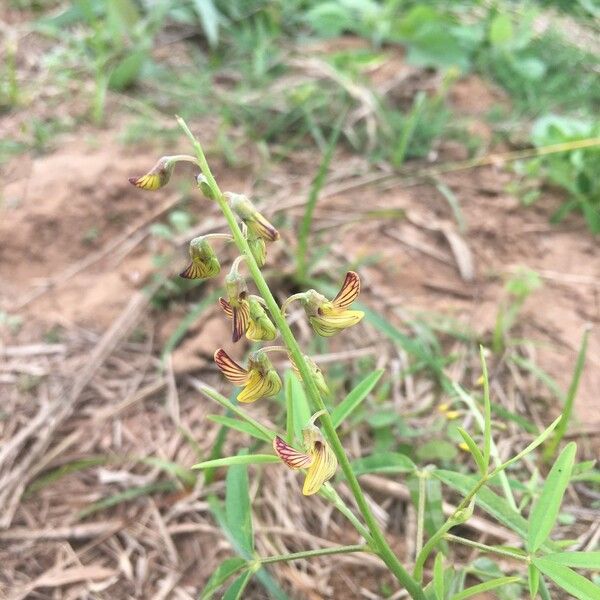
Plant Overview
Known as the Lanceleaf Rattlebox, this sun-loving legume gets its name from the rhythmic percussion it provides when the wind blows through its dried pods. Originally a native of Africa, it has traveled the globe, often favored for its ability to "fix" nitrogen in tired soil while showing off elegant spikes of cheerful yellow blooms.
🔍 How to Identify
- 🌿 Slender Foliage: It features distinctive "trifoliate" leaves—meaning three narrow, lance-shaped leaflets join at a single point, giving the plant a delicate, airy appearance.
- 🟡 Pea-Like Blooms: The plant produces tall upright spikes (racemes) of bright yellow flowers. If you look closely, you’ll see delicate reddish-brown "pinstripes" decorating the petals.
- 🥁 The "Rattle" Pods: After flowering, it develops cylindrical, inflated pods. As these pods dry and turn purplish-black, the seeds inside break loose, turning every breeze into a tiny musical performance.
🏡 In Your Garden
- ☀️ Sun Seeker: This plant thrives in full sun and well-draining, sandy soil. It is incredibly drought-tolerant once established, making it a rugged choice for meadows or "wild" garden corners.
- 🌱 Natural Fertilizer: Because it is a legume, it works with soil bacteria to pull nitrogen from the air and store it in its roots. It is often used as a "green manure" to improve soil quality for future plantings.
- 🦋 Pollinator Magnet: The bright yellow flowers are a favorite stop for various bees and butterflies, providing a high-energy nectar source during the heat of the summer.
⚠️ Safety & Toxicity
- 🚫 Livestock Warning: The Lanceleaf Rattlebox contains pyrrolizidine alkaloids, which are toxic to horses, cattle, and goats. It should be removed from hay fields or grazing pastures.
- 🐾 Pets & Kids: All parts of the plant, especially the seeds, are considered toxic if ingested. It can cause liver distress, so it is best kept out of reach of curious dogs or small children.
✨ Fun Fact
The genus name Crotalaria comes from the Greek word krotalon, which means "castanet". It’s a direct reference to the way the seeds click-clack inside the dried pods, sounding just like the handheld percussion instruments used by Spanish dancers!

Detailed Care Instructions
To grow Crotalaria lanceolata plant, you can follow these steps:
- Climate and soil requirements: Crotalaria lanceolata prefers warm climates and well-drained soil. Ensure that the climate of your region and the soil conditions are suitable for its growth.
- Seeds: Obtain Crotalaria lanceolata seeds from a reputable nursery or online supplier.
- Planting time: Sow the seeds in the spring after the last frost date in your area, as Crotalaria lanceolata is a warm-season plant.
- Seed treatment: Soak the seeds in warm water overnight or scratch the seed coat to increase germination rates.
- Germination: Start germinating the seeds indoors by placing them in pots or trays filled with seed-starting mix. Press the seeds lightly into the soil, ensuring good seed-to-soil contact.
- Light and temperature: Crotalaria lanceolata requires full sun for optimum growth. Keep the seeds in a warm location, ideally between 70-85°F (21-29°C).
- Watering: Keep the soil moist but not waterlogged during the germination process. Once the seedlings emerge, reduce watering but ensure the soil is not allowed to dry out completely.
- Transplanting: Once the seedlings have grown to a suitable size (around 2-3 inches), they can be transplanted into larger pots or directly into the garden. Ensure a spacing of about 12-18 inches between plants.
- Garden planting: If planting outdoors, choose a well-draining location with full sun exposure. Prepare the soil by removing any weeds or debris and amend it with organic matter, such as compost, to improve fertility and drainage.
- Maintenance: Water the plants regularly, especially during dry periods, but avoid overwatering. Mulching around the plants can help retain moisture and suppress weed growth. Monitor for any pests or diseases and take appropriate measures if needed.
- Harvesting: Crotalaria lanceolata typically blooms in the summer, and you can expect flowers to appear 10-12 weeks after planting. Harvest the seeds once they mature and turn brown. Allow them to dry before storing them in a cool, dry place or use them for future planting.
Remember to check with local gardening resources for any specific regional recommendations or restrictions regarding the cultivation of Crotalaria lanceolata.

Place in a bright room that is sun drenched almost all day. Or directly in a south-facing window.

To water this plant, you should allow the soil to dry out partially between waterings, as it prefers to grow in well-draining soil. This may mean watering once or twice a week depending on the environment and conditions. When watering, it is suggested to water the soil directly and avoid getting water on the leaves to prevent fungal issues. Additionally, make sure the pot has good drainage and excess water is able to escape so that the plant is not sitting in water-saturated soil.
To fertilize this plant, first choose a balanced, slow-release fertilizer with equal parts nitrogen, phosphorus, and potassium. Mix the fertilizer with the soil around the base of the plant, avoiding direct contact with the stem. Water the plant thoroughly before and after fertilizing to ensure proper distribution of nutrients. Fertilize once every three to four weeks during the growing season, and decrease frequency during winter months. Be careful not to over-fertilize, as this can damage the plant and decrease its overall health.
The ideal soil for Crotalaria Lanceolata plant is well-drained and fertile with a pH level of 6.0 to 7.5. The soil should be loose and crumbly, allowing air to circulate around the roots and preventing waterlogging. It should also retain moisture to ensure adequate hydration for the plant. Adding organic matter, such as compost or aged manure, to the soil can enhance its fertility and improve its structure. Avoid using heavy clay or sandy soils as they may not provide enough nutrient and water retention for the plant. Additionally, the plant requires full sunlight exposure for optimal growth and flowering.
Crotalaria Lanceolata plant can be propagated through stem cuttings. Take a few healthy stem cuttings from the parent plant and dip them in rooting hormone powder. Plant the cuttings in a well-draining potting soil mix and keep the soil moist. Place the pot with the cuttings in a semi-shaded location. Keep the soil moist but not waterlogged. After a couple of weeks, the cuttings should develop roots, and you can transplant them into individual pots or directly into the ground. In addition, Crotalaria Lanceolata plant can also be propagated through seed germination. Collect the mature seeds from the parent plant, soak them in warm water for a few hours, and sow them in a well-draining potting mix. Keep the soil moist and place the pot in a warm and bright location. The seeds will germinate within two to three weeks, and you can transplant the seedlings into individual pots or directly into the ground.








