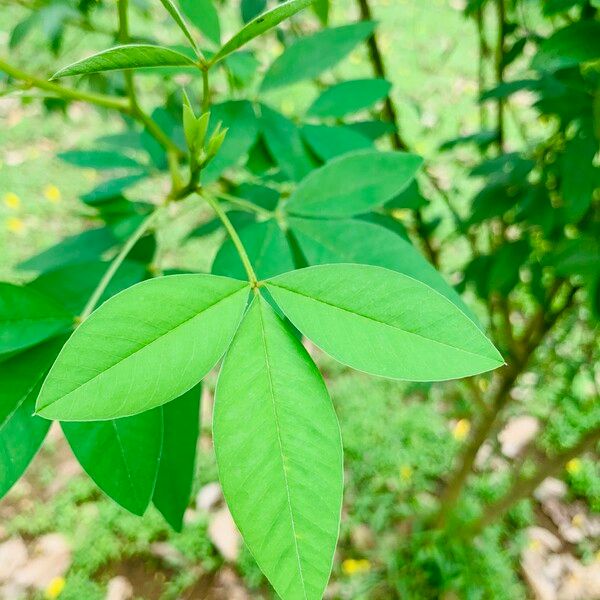
Plant Overview
Commonly known as the Showy Rattlebox, this vibrant member of the pea family is famous for the musical sound its dried seed pods make in the wind. Originally hailing from Central and South America, it has traveled the globe thanks to its striking sunshine-yellow flowers and its ability to thrive in tough conditions. While it is often admired for its beauty and soil-healing properties, it hides a toxic secret that every pet owner and gardener should know.
🔍 How to Identify
- 🌼 Golden Blooms: The flowers are bright yellow, pea-shaped, and usually grow in long, upright clusters (racemes) that stand out against the green foliage.
- 🍃 Trifoliate Leaves: It features leaves divided into three distinct leaflets, similar to a large clover, which often have a soft, silvery sheen on the underside.
- 🫘 Musical Pods: The plant produces smooth, inflated seed pods that turn from green to a dark purplish-brown; when dry, the loose seeds inside "rattle" when shaken.
🏡 In Your Garden
- 🌱 Soil Rebuilder: As a legume, the Showy Rattlebox works with soil bacteria to "fix" nitrogen, pulling it from the air and depositing it into the ground, which can actually improve the soil for future plants.
- ☀️ Sun & Space: It thrives in full sun and can become quite shrubby; however, it has a deep taproot that makes it very difficult to transplant once it has settled in.
- 🦋 Butterfly Host: It is a critical host plant for several species of butterflies and moths, including the Ornate Bella Moth, which uses the plant’s chemicals to make itself distasteful to predators.
⚠️ Safety & Toxicity
- 🚫 High Toxicity: This plant contains pyrrolizidine alkaloids, which are highly toxic if ingested.
- 🐾 Livestock & Pets: It is particularly dangerous for horses, cattle, and dogs. Chronic ingestion can lead to irreversible liver damage, so it should be cleared from grazing pastures and play areas.
- 🧒 Child Safety: The rattling pods are naturally attractive to children as "toys," but the seeds inside are the most toxic part of the plant and should never be consumed.
✨ Fun Fact
The genus name Crotalaria comes from the Greek word krotalon, which means "castanet" or "rattle." This is the exact same linguistic root used for the scientific name of the Rattlesnake (Crotalus)!

Detailed Care Instructions
To grow Crotalaria Micans, also known as velvet bean or rattlebox, follow these steps:
- Climate: Crotalaria Micans is a tropical plant and prefers warm and humid conditions. Ensure that your area has temperatures between 60-80°F (15-27°C) and high humidity levels.
- Sunlight: Choose a location that receives full sun or partial shade. Six hours of direct sunlight per day is ideal for the plant's growth.
- Soil: Crotalaria Micans prefers well-draining soil. Use a mix of fertile soil, organic matter, and sand to improve drainage. A pH between 5.5 and 6.5 is suitable.
- Planting: Sow the seeds directly into the soil. Plant them about 1/4 inch deep and space them 6-12 inches apart. Water the seeds immediately after planting to ensure soil contact.
- Watering: Water the plant regularly to keep the soil moist, but not waterlogged. Allow the top inch of soil to dry out between waterings. Avoid overwatering, as it can cause root rot.
- Fertilizer: Apply a balanced fertilizer every 2-3 weeks during the growing season to promote healthy growth. Follow the instructions on the fertilizer package for the correct dosage.
- Mulching: Applying a layer of organic mulch around the plant helps to retain moisture in the soil and suppress weed growth. Mulch also provides insulation during cooler temperatures.
- Support: Crotalaria Micans is a climbing plant that requires support. Provide a trellis, fence, or other structures for it to climb on. Regularly train the vines to grow along the support structure.
- Pruning: Prune the plant regularly to promote bushier growth and to remove any dead or damaged parts. Pinch back the growing tips to encourage lateral branching.
- Pest and Disease Control: Monitor the plant for pests, such as aphids or spider mites, and promptly address any issues. Ensure good air circulation around the plant to prevent fungal diseases.
- Harvesting: Harvest the seeds once the pods turn dry and brown. Remove the pods and extract the seeds. Allow the seeds to dry completely before storing them in a cool, dry place for future planting.
By following these steps, you can successfully grow Crotalaria Micans and enjoy its vibrant foliage and unique flowers.

Place in a bright room that is sun drenched almost all day. Or directly in a south-facing window.

To water this plant, you should first check the soil moisture level by inserting your finger about an inch into the soil. If it feels dry, water the plant deeply until the excess water begins to drain out of the bottom of the container. It is important not to overwater the plant, as it is sensitive to waterlogged soil. Allow the soil to dry out partially before watering again. When watering, aim to moisten the soil evenly around the plant, without getting water on the leaves or stem, which can lead to fungal growth or disease. Watering can be reduced during the plant's dormant period, but make sure the soil does not completely dry out.
To fertilize the Crotalaria Micans plant, apply a balanced fertilizer during the growing season, typically every two to three weeks. Use a fertilizer with an N-P-K ratio of 10-10-10 or similar. Dilute the fertilizer to half-strength before applying to avoid burning the plant. Water the plant before and after fertilization to avoid stress. Avoid fertilizing during the plant's dormant season.
When growing Crotalaria Micans, it's important to use soil that is well-draining and nutrient-rich. The ideal soil type for this plant is a loamy soil that is rich in organic matter. The pH level of the soil should be in the range of 5.0 to 7.0.
It's recommended to mix in some sand or perlite to improve drainage. Additionally, the soil should be kept moist but not waterlogged, as excessive moisture can cause root rot.
When planting Crotalaria Micans, it's also important to provide it with adequate sunlight, as it thrives in full sun conditions. This plant can be propagated easily by seeds or stem cuttings.
Maintaining proper soil moisture and regularly fertilizing with an all-purpose fertilizer can help promote healthy growth and flowering.
To propagate this plant, take a stem cutting with at least two nodes. Remove the lower leaves and dip the cut end in rooting hormone. Place the cutting in a pot filled with moist potting soil and keep it in a warm, humid location with bright indirect light. Mist the cutting regularly and keep the soil moist but not waterlogged. After a few weeks, roots should begin to form, at which point the cutting can be transplanted into its own pot.








