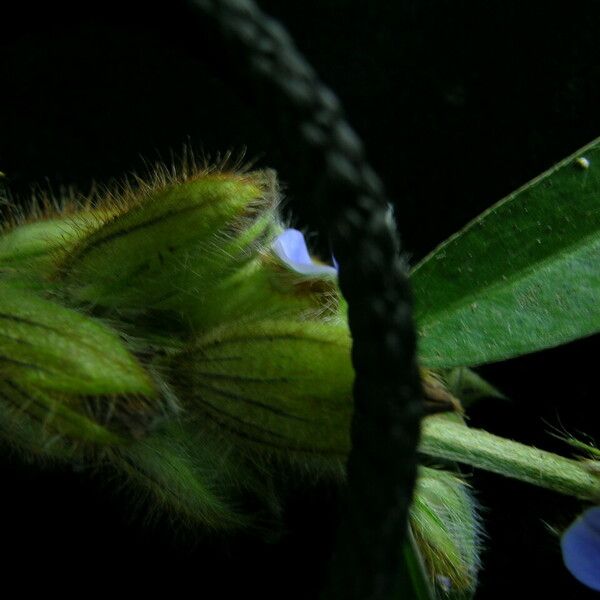
Plant Overview
Often called the Stiff-haired Rattlebox, this charming member of the pea family is a common sight in the sunny grasslands and hillsides of East and South Asia. It gets its whimsical name from its unique seed pods, which transform into tiny, natural "musical instruments" once they dry out. While it looks like a delicate wildflower, it is a hardy survivor that plays a vital role in its ecosystem.
🔍 How to Identify
- 💙 The Flowers: Features delicate, sky-blue to pale violet "pea-like" blossoms that typically cluster at the top of the stems.
- 🌿 The Foliage: The leaves are long, narrow, and lance-shaped. They are covered in fine, stiff hairs that give the plant a slightly silvery or fuzzy texture.
- 🔔 The "Rattle" Pods: After flowering, it produces short, inflated, and very hairy pods. When the seeds inside ripen and dry, they break loose and rattle loudly when shaken by the wind.
🏡 In Your Garden
- 🌱 Soil Improver: As a legume, this plant has a "superpower"—it works with soil bacteria to fix nitrogen, naturally fertilizing the earth around it for future plants.
- ☀️ Sun & Space: It thrives in open, sunny areas with well-draining soil. Because it develops a deep, sturdy taproot early on, it is very difficult to transplant; it’s best to sow seeds exactly where you want them to stay.
- 🦋 Wildlife Magnet: Its blue blooms are a favorite for various specialized bees and small butterflies, making it a great choice for a wilder, pollinator-friendly landscape.
⚠️ Safety & Toxicity
- 🚫 Toxic to Livestock and Pets: Like many members of the Crotalaria genus, this plant contains pyrrolizidine alkaloids, which are toxic if eaten.
- 🐕 Details: It is particularly dangerous for horses, cattle, and dogs if ingested in large quantities, as the toxins can cause slow-acting but serious liver damage. It is best kept away from grazing areas or curious pets.
✨ Fun Fact
The genus name Crotalaria comes from the Greek word krotalon, which translates to "castanet" or "rattle." This is the same root word used for the scientific name of the Rattlesnake (Crotalus)!

Detailed Care Instructions

Place in a bright room that is sun drenched almost all day. Or directly in a south-facing window.

Water-loving plants flourish in wet or sloppy soil and near ponds. The extensive root system enables these plants to absorb plenty of water. The surface of the soil should be kept moist at all times. Place your pot in a container filled with water to guarantee that plants get enough water. If the ground becomes dry, it is recommended that you water it well. Plants in smaller pots will need to be watered more frequently. Water the soil in which the plant is standing thoroughly using a watering can.








