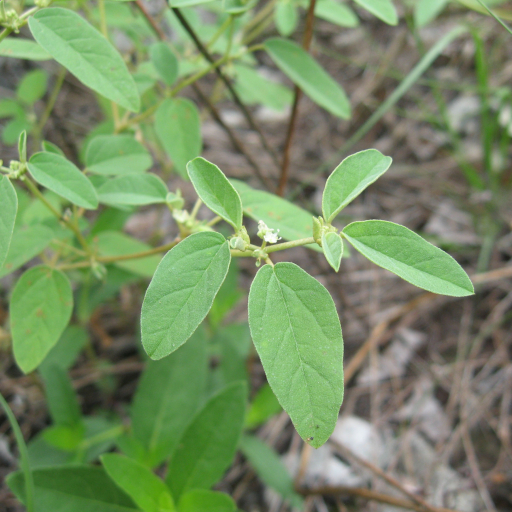
Plant Overview
Often called Prairie Tea or One-seeded Croton, this hardy annual is a staple of the American Midwest and South. While it might look like a humble weed at first glance, its dusty, silvery-green foliage gives it a rustic charm that reflects its tough-as-nails personality. Historically, it earned its nickname because some early settlers supposedly used the leaves to brew a medicinal tea—though modern experts suggest admiring it from a distance instead.
🔍 How to Identify
- 🌿 Dusty Foliage: The leaves and stems are covered in tiny, star-shaped hairs (stellate), giving the whole plant a distinctive grayish-green or "frosted" appearance.
- 🍃 Simple Leaves: The leaves are oval-shaped with smooth edges, lacking the teeth or lobes found on many of its cousins.
- 🌱 Branching Habit: It typically grows in a low, bushy mound, often branching out repeatedly in pairs to create a dense, rounded silhouette.
🏡 In Your Garden & Nature
- ☀️ Sun Seeker: This plant is a true sun-worshiper. It thrives in the hottest, driest parts of a landscape where other plants might wither, often popping up in rocky glades or along gravel roadsides.
- 🦅 Wildlife Magnet: While humans should avoid eating it, the seeds are a gourmet feast for ground-feeding birds. Mourning doves, in particular, are known to flock to these plants to forage for their protein-rich seeds.
- 🏜️ Soil Specialist: It prefers "poor" soil, specifically alkaline or limestone-heavy ground. If you find it in your yard, it’s a sign that your soil is well-drained and perhaps a bit rocky.
⚠️ Safety & Toxicity
- 🚫 Skin Irritant: Like many members of the Spurge family (Euphorbiaceae), Prairie Tea contains a clear-to-milky sap that can cause contact dermatitis or skin rashes in sensitive individuals.
- 🐾 Pet Warning: The plant is generally considered toxic if ingested by pets or livestock. It contains compounds that can lead to gastrointestinal distress, so it’s best kept away from curious dogs or grazing horses.
✨ Fun Fact
The species name monanthogynus literally translates to "one-flowered female." This refers to the plant's unique botanical quirk where the female flowers usually sit solitary at the base of the flower clusters, eventually producing just a single seed per pod!

Detailed Care Instructions
To grow a Croton Monanthogynus plant, you can follow these steps:
- Choose a suitable location: Croton Monanthogynus plants prefer bright indirect sunlight. Choose a spot in your home or garden where the plant can receive at least 6 hours of sunlight per day.
- Choose the right soil: Croton Monanthogynus plants require well-draining soil. Use a potting mix that is rich in organic matter and has good drainage. You can also add perlite or sand to improve the drainage.
- Select a container: Select a container with drainage holes to allow excess water to escape. The size of the container should be proportionate to the size of the plant.
- Watering: Water the plant when the top inch of soil feels dry. Ensure that you water thoroughly, until water drains out from the bottom of the container. Avoid overwatering, as excessive moisture can lead to root rot.
- Humidity: Croton Monanthogynus plants prefer high humidity. You can increase humidity by placing a tray filled with water near the plant or using a humidifier.
- Fertilization: Feed the plant with a balanced, water-soluble fertilizer every 4-6 weeks during the growing season (spring and summer). Follow the instructions on the fertilizer packaging for proper dosage.
- Pruning: Prune the plant periodically to maintain its shape and remove dead or unhealthy leaves. This will also help promote bushier growth.
- Pests and diseases: Inspect the plant regularly for pests like spider mites, mealybugs, or scale insects. If detected, treat the plant with an appropriate pesticide or insecticidal soap.
- Propagation: Croton Monanthogynus plants can be propagated through stem cuttings. Take a 4-6 inch cutting from a healthy plant, remove the lower leaves, and place it in a container with moist soil. Keep the cutting in a warm, humid environment until roots develop.
Remember that Croton Monanthogynus plants are sensitive to cold temperatures, so protect them from drafts or cold air. With proper care and attention, your Croton Monanthogynus plant should grow well and add beauty to your space.

Place in a bright room that is sun drenched almost all day. Or directly in a south-facing window.

Croton Monanthogynus is a plant that requires well-draining soil to prevent waterlogging and root rot. To water this plant, it is important to check the soil moisture level before adding water. The best way to do this is by inserting your finger into the soil up to your knuckle. If the soil feels dry, it is time to water the plant, but if the soil is still damp, wait a few more days before watering.
When watering this plant, it is best to use room temperature water, preferably collected rainwater or distilled water, to avoid the accumulation of minerals that can harm the plant. Pour the water slowly and evenly over the soil until it begins to flow out of the bottom of the pot. This ensures that the water reaches the roots where it is needed most.
Do not allow the plant to sit in water as this can lead to root rot. After watering, allow the excess water to drain out of the pot, and then empty the drainage tray. The frequency of watering will depend on the size of the pot, the amount of light, and temperature of the environment, but generally, Croton Monanthogynus plant prefers to be kept evenly moist, not saturated or dried out completely.
To fertilize this plant, use a balanced fertilizer with a ratio of 10-10-10 or 20-20-20, applied every 2-3 months during the growing season (spring and summer). Make sure to dilute the fertilizer according to package instructions before applying, and water the plant well before and after fertilizing. Avoid fertilizing during the dormant season (fall and winter) when the plant's growth has slowed down.
Croton Monanthogynus plant prefers a well-draining soil that is slightly acidic and rich in nutrients. The ideal soil mix should contain a combination of organic matter, such as peat moss or compost, along with a coarse material like sand or perlite to help with drainage. Additionally, it is important to avoid using heavy soils or those with high levels of clay, as these can lead to waterlogged roots and hinder growth. Overall, a fertile and well-aerated soil mix will promote healthy growth and development for this plant.
Croton Monanthogynus is a plant species that can be propagated through various methods. One of the easiest and most effective ways is through stem cuttings.
To propagate Croton Monanthogynus using stem cuttings, follow these steps:
- Start by selecting healthy stem cuttings from a mature and vibrant plant that has plenty of new growth.
- Use a clean and sharp gardening scissors or knife to take cuttings from the stem. Each cutting should be around 4-6 inches long and should have at least two or three nodes -these are the tiny growth areas on the stem-.
- Remove all the leaves except for a few at the top of the stem. This will allow the newly propagated plant to focus its energy on growing roots rather than supporting leaves.
- Dip the base of the cuttings into rooting hormone powder to promote root growth.
- Prepare a pot with good quality soil that is moist but not waterlogged.
- Insert the cuttings into the soil, making sure to plant them at a depth where only the remaining leaves are above the soil.
- Cover the pot with a plastic bag to create a greenhouse-like environment. This will help keep the soil moist and promote the growth of roots and new leaves.
- Place the pot near a window with indirect light to allow photosynthesis and avoid the direct sun that can burn the leafs and buds.
- Check the soil moisture regularly and water when it feels dry to the touch. Do not overwater or let the soil dry completely.
- After a few weeks, carefully remove the plastic bag and check for root growth by gently tugging on the cuttings. If they resist, it indicates that roots have formed.
- Once the roots have established, the propagated plants can be planted in their own pot or in the garden soil, if the outside temperature and humidity are stable enough.








