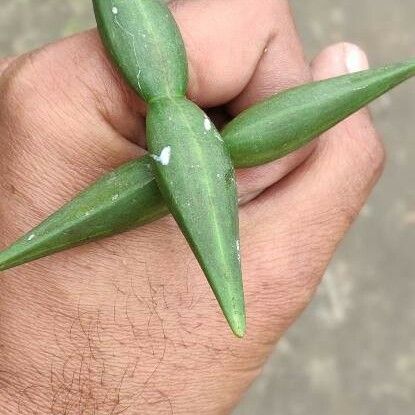
Plant Overview
Known as the Wax Leaved Climber or the False Sarsaparilla, Cryptolepis buchananii is a vigorous, woody vine with a rich history in Ayurvedic traditions. Often found draping over trees in the tropical forests of South Asia, it is prized for its elegant, glossy foliage and its resilient climbing nature. In many cultures, it is whispered to be a "bone-mender" due to its traditional medicinal uses.
🔍 How to Identify
- 🌿 The Foliage: The leaves are smooth, shiny, and leathery (hence the "wax leaved" name). They are a deep emerald green with a prominent pale mid-rib that creates a striking contrast.
- 💧 Milky Latex: If a leaf or stem is broken, the plant exudes a thick, milky white sap, a classic hallmark of many climbing vines in this family.
- 🌼 The Blooms: It produces clusters of small, star-shaped flowers that range from pale greenish-yellow to creamy white. They aren't particularly showy from a distance, but they possess a delicate, intricate beauty up close.
🏡 In Your Garden
- 🪜 The Need for Support: As a "liana" (a long-stemmed, woody vine), this plant is a natural-born climber. In a garden setting, it requires a sturdy trellis, fence, or arbor. Without something to grab onto, it will sprawl across the ground in search of a vertical host.
- ☀️ Light and Drainage: It thrives in bright, indirect light or dappled sun. Because it originates from forest edges, it dislikes "wet feet." Ensure your soil is well-draining; adding a bit of sand or perlite to your potting mix will keep its roots happy and prevent rot.
- ✂️ Growth Management: This vine is a fast grower once established. Regular pruning is recommended to keep it from overwhelming nearby plants or escaping its designated area.
⚠️ Safety & Toxicity
- 🚫 Skin Irritant: The milky latex (sap) contains compounds that can cause mild to moderate skin irritation or dermatitis in sensitive individuals. It is best to wear gloves when pruning.
- 🐾 Pet & Child Safety: While used medicinally in very specific preparations, the raw plant and its sap should be considered toxic if ingested. Keep it out of reach of curious pets and children, as ingestion can lead to stomach upset or more severe reactions.
✨ Fun Fact
In Thailand, this plant is known as Thao-En-On. It is a staple ingredient in traditional herbal compresses used by massage therapists to soothe aching muscles and joints, earning it a reputation as a natural "body mechanic" in the plant world!

Detailed Care Instructions
Growing Cryptolepis buchananii, an interesting plant known for its traditional uses, can be a rewarding endeavor. Here are some guidelines to help you grow this plant successfully:
1. Climate and Environment:
- Climate: Cryptolepis buchananii thrives in tropical and subtropical climates.
- Temperature: The plant prefers warm temperatures, ideally between 20°C to 30°C (68°F to 86°F).
- Humidity: Moderate to high humidity levels support its growth.
2. Soil Requirements:
- pH Level: The ideal pH level for the soil is between 5.5 and 7.5.
- Soil Type: Well-draining soil is essential. Loamy soil enriched with organic matter works best.
- Moisture: The soil should be kept consistently moist but not waterlogged.
3. Planting:
- Seeds: Sow seeds directly into the soil or start them in seed trays. Make sure they are covered lightly with soil.
- Cuttings: You can also propagate using stem cuttings. Take cuttings of 10-15 cm (4-6 inches) in length from a healthy plant.
- Spacing: Plant them at least 30 cm (12 inches) apart to give them room to grow.
4. Watering:
- Regular watering is essential, especially during the dry season. However, avoid overwatering as it can lead to root rot.
- Mulching can help retain moisture in the soil.
5. Light:
- Cryptolepis buchananii prefers full sunlight but can tolerate partial shade.
- Ensure the plant gets at least 6 hours of sunlight per day for optimal growth.
6. Fertilization:
- Use a balanced fertilizer (such as 10-10-10) once a month during the growing season.
- Organic fertilizers like compost or well-rotted manure can also be beneficial.
7. Pruning and Maintenance:
- Regular pruning helps maintain the plant's shape and encourages new growth.
- Remove any dead or diseased parts of the plant to prevent the spread of infections.
8. Pest and Disease Management:
- Common pests may include aphids, mites, and whiteflies. Use insecticidal soap or neem oil as needed.
- Ensure good air circulation around the plant to prevent fungal diseases. If fungal infections occur, treat with appropriate fungicides.
9. Harvesting:
- If you are growing Cryptolepis buchananii for medicinal purposes, leaves and stems can typically be harvested once the plant is well-established.
- Harvest leaves when they are mature but still tender, usually in the morning after the dew has dried.
10. Overwintering:
- If you are in a region with cold winters, consider growing Cryptolepis buchananii in containers that can be moved indoors.
- Ensure the indoor environment mimics the conditions mentioned above (adequate light, warmth, and humidity).
Growing Cryptolepis buchananii requires some attention to environmental conditions and regular care, but with the right approach, you can successfully cultivate this unique and valuable plant.

Place in a window with dappled sun or a spot in the middle of a room. Or directly in a window facing west or east.

Watering Cryptolepis buchananii requires careful attention to the plant's specific needs, ensuring optimal growth and health. Here’s a detailed guide:
### Understanding Plant Needs
1. Soil Moisture: This plant thrives in well-drained soil but requires consistent moisture. It should not be waterlogged or allowed to dry out completely.
2. Watering Frequency:
- Growing Season: During the active growing portion of the year, typically in spring and summer, water the plant more frequently. The top inch of soil should be kept consistently moist.
- Dormant Season: In fall and winter, reduce the frequency. Allow the soil to dry out slightly between watering sessions to prevent root rot.
3. Watering Method:
- Even Moisture Distribution: Use a watering can or a gentle shower setting on a hose to evenly distribute water across the soil surface.
- Deep Watering: Ensure that water penetrates deeply to encourage root growth. This can be achieved by watering slowly and allowing the water to soak in.
4. Water Quality: Utilize rainwater or distilled water if possible, as this plant may be sensitive to the chemicals found in tap water like chlorine or fluoride.
5. Environmental Considerations:
- Climate: In warmer climates, the plant may require more frequent watering, especially during hot and dry spells.
- Container vs. Ground: Plants in containers will typically need more frequent watering compared to those planted in the ground due to faster evaporation.
### Practical Tips
1. Mulching: Applying a layer of mulch around the base of the plant can help retain soil moisture and reduce the frequency of watering.
2. Watering Time: Early morning is the ideal time to water, as it allows leaves to dry out during the day, reducing the risk of fungal diseases.
3. Drainage: Ensure the soil or potting mix has excellent drainage. If the plant is in a pot, make sure it has drainage holes to prevent standing water.
### Monitoring
Regularly check the moisture level of the soil using your finger or a soil moisture meter. Adjust watering schedules based on findings to keep the soil consistently moist but not soggy.
By adhering to these guidelines, you can provide your Cryptolepis buchananii with the optimal conditions for growth, resulting in a healthy and thriving plant.
Here's a guide to fertilizing Cryptolepis Buchananii:
- Choosing the Right Fertilizer:
- Opt for a balanced, water-soluble fertilizer with an N-P-K (Nitrogen-Phosphorus-Potassium) ratio of around 10-10-10 or 20-20-20.
- Alternatively, use a slow-release, granular fertilizer if you prefer less frequent applications.
- Opt for a balanced, water-soluble fertilizer with an N-P-K (Nitrogen-Phosphorus-Potassium) ratio of around 10-10-10 or 20-20-20.
- Frequency:
- During the growing season (typically spring through early fall), fertilize the plant every 4-6 weeks.
- Reduce or stop fertilization in the late fall and winter months when the plant's growth naturally slows down.
- During the growing season (typically spring through early fall), fertilize the plant every 4-6 weeks.
- Application:
- Dissolve the required amount of water-soluble fertilizer in water according to the manufacturer's instructions.
- Water the plant thoroughly with the fertilizer solution, ensuring even distribution around the root zone.
- For granular fertilizers, sprinkle the recommended amount evenly around the base of the plant, then water well to help the fertilizer reach the root zone.
- Dissolve the required amount of water-soluble fertilizer in water according to the manufacturer's instructions.
- Amount:
- Be cautious not to over-fertilize. Follow the dosing instructions on the fertilizer package carefully.
- Over-fertilization can lead to nutrient imbalances and may harm the plant.
- Be cautious not to over-fertilize. Follow the dosing instructions on the fertilizer package carefully.
- Monitoring:
- Keep an eye on the plant for signs of nutrient deficiency or excess, such as yellowing leaves or burnt leaf tips.
- Adjust fertilization accordingly based on the plant's response and growth patterns.
Always ensure the plant is well-watered, as this helps the roots absorb the nutrients more effectively. Healthy soil and regular monitoring will support the overall vitality of Cryptolepis Buchananii.
- Keep an eye on the plant for signs of nutrient deficiency or excess, such as yellowing leaves or burnt leaf tips.
Cryptolepis buchananii requires well-draining soil for optimal growth. Here are the detailed characteristics and components of the soil to use for cultivating this plant:
- Soil Texture:
- Loamy Soil: The ideal soil should be loamy, which is a balanced mixture of sand, silt, and clay. This texture ensures that the soil retains enough moisture while also allowing excess water to drain away, preventing waterlogging.
- Sandy Loam: Including a significant proportion of sand helps improve drainage and aeration.
- Clay Loam: Small amounts of clay can help retain nutrients and moisture.
- Loamy Soil: The ideal soil should be loamy, which is a balanced mixture of sand, silt, and clay. This texture ensures that the soil retains enough moisture while also allowing excess water to drain away, preventing waterlogging.
- pH Level:
- The soil should be slightly acidic to neutral, with a pH range of around 6.0 to 7.5. This pH range is suitable for nutrient availability and uptake by the plant roots.
- The soil should be slightly acidic to neutral, with a pH range of around 6.0 to 7.5. This pH range is suitable for nutrient availability and uptake by the plant roots.
- Organic Content:
- Compost: Incorporating well-decomposed compost or organic matter enriches the soil with essential nutrients and improves its water-holding capacity and structure.
- Leaf Mold or Aged Manure: These organic amendments also contribute to soil fertility and microbial activity, enhancing root development and plant health.
- Compost: Incorporating well-decomposed compost or organic matter enriches the soil with essential nutrients and improves its water-holding capacity and structure.
- Drainage:
- Ensure that the soil has excellent drainage properties. You can improve drainage by adding coarse sand or fine gravel to the soil mix.
- Raised beds or mounds can be beneficial in areas where natural drainage is poor.
- Ensure that the soil has excellent drainage properties. You can improve drainage by adding coarse sand or fine gravel to the soil mix.
- Nutrient Content:
- Nutrient-rich soil is crucial. A balanced fertilizer or organic amendments should be used to provide essential nutrients such as nitrogen, phosphorus, and potassium.
- Periodic soil testing can help determine nutrient levels and inform appropriate fertilizer application.
- Nutrient-rich soil is crucial. A balanced fertilizer or organic amendments should be used to provide essential nutrients such as nitrogen, phosphorus, and potassium.
- Aeration:
- The soil should be well-aerated to facilitate healthy root growth. Avoid soil compaction by regularly loosening the soil around the plant.
- The soil should be well-aerated to facilitate healthy root growth. Avoid soil compaction by regularly loosening the soil around the plant.
- Soil Preparation:
- Before planting, thoroughly till the soil to a depth of 12-15 inches (30-38 cm) to break up any compacted layers and mix in organic matter.
- Ensure the soil is free from weeds and other competing vegetation that can hamper the growth of the plant.
By paying attention to these soil characteristics and properly preparing and maintaining the planting site, you can ensure a conducive environment for the healthy growth of Cryptolepis buchananii.
- Before planting, thoroughly till the soil to a depth of 12-15 inches (30-38 cm) to break up any compacted layers and mix in organic matter.
Propagating Cryptolepis buchananii involves several steps to ensure successful growth. Here’s a detailed guide to doing it effectively:
Propagation by Stem Cuttings:
- Selection of Cutting:
- Choose a healthy, disease-free plant to take cuttings from.
- Select a semi-hardwood or green, pliable portion of the stem (typically a 4-6 inch cutting).
- Make sure the cutting has at least 2-3 nodes (the areas where leaves attach to the stem).
- Choose a healthy, disease-free plant to take cuttings from.
- Preparing the Cutting:
- Make a clean cut just below a node using a sterilized, sharp knife or pruning shears.
- Remove the leaves from the lower half of the cutting to reduce water loss and prevent rot when planted.
- Make a clean cut just below a node using a sterilized, sharp knife or pruning shears.
- Rooting Hormone Application:
- Dip the cut end of the cutting into a rooting hormone powder or gel to encourage root development. This step is optional but can increase the success rate.
- Dip the cut end of the cutting into a rooting hormone powder or gel to encourage root development. This step is optional but can increase the success rate.
- Planting Medium:
- Prepare a well-draining potting mix. A mixture of perlite, coarse sand, and peat moss or coconut coir works well.
- Moisten the potting mix slightly before planting.
- Prepare a well-draining potting mix. A mixture of perlite, coarse sand, and peat moss or coconut coir works well.
- Planting the Cutting:
- Insert the cut end of the cutting into the potting mix, ensuring at least one node is buried in the soil.
- Firm the soil around the cutting to remove air pockets and provide stability.
- Insert the cut end of the cutting into the potting mix, ensuring at least one node is buried in the soil.
- Microclimate Creation:
- Cover the pot with a clear plastic bag or a plastic dome to create a humid environment, which helps in reducing moisture loss from the cutting.
- Ensure the plastic does not touch the cutting by using sticks or wireframes to hold it up.
- Cover the pot with a clear plastic bag or a plastic dome to create a humid environment, which helps in reducing moisture loss from the cutting.
- Positioning:
- Place the pot in a warm, bright location with indirect sunlight. Avoid direct sunlight as it can overheat and dry out the cutting.
- Maintain a constant temperature around 70-75°F (21-24°C).
- Place the pot in a warm, bright location with indirect sunlight. Avoid direct sunlight as it can overheat and dry out the cutting.
- Moisture Management:
- Check the soil regularly to keep it moist but not soggy. Water as needed to maintain consistent moisture.
- Mist the cutting occasionally if the humidity levels are low.
- Check the soil regularly to keep it moist but not soggy. Water as needed to maintain consistent moisture.
- Root Development:
- Roots typically begin to develop within 4-6 weeks. To check root development, gently tug on the cutting. Resistance indicates root formation.
- Once a good root system has developed, you can transplant the cutting into a larger pot or outdoors, depending on your climate.
Propagation by Seeds:
- Roots typically begin to develop within 4-6 weeks. To check root development, gently tug on the cutting. Resistance indicates root formation.
- Seed Collection:
- Collect mature seeds from the plant. Seeds should be fully developed and dry before planting.
- Store seeds in a cool, dry place if not planting immediately.
- Collect mature seeds from the plant. Seeds should be fully developed and dry before planting.
- Seed Preparation:
- Soak seeds in warm water for 24 hours before planting to soften the outer coat and encourage germination.
- Soak seeds in warm water for 24 hours before planting to soften the outer coat and encourage germination.
- Sowing the Seeds:
- Fill a seed tray or small pots with a well-draining seed starting mix.
- Sow the seeds on the surface of the mix and lightly cover them with a thin layer of soil or sand.
- Mist the surface gently to moisten the soil without displacing the seeds.
- Fill a seed tray or small pots with a well-draining seed starting mix.
- Germination Conditions:
- Place the tray or pots in a warm, bright location with indirect sunlight.
- Cover with a clear plastic lid or plastic wrap to maintain humidity.
- Keep the soil consistently moist but not waterlogged.
- Place the tray or pots in a warm, bright location with indirect sunlight.
- Seedling Care:
- Once seedlings emerge, typically within 2-4 weeks, gradually acclimate them to lower humidity by removing the plastic cover.
- Provide adequate light and maintain soil moisture.
- When seedlings develop true leaves and are strong enough to handle, transplant them into larger pots or their permanent location.
General Care Post-Propagation:
- Once seedlings emerge, typically within 2-4 weeks, gradually acclimate them to lower humidity by removing the plastic cover.
- Watering: Ensure consistent moisture; the soil should be allowed to dry slightly between waterings.
- Light: Provide bright, indirect light. Some species may tolerate partial shade.
- Soil: Use well-draining soil suited to the plant's specific needs.
- Fertilization: Apply a balanced liquid fertilizer once a month during the growing season.
With these detailed steps, you should be able to successfully propagate Cryptolepis buchananii and enjoy growing this unique plant.








