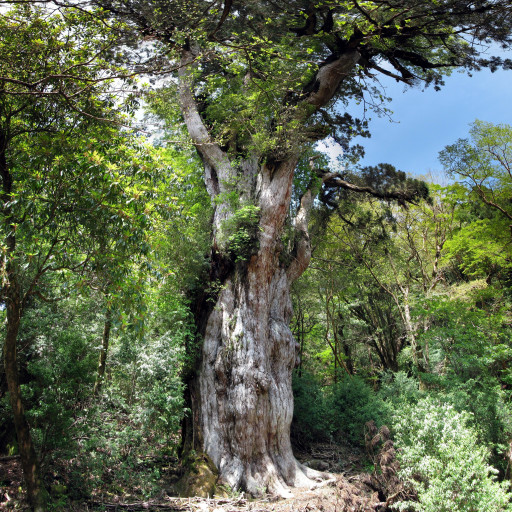
Plant Overview
The Cryptomeria japonica, more commonly known as the Japanese Cedar or Sugi, is the national tree of Japan and a cornerstone of East Asian forest aesthetics. Often found guarding ancient Shinto shrines and Buddhist temples, this majestic evergreen is beloved for its symmetrical, spire-like silhouette and its incredibly aromatic, reddish wood. While it looks like a prehistoric giant in the wild, many dwarf cultivars make it a popular choice for structured, peaceful home gardens.
🔍 How to Identify
- 🌲 Foliage Structure: The leaves are awl-shaped, needle-like, and arranged spirally around the twigs. They curve inward slightly, giving the branches a soft, rope-like appearance.
- 🪵 The Bark: One of its most striking features is its thick, reddish-brown bark that peels away in long, vertical strips, providing year-round textural interest.
- 🏀 Small Cones: It produces globular, brownish-green cones at the tips of its branches. These look like tiny, spiky wooden soccer balls and persist on the tree after releasing their seeds.
- 🎨 Winter Bronzing: Unlike many evergreens that stay bright green, the Sugi often takes on a beautiful bronze or plum hue during cold winter months as a natural protective response.
🏡 In Your Garden
- ☁️ Humidity is Key: This tree originates from regions with high rainfall and humidity. It struggles in dry, windy sites, where its needle tips may turn brown. If you live in a dry climate, regular misting or a sheltered spot is essential.
- 💧 Thirsty Roots: The Japanese Cedar hates "wet feet" but equally dislikes drying out completely. It prefers deep, rich, acidic soil that remains consistently moist. Think of it as a "forest floor" plant—it thrives on organic mulch.
- ✂️ Low Maintenance: Because of its naturally neat, pyramidal habit, it rarely requires pruning. In fact, many gardeners find that the less they touch it, the better it looks.
⚠️ Safety & Toxicity
- ✅ Status: Non-toxic and generally safe.
- 🤧 Allergy Alert: While not poisonous to touch or ingest, Cryptomeria japonica is a notorious producer of pollen. In Japan, it is the primary cause of hay fever (hayfever season is often called "Sugi-pollen season"). If you have severe seasonal allergies, you may want to plant it away from bedroom windows.
- 🐾 Pet Friendly: It is considered non-toxic to dogs, cats, and horses, making it a safe choice for pet-friendly landscapes.
✨ Fun Fact
The oldest known Japanese Cedar is a legendary tree called Jomon Sugi, located on the island of Yakushima. Scientists estimate it could be anywhere from 2,170 to 7,200 years old, meaning it may have been growing since the dawn of Japanese civilization!

Detailed Care Instructions
| Color | Non-Flowering |
| Soil Ph | Acidic |
| Humidity | Normal |
| Lighting | Full Sun |
| Soil Type | Moist, Rich, Well-Drained Soils |
| Bloom Time | Non-Flowering |
| Difficulty | Easy |
| Plant Type | Coniferous Evergreen |
| Mature Size | 50-60 Ft. Tall, 20-30 Feet Tall |
| Native Area | Japan |
| Temperature | 18°C - 24°C |
| Sun Exposure | Full Sun |
| Hardiness Zones | 5-8 |
To grow a Cryptomeria Japonica plant, also known as Japanese cedar or Sugi tree, follow these steps:
- Choose the right location: Cryptomeria Japonica prefer full sun to partial shade. Ensure the location has well-draining soil that doesn't stay waterlogged.
- Prepare the soil: Improve the soil with organic matter such as compost or well-rotted manure before planting. This will provide better drainage and nutrient content.
- Planting: Dig a hole twice as wide and the same depth as the root ball of the plant. Place the plant in the hole and backfill with soil, gently firming it around the roots. Water the plant thoroughly after planting.
- Watering: Cryptomeria Japonica needs regular watering during the first growing season to establish a strong root system. Water deeply and regularly, especially during dry spells, but avoid overwatering.
- Mulching: Apply a layer of organic mulch around the base of the plant to retain moisture, suppress weeds, and insulate the roots. Keep the mulch a few inches away from the trunk to prevent rot.
- Pruning: Minimal pruning is required, but if necessary, prune in late winter or early spring to remove dead or damaged branches. Avoid heavy pruning on mature trees as they have a naturally conical shape.
- Fertilization: Apply a slow-release balanced fertilizer specifically formulated for evergreen plants in early spring before new growth starts. Follow the instructions on the fertilizer packaging for accurate application rates.
- Pest and disease control: Cryptomeria Japonica is generally resistant to pests and diseases. However, keep an eye out for common issues like scale insects or fungal diseases, and treat them accordingly.
- Provide winter protection: In colder regions, protect the plant from winter winds and heavy snow by wrapping it in burlap or a protective covering.
- Monitor the plant's growth and overall health, providing care as needed. With proper care, Cryptomeria Japonica can grow well and reach heights of up to 100 feet (30 meters) in favorable conditions.
Remember to research the specific variety of Cryptomeria Japonica you have, as growth habits and care requirements may vary slightly.

Place in a bright room that is sun drenched almost all day. Or directly in a south-facing window.

To water this plant, make sure you keep the soil around it moist but not waterlogged. You can achieve this by watering it deeply once a week or more frequently if the weather is particularly hot and dry. Avoid watering the foliage directly as this can increase the likelihood of fungal diseases developing. Instead, water at the base of the plant, aiming for the soil around its roots. You can also mulch around the base of the plant to help retain moisture in the soil. Monitor the plant's leaves regularly to ensure they remain green and healthy. If you notice any signs of yellowing or wilting, it may be an indication that the plant needs more water.
To fertilize this plant, use a slow-release, balanced fertilizer with an N-P-K ratio of 10-10-10 or 12-12-12. Apply the fertilizer in early spring before new growth begins and again in mid-summer. Water the plant before and after fertilizing to prevent fertilizer burn. Spread the fertilizer evenly around the base of the plant, avoiding contact with the foliage. Follow the instructions on the fertilizer package for amount and frequency of application based on the size and age of the plant.
Cryptomeria Japonica plant prefers to be grown in a moist, well-draining soil that is rich in organic matter. The ideal soil pH for this plant is slightly acidic, ranging from 5.5 to 6.5. A loamy soil with good drainage and moderate fertility is best suited for this plant. It can tolerate a wide range of soil types but prefers soil that is not too heavy or too sandy. When planting, it is recommended to amend the soil with compost or other organic matter to improve soil quality and drainage. Avoid soil that is constantly waterlogged or has a high clay content, as this can cause root rot and other problems. It is important to ensure that the soil around the plant stays moist but not soggy.
Cryptomeria Japonica plant can be propagated through several techniques, including cutting, layering, and seed propagation. To propagate through cutting, select healthy stem cuttings, ideally with a few leaves, from the parent plant and prune any flowers or buds. The cuttings should be approximately 5-6 inches in length. Dip the cut end into rooting hormone powder and plant it in well-draining soil mix. Keep the pot in high humidity and bright but indirect light. The roots should grow in three to four weeks, and a new plant will take about six months to show healthy growth. For propagation through layering, select a healthy branch of the parent plant that is low to the ground and bend it gently to reach the soil surface. Use a sharp knife to scratch some bark off the portion that will be in contact with soil and apply rooting hormone. Bury it slightly in the soil and cover it with mulch. Water regularly and wait for the new plant to form roots, which can take a year or more. Lastly, seed propagation involves collecting seeds from a mature plant, sowing them in well-draining soil in a seedling pot, and placing them in a warm and bright location. The seeds should germinate in two to four weeks, and the new plant should be transplanted when it has grown big enough to handle.








