Plant Overview
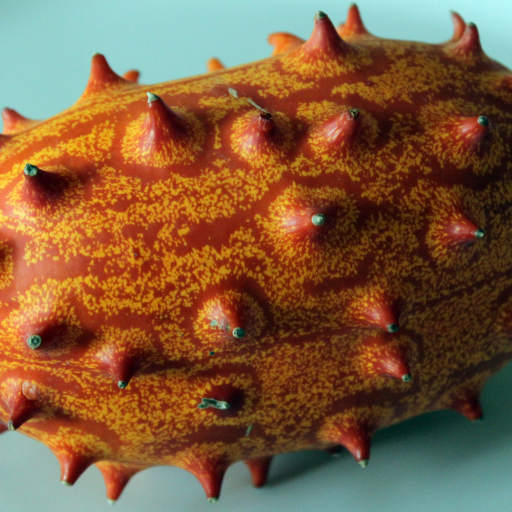
Often called the Kiwano, "African Horned Melon," or even the "Blowfish Fruit," this plant looks like it was plucked straight from a prehistoric era or a science fiction movie. Native to the semi-arid regions of Southern and Central Africa, it is a rugged, heat-loving vine from the cucumber family. Its striking, neon-orange fruit hides a refreshing, lime-green jelly interior that tastes like a citrusy mix of cucumber and banana.
🔍 How to Identify
- 🍈 The Spiky Fruit: The most recognizable feature is the oval fruit, roughly the size of a large pear, covered in stout, conical "horns." It transitions from a mottled green to a brilliant sunset orange when ripe.
- 🌿 Bristly Vines: The plant is a vigorous climber with thin, angled stems covered in rough, sandpaper-like hairs that help it grip surfaces.
- 🌼 Golden Blooms: It produces small, bright yellow five-petaled flowers. Because male and female flowers are separate on the same plant, you’ll often see tiny "mini-melons" at the base of the female blooms before they even open.
🏡 In Your Garden
- 🧗 Trellis Training: These vines are aggressive growers and love to climb. Providing a sturdy trellis or cattle panel keeps the fruit off the ground, preventing rot and making the spiky harvest much easier to manage.
- ☀️ Thirst for Heat: Coming from the Kalahari Desert, this plant is remarkably drought-tolerant. However, to get that juicy, jelly-like pulp, it needs consistent watering during the flowering stage and absolute full sun exposure.
⚠️ Safety & Toxicity
- ✅ Edible Status: The fruit is entirely safe for human consumption and is packed with Vitamin C and magnesium.
- 🧤 Physical Hazard: While not chemically toxic, the "horns" are sharp enough to puncture skin if handled roughly. Always wear garden gloves when harvesting.
- 🐾 Pets & Kids: The plant is generally considered non-toxic to dogs and cats, but the hairy stems and prickly fruit can cause physical irritation or a "scratchy" throat if a curious pet tries to chew on the vine.
✨ Fun Fact
The Horned Melon is so visually strange that it has been used as a "space fruit" in various sci-fi films and TV shows, most notably appearing in Star Trek: Deep Space Nine as an exotic alien delicacy!

Detailed Care Instructions
To grow Cucumis Metulifer, also known as the kiwano or horned melon, follow these steps:
- Climate: Kiwano plants thrive in warm climates with temperatures between 70-85°F (21-29°C). They require a long growing season of 90-120 days.
- Soil: Choose well-draining soil with a pH level of 6-6.5. The soil should be rich in organic matter and slightly sandy for better drainage.
- Planting seeds: Start by soaking the kiwano seeds in warm water for 24 hours before planting. This will help improve germination. Plant the seeds directly into the ground or containers, about 1 inch deep.
- Sunlight: Kiwano plants require full sun exposure for at least 6-8 hours a day.
- Watering: Water the plants regularly, keeping the soil moist but not waterlogged. Ensure the plants receive consistent watering throughout their growing period.
- Trellis or support: As the kiwano plant grows, it produces vines that can become quite long. Provide a trellis or support system for the vines to climb. This will save space and make harvesting easier.
- Fertilizer: Apply a slow-release organic fertilizer, such as compost or aged manure, before planting the kiwano seeds. Additionally, you can use a balanced liquid fertilizer every few weeks during the growing season.
- Pollination: Kiwano plants rely on bees and other insects for pollination. If the plants are kept indoors or in a greenhouse, manually pollinate the flowers using a paintbrush or by gently shaking the vines when flowers are open.
- Harvesting: Kiwano fruits are ready for harvesting when their skin turns orange-yellow and they feel slightly soft when gently squeezed. Cut the fruits from the vines using pruning shears or a sharp knife.
With proper care and suitable growing conditions, you can enjoy harvesting and eating your homegrown kiwano fruits.

Place in a bright room that is sun drenched almost all day. Or directly in a south-facing window.

Cucumis Metulifer is a type of plant that requires careful attention to watering in order for it to thrive. When watering this plant, it's important to ensure that the soil is consistently moist, but not too wet. The best way to achieve this is to water the plant deeply, allowing the water to penetrate the soil to a depth of at least a few inches. However, do not let the water pool on the surface of the soil, as this can lead to waterlogging and root rot. Additionally, it is recommended to water in the morning or evening, as watering during the hottest part of the day can cause the water to evaporate too quickly and won't soak the soil properly. Lastly, it's best to use room temperature water and avoid getting the leaves wet to prevent plant diseases.
To fertilize Cucumis Metulifer plants, follow these instructions:
- Choose a balanced fertilizer with equal ratios of nitrogen (N), phosphorus (P), and potassium (K). Look for a water-soluble or granular fertilizer specifically formulated for fruiting or flowering plants.
- Start fertilizing when the plants are established and have developed a few true leaves. This is usually around 3-4 weeks after germination.
- Dilute the fertilizer according to the package instructions. Use a watering can or sprayer to apply the fertilizer solution evenly to the soil around the base of the plant. Avoid applying fertilizer directly to the leaves, as this may cause burn.
- Apply the fertilizer every 2-3 weeks throughout the growing season, or as recommended on the fertilizer package. Be sure to adjust the application rate based on the size and growth of the plant.
- Water the plants thoroughly after fertilizing to help the nutrients reach the roots. Adequate watering is essential for the plant to take up and utilize the fertilizer properly.
- Monitor the plants for signs of nutrient deficiency or excess. Common signs of deficiency include yellowing leaves, stunted growth, and poor fruit development. If you notice any deficiencies, consider adjusting the fertilizer application rate or switching to a different type of fertilizer.
- Take care not to over-fertilize, as this can cause nutrient imbalances and plant stress. Follow the recommended application rates and avoid excessive use of fertilizers.
- Additionally, it's beneficial to incorporate organic matter, such as compost or well-rotted manure, into the soil before planting. This will provide a slow-release source of nutrients throughout the growing season.
Remember, it's always recommended to read and follow the specific fertilizer package instructions for optimal results.
For optimal growth and health, Cucumis Metulifer requires soil that is well-draining and rich in nutrients. A soil pH range of 6.0-7.5 is ideal. It is recommended to use a mixture of sand, perlite, and peat moss to improve drainage and aeration. Adding compost or other organic matter can also improve the soil's nutrient content. The soil should be kept consistently moist but not waterlogged, as this can lead to root rot. Finally, regular fertilization with a balanced fertilizer can help promote healthy growth and fruit production.
Cucumis Metulifer is a tropical plant that can be propagated through several methods. Here's a detailed guide on how to propagate this plant:
- Seeds: The most common and reliable method of propagation is by using seeds. To start, collect mature fruits from a Cucumis Metulifer plant. Cut open the fruit and remove the seeds, ensuring that they are fully ripe and viable. Rinse the seeds in water to remove any pulp or flesh adhering to them.
- Preparing seed trays: Fill a seed tray with a well-draining potting mix. You can also use a mixture of peat moss, perlite, and vermiculite. Moisten the potting mix with water so that it is uniformly damp but not soaking wet.
- Planting seeds: Spread the Cucumis Metulifer seeds evenly over the surface of the potting mix in the seed tray. Gently press the seeds into the soil to ensure good contact. Avoid burying them too deep as they require light to germinate. Cover the tray with a plastic dome or wrap it in a clear plastic bag to create a humid environment.
- Germination: Place the seed tray in a warm location, ideally between 70-85°F (21-29°C). Cucumis Metulifer seeds usually germinate within 7-14 days. Keep the potting mix consistently moist but not overly wet during the germination process.
- Transplanting seedlings: Once the seedlings have developed two to three true leaves, they can be transplanted into individual pots. Select pots that have drainage holes to prevent waterlogging. Fill the pots with a well-draining potting mix. Gently lift the seedlings from the seed tray, keeping their delicate roots intact, and transfer them to the individual pots.
- Providing optimal conditions: Place the pots in a well-lit area, preferably in a location that receives bright indirect sunlight. Maintain a temperature range of 68-77°F (20-25°C). Water the plants regularly, ensuring that the soil remains moist but not waterlogged. Monitor the plant for any signs of pests or diseases and take appropriate measures to address them.
- Growth and development: Cucumis Metulifer plants typically grow as sprawling vines. As they grow, provide support such as trellises or stakes to help the vines climb and avoid overcrowding. Regularly prune any dead or damaged foliage to promote healthy growth. The plants will eventually start flowering, and if pollinated, they will produce fruits.
By following these steps, you can successfully propagate Cucumis Metulifer and enjoy its unique characteristics and beauty in your garden or indoor space.
Common pests of the jelly melon include Spider mites, thrips, whiteflies. Make a habit of checking your jelly melon frequently for pests so that any infestations can be caught and managed early.








