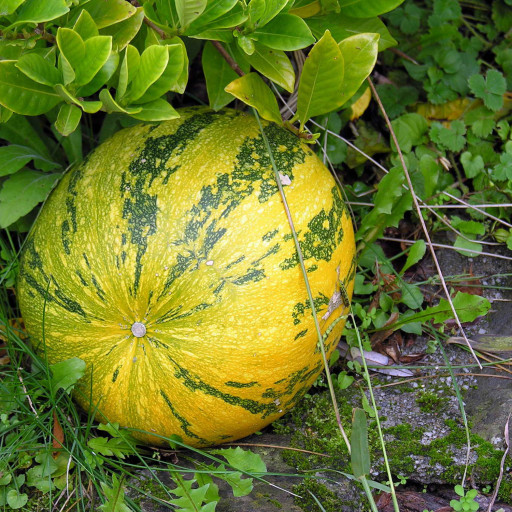
Plant Overview
Known as the "King of the Patch," Cucurbita maxima is the botanical powerhouse behind the world’s most massive pumpkins and flavorful winter squashes. Originating in South America, this species has been cultivated for thousands of years, evolving into diverse forms like the Blue Hubbard, Kabocha, and the legendary "Atlantic Giant." Whether it's destined for a prize-winning weigh-off or a creamy autumn soup, this plant is the ultimate symbol of harvest abundance.
🔍 How to Identify
- 🍃 The Leaves: Unlike the prickly, deeply lobed leaves of summer squash, C. maxima features massive, rounded, or kidney-shaped leaves. They are remarkably soft to the touch and lack the sharp "teeth" found on other species.
- 🌼 The Blooms: It produces large, bell-shaped golden flowers. You can tell the female flowers apart by the small, marble-sized fruit swelling at the base of the petals.
- 茎 The Fruit Stalk: One of the easiest ways to identify this species is by the "peduncle" (the stem attached to the fruit). It is thick, corky, and cylindrical, whereas other pumpkin species usually have a hard, five-sided, flared stem.
🏡 In Your Garden
- 🍽️ A Heavy Feeder: These plants are notorious "soil gluttons." To reach their full potential, they require deep, rich soil packed with organic matter and compost to fuel their explosive vine growth.
- 📏 Space Requirements: Give them room to roam! A single plant can easily send out vines reaching 20 to 30 feet. If you are short on space, look for "bush" varieties, or be prepared to prune the secondary runners.
- 🌱 Root Sensitivity: C. maxima has a sensitive taproot that dislikes being moved. To avoid transplant shock, it is best to sow seeds directly into the garden once the soil is consistently warm.
⚠️ Safety & Toxicity
- ✅ Status: Entirely non-toxic and highly nutritious.
- 🐶 Pet Friendly: Cooked, unseasoned pumpkin is a fiber-rich superfood often used to help settle the stomachs of dogs and cats.
- 👅 The Bitter Warning: If a squash tastes exceptionally bitter, do not eat it. On rare occasions, wild cross-pollination can cause high levels of "cucurbitacins," which can cause digestive upset.
✨ Fun Fact
🏆 Every single world-record-breaking giant pumpkin ever grown belongs to the Cucurbita maxima species. The current world record stands at over 2,700 pounds—roughly the weight of a small compact car!

Detailed Care Instructions
Yes, they are. While some patience is needed before harvest, plants grow easily and bush varieties are available for smaller spaces.
Does winter squash grow fast?
Yes, they do grow quickly. Vines can grow quite large and spill off the edges of the garden. Train them away from other plants as they grow longer.
What is the difference between winter squash and summer squash?
The main difference is the skin. Most summer squash can be harvested before it matures when the skin is tender and even more flavorful. Summer squash matures in a shorter period of time and, when grown in ideal conditions, is a prolific producer of fruits. Winter squash usually produces just 4 to 5 fruits per vine.
| Color | Orange, Yellow |
| Soil Ph | Slightly Acidic To Neutral |
| Lighting | Full Sun |
| Soil Type | Loamy |
| Bloom Time | Summer |
| Plant Type | Vegetable |
| Mature Size | 9-30 In. Tall, 10-12 Ft. Spread |
| Native Area | North America |
| Sun Exposure | Full Sun |
| Hardiness Zones | 3-9 |
To grow Cucurbita Maxima plants, also known as squash or pumpkins, follow these steps:
- Choose a suitable planting location: Cucurbita Maxima plants require full sun, well-drained soil, and ample space to spread out. Make sure the area receives at least 6-8 hours of direct sunlight per day.
- Prepare the soil: Loosen the soil and remove any rocks, weeds, or other debris. Mix in organic matter, such as compost or well-rotted manure, to improve fertility and drainage.
- Start seeds indoors (optional): If you want to get a head start, you can start seeds indoors about 2-4 weeks before the last expected frost date. Plant the seeds in biodegradable pots filled with seed-starting mix. Keep them moist and provide ample light until it's time to transplant them outdoors.
- Transplant or direct sow the seeds: Wait until all danger of frost has passed and the soil has warmed up before transplanting or sowing the seeds directly into the ground. Space the plants or sow the seeds about 3-5 feet apart, allowing enough room for the vines to spread.
- Water regularly: Cucurbita Maxima plants need consistent moisture, especially when they're young and during fruit development. Water deeply, but avoid overwatering or allowing the soil to become waterlogged, as this can lead to root rot.
- Mulch: Apply a layer of organic mulch, such as straw or wood chips, around the base of the plants to help conserve moisture, suppress weeds, and regulate soil temperature.
- Support the vines (if necessary): Cucurbita Maxima plants can grow to be quite large, with long trailing vines. If desired, you can provide support, such as trellises or fences, to keep the vines off the ground and prevent them from taking up too much space.
- Fertilize appropriately: Cucurbita Maxima plants benefit from regular feeding. Apply a balanced fertilizer once a month or use compost or well-rotted manure to provide nutrients.
- Monitor for pests and diseases: Keep an eye out for common pests like aphids, cucumber beetles, and squash bugs. Also, watch for diseases like powdery mildew. Take preventative measures, such as practicing good sanitation, using organic pest control methods, and choosing disease-resistant varieties if available.
- Harvest the fruits: Depending on the variety, Cucurbita Maxima plants can take 80-120 days to mature. Once the fruits are fully grown and their rinds have hardened, you can harvest them by cutting the stem with a sharp knife or pruners. Leave a short stem attached to the fruit for better storage.
Remember to research specific care instructions for the particular variety of Cucurbita Maxima plant you are growing, as there may be slight variations in optimal conditions and care requirements.

Place in a bright room that is sun drenched almost all day. Or directly in a south-facing window.

To water this particular plant, it is important to maintain a consistent moisture level in the soil. This can be achieved by watering deeply and thoroughly, making sure the soil is saturated all the way to the root system. It is best to water in the early morning or late afternoon to prevent evaporation and reduce the risk of fungal disease. Avoid getting water on the leaves or fruit, as this can also increase the risk of disease. Additionally, the plant may require more frequent watering during periods of high temperatures or drought conditions.
To fertilize this plant, begin by preparing the soil with organic matter to provide the necessary nutrients. It is recommended to use a balanced fertilizer with equal amounts of nitrogen, phosphorus and potassium. Apply the fertilizer to the soil around the base of the plant, taking care not to get any on the leaves. Water the plant well after applying the fertilizer. As the plant develops, continue to fertilize every 4-6 weeks, leaving enough time for the plant to utilize the nutrients. Check the soil regularly to ensure it stays moist and adjust watering and fertilizing as needed.
For best results when planting this specific type of plant, it is important to use a well-draining soil with a pH range of 6 to 7. The soil should be rich in organic matter and high in nutrients such as nitrogen, phosphorus, and potassium. It is advisable to avoid using heavy soils with a high clay content, as these tend to be poorly drained and can stunt plant growth. Instead, choose a soil that is light and airy, allowing for good water and nutrient absorption. In addition to soil quality, it is important to ensure that the planting location provides adequate sunlight, as this plant requires full sun to thrive.
Propagation of this plant can be done through either sexual or asexual means. Sexual propagation involves the transfer of pollen from the male to female flowers, resulting in seed production. To do this, you can either let the plant self-pollinate or manually transfer the pollen using a small brush or cotton swab.
Asexual propagation, on the other hand, involves taking a cutting from the plant and rooting it to create a new plant. To do this, select a healthy parent plant and take a cutting that is roughly six to eight inches long, making sure to include a few leaves and a stem node. Dip the cut end in rooting hormone and plant it in a well-draining potting soil mix. Keep the soil moist and place the cutting in a warm, bright area (but out of direct sunlight) until roots begin to form.
Once your new plants are established, they can be transplanted into the garden or larger containers. Whether using sexual or asexual propagation, it's important to keep the plants well-watered and fertilized for optimal growth and yield.
Common pests of the winter squash include Spider mites, thrips, whiteflies. Make a habit of checking your winter squash frequently for pests so that any infestations can be caught and managed early.








