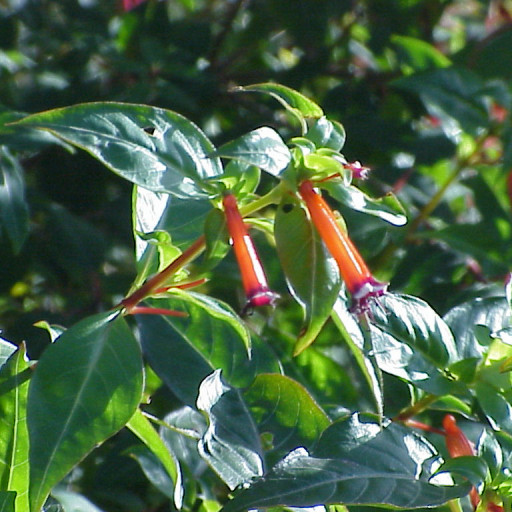
Plant Overview
Often called the Mexican Cigar Plant, Cuphea ignea looks like it is perpetually celebrating a tiny fiesta. Native to Mexico and Jamaica, this evergreen sub-shrub is a favorite for gardeners who want to turn their balcony or backyard into a bustling diner for hummingbirds. Its name comes from the Latin word ignis, meaning "fire," which perfectly captures the burning intensity of its unique, smoldering blooms.
🔍 How to Identify
- 🌺 The "Lit" Bloom: Its most famous feature is the tubular, bright orange-red flower. The tip is ringed with a dark purple or black band and finished with a white "ashy" edge, mimicking a lit cigar.
- 🍃 Glossy Foliage: The leaves are small, neat, and lance-shaped. They have a deep, dark green color and a smooth texture that provides a sharp, cool contrast to the fiery flowers.
- 🌿 Mounded Habit: It grows in a dense, bushy mound, usually reaching about 1 to 2 feet in height, making it look like a compact explosion of color in a pot or garden bed.
🏡 In Your Garden
- ☀️ Sun Worshipper: To keep those "cigars" coming all summer long, place this plant in the brightest spot possible. While it can survive in partial shade, it will produce fewer flowers and the stems may become "leggy" as they reach for the light.
- 🐦 Pollinator Magnet: This plant is evolutionarily "designed" for hummingbirds. The tubular shape of the flower is the perfect fit for their long beaks, and they will often skip other flowers just to get to the high-energy nectar inside the Cuphea.
- ✂️ Self-Cleaning: One of the best perks for hobbyists is that it is "self-cleaning," meaning old flowers fall off on their own. You won't need to spend hours deadheading to keep it looking tidy.
⚠️ Safety & Toxicity
- ✅ Safe for All: Cuphea ignea is generally considered non-toxic to dogs, cats, and humans. It is a fantastic "worry-free" choice for family gardens and households with curious pets.
- 🧤 Mild Irritation: While not poisonous, some gardeners with very sensitive skin might notice a slight itch if they handle the sap or stems during heavy pruning; wearing gloves is a simple fix.
✨ Fun Fact
The species name ignea translates directly to "fiery" or "glowing." In the Victorian "Language of Flowers," giving someone a Mexican Cigar Plant was often a way to symbolize a "burning attachment" or intense energy!

Detailed Care Instructions
These plants can reach their full maturity height of 24 inches within one year if the growing conditions are right for them.
What are good companion plants for Mexican cigar plants?
Pair these plants with Mexican heather, marigold, million bells, dahlia, and other sun-loving flowering plants.
Are Mexican cigar plants deer-resistant?
Absolutely! Not only are they deer-resistant, but rabbits also don't find them tasty either.
| Color | Red |
| Soil Ph | Acid, Neutral, Alkaline |
| Humidity | Normal |
| Lighting | Full Sun |
| Toxicity | Non-Toxic |
| Soil Type | Moist, Well-Drained |
| Bloom Time | Spring, Summer, Fall |
| Difficulty | Medium |
| Plant Type | Perennial, Annual |
| Hibernation | Cold Period |
| Mature Size | Up To 25 In. Tall |
| Native Area | Mexico, Jamaica |
| Temperature | Min 18°C |
| Sun Exposure | Full Sun, Partial Shade |
| Hardiness Zones | 10-12 |
To grow Cuphea Ignea, also known as Firecracker Plant, you can follow these steps:
- Choose a suitable location: Cuphea Ignea prefers full sun to partial shade. Select a well-draining spot in your garden or a container large enough to accommodate the plant.
- Soil preparation: Prepare the soil by amending it with compost or other organic matter to improve drainage and fertility. Cuphea Ignea prefers slightly acidic soil with a pH range of 5.5 to 6.5.
- Planting: Dig a hole and place the Cuphea Ignea plant in it at the same depth it was in its nursery pot. Space multiple plants around 12-18 inches apart to allow for proper growth.
- Watering: After planting, water the plant thoroughly to settle the soil. Keep the soil consistently moist but not waterlogged. Water deeply whenever the top inch of soil feels dry.
- Fertilization: Feed the Cuphea Ignea plant with a balanced, slow-release fertilizer every four to six weeks during the growing season. Follow the package instructions for application rates.
- Pruning: Regularly trim back the plant to maintain a compact, bushy shape. Pinch back the growing tips to encourage branching and more flowers.
- Mulching: Apply a layer of organic mulch, like shredded bark or compost, around the base of the plant to help retain soil moisture and suppress weed growth.
- Pests and diseases: Cuphea Ignea is generally resistant to pests and diseases. However, keep an eye out for common garden pests like aphids or spider mites. Use appropriate insecticides or organic pest control methods if necessary.
- Overwintering: In cooler climates, Cuphea Ignea is typically treated as an annual. However, in frost-free regions, it can be perennial. Protect the plant from freezing temperatures by providing a layer of mulch around the base or bringing container-grown plants indoors during winter.
With proper care, your Cuphea Ignea plant should thrive and produce its characteristic vibrant, tubular flowers that attract hummingbirds and butterflies.

Place in a bright room that is sun drenched almost all day. Or directly in a south-facing window.

Cuphea Ignea is a plant that requires consistent watering to thrive. To properly water this plant, you should wait until the top inch of soil feels dry before watering. When watering, be sure to water the soil thoroughly. It's important to avoid overwatering, so make sure the soil doesn't become waterlogged. Additionally, avoid getting water on the plant's leaves to prevent diseases and fungal growth.
The Cuphea Ignea plant should be fertilized every two weeks during the growing season with an all-purpose liquid fertilizer. For best results, use a fertilizer with equal parts nitrogen, phosphorous, and potassium. Apply the fertilizer around the base of the plant, avoiding contact with the leaves and stems. Water the plant immediately after fertilizing to help the nutrients penetrate the soil. Reduce fertilization during the dormant season, or when the plant is not actively growing.
Cuphea Ignea belongs to a particular group of plants that require a specific type of soil to thrive. The ideal soil for this plant would be rich in organic matter and have good drainage. A well-draining potting mix that is designed for plants with similar needs would work well. The soil should be slightly acidic with a pH range of 6.0-7.5. The plant prefers soil that is moist, but not waterlogged, and will not tolerate overly wet soil. Soil with a high level of fertility would be beneficial to the growth of the plant. Adding a slow-release fertilizer periodically can also encourage strong and healthy growth. Overall, the best soil for Cuphea Ignea should have a balanced nutrient content, good drainage, and sufficient moisture retention.
To propagate this plant, you would need to take stem cuttings. Select a healthy stem and cut it at a 45-degree angle just below a node. Remove any lower leaves that are close to the cut end. Dip the cut end into rooting hormone powder and plant it in a pot filled with a well-draining, moist potting mix. Cover the pot with a plastic bag to create a humid environment and place it in a bright, warm spot out of direct sunlight. Mist the cutting daily and keep the soil moist but not overly wet. Within a few weeks, the cutting should begin to root and new growth should appear. Gradually acclimate the new plant to lower humidity and more light over the course of a week or two before transplanting it to its permanent location.
Common pests of the firecracker-plant include Spider mites. Make a habit of checking your firecracker-plant frequently for pests so that any infestations can be caught and managed early.








