Plant Overview
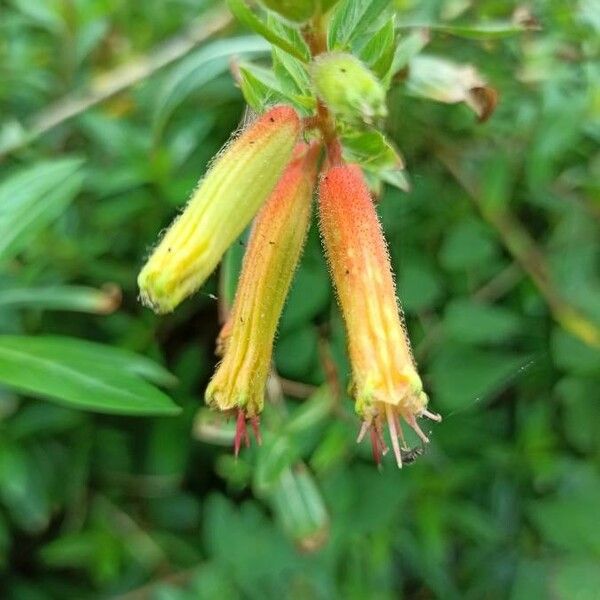
Known affectionately as the Candy Corn Plant or the Mexican Giant Cigar Plant, this vibrant shrub is a festive addition to any warm-climate garden. Native to the sunny hills of Mexico, it produces dozens of upright, bicolored flowers that look like tiny glowing candles or, quite literally, pieces of Halloween candy. It is a magnet for pollinators, often turning a quiet backyard into a bustling hub for hummingbirds and butterflies.
🔍 How to Identify
- 🍭 Candy-Like Blooms: The tubular flowers are the star of the show, featuring a bright yellow tip that transitions into a fiery orange or scarlet base, perfectly mimicking the layers of candy corn.
- 🍃 Lance-Shaped Foliage: The leaves are long, narrow, and deep green. They grow in opposite pairs along the stems and have a slightly rough, almost sandpapery texture.
- 📏 Upright Growth: Unlike its low-creeping relatives, this species grows quite tall and sturdy, often reaching 3 to 4 feet in height with stems that become woody at the base as the plant ages.
🏡 In Your Garden
- ☀️ Sun-Driven Energy: This plant is a true sun-worshiper. While it can survive in partial shade, it needs maximum light to produce its iconic "glow." In too much shade, the stems may become "leggy" and lanky as they stretch toward the sun.
- 💧 Drought Resilience: Once its root system is established, it is remarkably tough and can handle dry spells. However, it performs best with regular deep watering—just ensure the soil drains quickly, as it hates "wet feet" which can lead to root rot.
- ✂️ Pruning for Shape: Because it can become top-heavy with flowers, a light pruning in early spring helps encourage a bushier, more compact shape and prevents the woody stems from splitting under their own weight.
⚠️ Safety & Toxicity
- ✅ Generally Safe: Cuphea micropetala is considered non-toxic to humans, cats, and dogs, making it a "worry-free" choice for family gardens.
- 🧤 Mild Irritation: While not poisonous, the stems and leaves are covered in tiny, stiff hairs. Sensitive individuals might experience a very mild skin itch or redness after heavy pruning, so wearing gloves is a smart move for those with reactive skin.
✨ Fun Fact
🕊️ Built for Beaks: The flowers have evolved a specific tubular shape that is too narrow for many bees but perfectly matches the long, slender beaks of hummingbirds. These birds act as the plant's primary pollinators, darting from bloom to bloom in a high-energy dance.

Detailed Care Instructions
| Color | Orange And Yellow |
| Soil Ph | 5.5 To 6.5; Slightly Acidic To Neutral |
| Humidity | Normal |
| Lighting | Full Sun |
| Soil Type | Average, Well-Drained Soil |
| Bloom Time | Summer To Fall |
| Difficulty | Medium |
| Plant Type | Semi-Woody Shrub, Often Planted As An Annual |
| Mature Size | 3 Feet Tall, With A 2-Foot Spread |
| Native Area | Mexico |
| Temperature | 18°C - 26°C |
| Sun Exposure | Full Sun To Part Shade |
| Hardiness Zones | 8 To 11, Usda |
To grow Cuphea Micropetala, also known as the Mexican Heather or False Heather, follow these steps:
- Choose a well-draining soil: Mexican Heather prefers a slightly acidic soil with a pH range of 5.5 to 6.5. Prepare a pot or garden bed with a mixture of well-draining soil, such as a combination of peat moss, perlite, and compost.
- Provide adequate sunlight: Cuphea Micropetala thrives in full sun to partial shade. Ensure that the plant receives at least 6 hours of direct sunlight per day. If you are growing it indoors, place it near a sunny window.
- Water regularly: Keep the soil consistently moist but not waterlogged. Monitor the soil moisture levels and water when the top inch of soil feels dry. Avoid overwatering, as it can lead to root rot.
- Fertilize periodically: Mexican Heather benefits from regular fertilization. Use a balanced, slow-release fertilizer or a water-soluble fertilizer formulated for flowering plants. Follow the instructions on the packaging for proper application rates.
- Prune regularly: To encourage bushier growth and more abundant flowering, prune Mexican Heather regularly. Pinch back the tips of the plant to maintain a compact shape and remove any dead or damaged branches.
- Mulch around the plant: Apply mulch around the base of the plant to help retain moisture, suppress weeds, and regulate soil temperature. Avoid placing mulch directly against the stem to prevent rot.
- Protect from frost: Cuphea Micropetala is a tender perennial that is susceptible to frost damage. If you live in a region with cold winters, consider growing it in a container so you can bring it indoors during the colder months.
- Propagation: Mexican Heather can be propagated through stem cuttings. Take 4-6 inch long cuttings from healthy plants in spring or early summer. Remove the lower leaves, dip the cut end in rooting hormone, and plant it in a well-draining rooting medium. Keep it in a warm, humid environment until new roots develop.
By following these steps, you can successfully grow and care for Cuphea Micropetala plant.

Place in a window with dappled sun or a spot in the middle of a room. Or directly in a window facing west or east.

To water this particular plant, it is important to give it a thorough soak until the water runs out the bottom of the pot or container. Allow the soil to dry out slightly before watering again, as over-watering can lead to root rot. It is best to test the soil moisture with your finger before watering to ensure it is not too wet. Additionally, avoid getting any water on the leaves as this can promote fungal growth. Watering should be done in the morning or late afternoon to prevent evaporation during the hottest parts of the day.
- Choose a complete fertilizer that contains nitrogen, phosphorus, and potassium in a balanced ratio.
- Mix the fertilizer with water according to the package instructions.
- Apply the fertilizer solution to the soil around the base of the plant.
- Be careful not to over-fertilize as this can cause damage to the plant.
- Alternatively, use a slow-release fertilizer at the beginning of the growing season, following package instructions for application rates.
- Water the plant immediately after fertilizing to ensure the nutrients are absorbed by the roots.
- Repeat fertilization every 4-6 weeks during the growing season or as needed.
- Stop fertilizing in late summer to allow the plant to prepare for winter.
The ideal soil to use with this plant is a well-draining, slightly acidic soil with high organic matter content. It should have a pH level between 5.5 and 6.5 and be rich in nutrients such as nitrogen, phosphorus, and potassium. The soil should also be loose and aerated to allow for good root growth and water absorption. Adding compost or other organic matter can help improve the soil quality. It is important to avoid using heavy soils that retain too much water, as this can lead to root rot and other issues.
To propagate this plant, take stem cuttings of about 4-6 inches long from a healthy and mature plant. Remove the lower leaves of the cutting and dip the cut end in rooting hormone powder. Then, plant the cutting in a well-draining potting mix and keep it moist and warm. You can cover the pot with a plastic bag to create a humid environment for the cutting. Place the pot in a bright area with indirect sunlight. After a few weeks, the cutting should start developing roots. Once the roots have grown sufficiently, transplant the new plant into a larger pot or in the garden.








