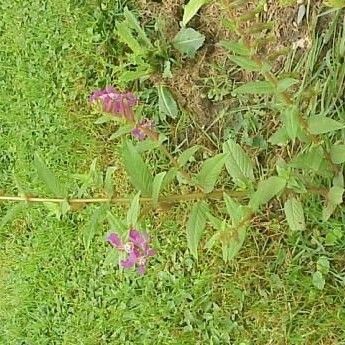
Plant Overview
Known as the Creeping Mexican Heather, Cuphea procumbens is a charming ground-hugger that brings a splash of deep magenta and royal purple to garden edges. In its native Mexican highlands, it is a rugged survivor, often nicknamed the "Trailing Cuphea" for its graceful, sprawling habit. It is a favorite for gardeners looking to attract hummingbirds and bees with a plant that looks delicate but acts tough.
🔍 How to Identify
- 🌸 "Ear" Petals: The flowers feature six petals, but the two upper ones are significantly larger and more upright, often resembling tiny purple bunny ears.
- 🌿 Sticky Stems: If you touch the branches, you will notice a distinct tackiness. The stems are covered in glandular hairs that help protect the plant from crawling "nectar thieves."
- 🍃 Lance-Shaped Leaves: The foliage consists of small, pointed, dark green leaves that grow in pairs, creating a dense, bushy mat that smothers weeds.
🏡 In Your Garden
- 🧺 The Perfect spiller: Because of its "procumbent" (creeping) nature, this plant is a superstar in hanging baskets or trailing over the edges of stone walls where its stems can cascade downward.
- 💧 Thirsty Sun-Lover: While it thrives in full sun to bring out the best colors, it hates drying out completely. Think of it as a "thirsty" sun-lover—it needs regular watering to maintain its lush appearance during the heat of summer.
- ✂️ Self-Cleaning: One of the best perks for hobbyists is that it is largely self-cleaning, meaning the old flowers drop off on their own without the need for constant deadheading.
⚠️ Safety & Toxicity
- ✅ Non-Toxic: This species is generally considered safe and non-toxic for cats, dogs, and children.
- 🤏 Sticky Residue: While not poisonous, the sticky resin on the stems can collect dust or pollen, which might occasionally cause mild skin irritation for those with very sensitive skin or hay fever during pruning.
✨ Fun Fact
Scientists have studied the seeds of Cuphea procumbens as a potential sustainable source of "Capric Acid." This is a fatty acid usually found in coconut and palm oil, meaning this little garden flower could one day help reduce the environmental impact of the soap and cosmetic industries!

Detailed Care Instructions
To grow Cuphea Procumbens, also known as creeping Mexican heather, you can follow these steps:
- Select a suitable location: Cuphea Procumbens prefers a sunny spot but can tolerate partial shade. Ensure the soil is well-draining, as this plant is prone to root rot if the soil remains waterlogged.
- Prepare the soil: Remove any weeds or debris from the chosen area and loosen the soil. If the soil is heavy or clay-like, you may need to improve drainage by adding compost or sand.
- Planting: Dig a hole that is slightly larger than the root ball of the plant. Place the Cuphea Procumbens in the hole, ensuring that the crown of the plant (where the stems meet the roots) is level with the soil surface. Backfill the hole with soil and gently tamp it down to remove air pockets.
- Watering: Water the plant thoroughly after planting to settle the soil around the roots. Going forward, water consistently to keep the soil evenly moist but not waterlogged. Cuphea Procumbens prefers moderate water levels and does not tolerate drought.
- Mulching: Apply a layer of organic mulch around the base of the plant to help retain moisture, suppress weeds, and regulate soil temperature.
- Fertilizing: Feed your Cuphea Procumbens plant with a balanced, slow-release fertilizer in early spring. Follow the instructions on the fertilizer package for application rates. Avoid over-fertilizing, as excessive nutrients can lead to leggy growth or reduced flowering.
- Pruning: Prune Cuphea Procumbens as needed to maintain its desired shape and size. Remove any dead, damaged, or overgrown branches. Additionally, periodic pruning can help promote bushier growth and increase flowering.
- Pest and disease control: Cuphea Procumbens is generally resistant to pests and diseases. However, keep an eye out for common issues such as aphids or powdery mildew. If necessary, treat with appropriate insecticides or fungicides according to the instructions.
- Propagation: Cuphea Procumbens can be propagated through stem cuttings in late spring or early summer. Take a 3-4 inch (8-10 cm) long cutting from a healthy, non-flowering stem. Remove the lower leaves and dip the cut end in rooting hormone. Plant the cutting in a well-draining rooting medium, keep it consistently moist, and provide indirect light until roots develop.
By following these guidelines, you should be able to successfully grow Cuphea Procumbens and enjoy its attractive flowers and foliage.
To water this particular plant, it is best to insert your finger into the soil up to your first knuckle to test for moisture. If the top inch of the soil feels dry to the touch, it is time to water. Use a watering can or hose with a gentle flow to saturate the soil until water runs out of the drainage holes. Avoid overwatering as this can cause root rot. Allow the soil to slightly dry out between waterings and adjust the frequency based on temperature and humidity levels.
To fertilize the Cuphea Procumbens plant, follow these instructions:
- Select a balanced, water-soluble fertilizer with an NPK ratio of 10-10-10 or similar.
- Dilute the fertilizer according to the package instructions. Usually, a concentration of 1 tablespoon of fertilizer per gallon of water is suitable.
- Water the plant thoroughly before applying the fertilizer. This helps prevent root burn and ensures that nutrients are evenly distributed throughout the soil.
- Pour the diluted fertilizer carefully around the base of the plant, avoiding direct contact with the stems or leaves. Apply enough to moisten the soil but avoid excessive runoff.
- Repeat the fertilization process every 4-6 weeks during the growing season, typically from spring to early fall. Adjust the frequency if needed based on the plant's response and the specific fertilizer used.
Remember to always read and follow the instructions on the fertilizer packaging, as different brands may have specific directions or recommended dosages. Additionally, keep in mind any specific requirements or preferences that the Cuphea Procumbens plant might have for optimal growth and health.
Cuphea Procumbens plant prefers well-draining soil that is slightly acidic with a pH ranging from 5 to 6.5. The soil should be rich in organic matter and nutrient-dense to support its growth and development. A mixture of sand, peat moss, perlite, and loam-based soil will create an ideal environment for the plant. It is important to ensure proper drainage in the soil, as Cuphea Procumbens plant does not tolerate waterlogged soil. Additionally, it is recommended to fertilize the plant every two weeks during the growing season to promote healthy growth and vibrant blooms. Avoid using heavy clay soils as they can restrict root growth and impede proper drainage.
To propagate this plant, first take a cutting of about 4-6 inches from the stem of a healthy plant. Remove the leaves from the bottom two-thirds of the cutting and dip the cut end into rooting hormone.
Prepare a pot with well-draining soil and make a hole with a pencil or your finger. Insert the cutting into the hole and gently press the soil around it. Water the cutting and cover it with a plastic bag or dome to create a humid environment.
Place the pot in indirect sunlight and keep the soil moist. After a few weeks, remove the plastic covering and monitor the growth of the new plant. Once it has established roots and is growing well, transplant it into its permanent location.








