Plant Overview
Known as "Black Turmeric" or Kala Haldi, this striking perennial is the mysterious, rare cousin of the common orange turmeric. Deeply rooted in Indian folklore and Ayurvedic medicine, it is prized not just for its healing properties but for its supposed ability to ward off negative energy. Finding one in the wild is a rare treat, as it is currently considered an endangered species in several regions.
🔍 How to Identify
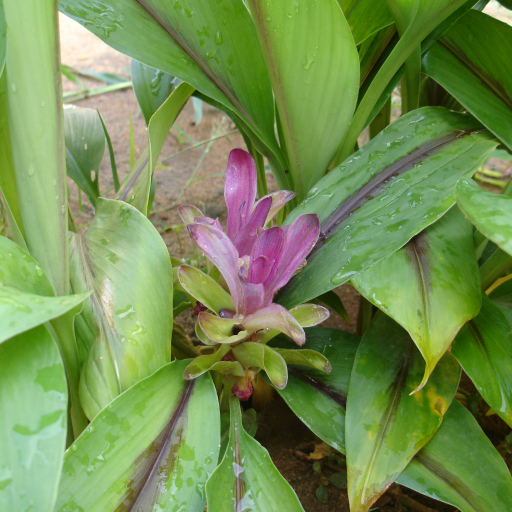
- 🍃 The Midrib Stripe: The most distinctive feature is a deep violet or maroon stripe that runs down the center of each long, lance-shaped leaf.
- 🌑 The "Secret" Interior: While the outside looks like ginger, slicing the rhizome (root) reveals a stunning, concentric bluish-black or deep violet core.
- 🌸 Spiky Blooms: It produces a dense flower spike with pinkish-maroon bracts that shield small, delicate yellow or pale pink flowers.
🏡 In Your Garden
- 🪴 Space for Roots: Because this plant grows from a heavy rhizome, it requires deep, well-draining soil. It hates "wet feet," so ensure your pot or garden bed doesn't hold stagnant water, which leads to rot.
- 💤 The Winter Nap: Don't panic if your plant disappears! Black Turmeric goes completely dormant in the winter, with the foliage dying back entirely. The plant is simply resting underground and will sprout again when the warmth returns.
⚠️ Safety & Toxicity
- ✅ Status: Non-toxic but should be used with caution.
- 🐾 Details: While the rhizome is used medicinally for humans, it can cause mild digestive upset in cats and dogs if they dig it up and consume large quantities. It is also a potent dye—be careful, as the blue-black juice can easily stain skin and light-colored clothing!
✨ Fun Fact
In various parts of India, Black Turmeric is considered a "talisman" of prosperity. It is often kept in cash boxes or tied in black cloth during festivals to attract wealth and protect the household from the "evil eye."

Detailed Care Instructions








