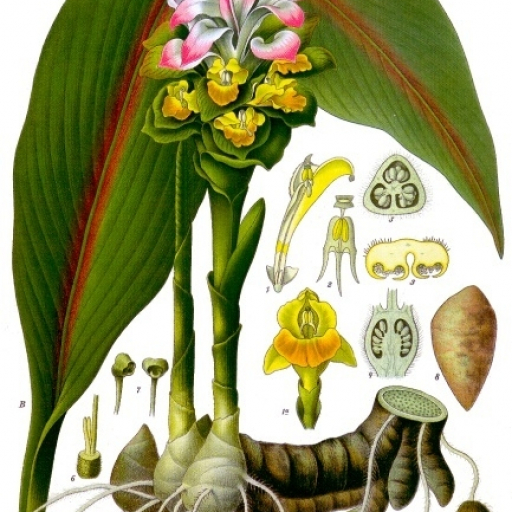
Plant Overview
Often called "White Turmeric" or the "Hidden Lily," Curcuma zedoaria is an ancient spice plant that seems to have stepped right out of a tropical rainforest. Before orange turmeric became a global household name, this "Zedoary" was a prized commodity on the Silk Road. It is loved by gardeners today for its lush, architectural foliage and its habit of tucking its vibrant, pinecone-like flowers beneath its large leaves.
🔍 How to Identify
- 🌿 The "Racing Stripe" Leaves: Its most striking feature is a deep burgundy or purple vein that runs straight down the center of its large, lance-shaped green leaves.
- 🌸 Hidden Blooms: The flower spikes (bracts) are cone-shaped and emerge from the base. They are usually a creamy white at the bottom, blushing into a brilliant hot pink or purple at the tip.
- 🍠 The Pale Rhizome: Unlike the bright orange of common turmeric, the interior of a Zedoary root is a pale, translucent yellow or white, smelling distinctly of green mango and ginger.
🏡 In Your Garden
- 💧 The Winter Sleeper: This plant is a "deciduous perennial." Don't panic when the leaves turn yellow and die back in the fall; the plant is simply going dormant. Stop watering during this time to prevent the underground rhizomes from rotting.
- ☀️ Dappled Light Specialist: Because its leaves are so broad and thin, they can sunburn easily. It thrives in "filtered" light—think of the dappled sun under a tall tree canopy rather than the harsh midday heat.
- 🍲 Soil Richness: It is a heavy feeder. It prefers "forest floor" soil—loamy, rich in organic matter, and slightly acidic—to produce the largest, healthiest rhizomes.
⚠️ Safety & Toxicity
- ✅ Status: Generally safe for humans and used in traditional cooking.
- 🐾 Pet Caution: While not considered highly toxic, the high concentration of essential oils in the rhizome can cause digestive upset (vomiting or drooling) in cats and dogs if they decide to dig it up and chew on it.
- 💊 Human Sensitivity: In concentrated medicinal forms, it should be avoided by pregnant women, as it has historically been used to stimulate blood flow.
✨ Fun Fact
Zedoary was a key ingredient in "Medieval Gruit," a herb mixture used to bitter and flavor ales before hops became the standard in beer making!

Detailed Care Instructions
| Humidity | Normal |
| Lighting | Part Sun |
| Difficulty | Medium |
| Hibernation | Cold Period |
| Temperature | 22°C - 32°C |
| Hardiness Zones | 10 - 12 |
To grow Curcuma Zedoaria (also known as Zedoary or White Turmeric) plant, you can follow these steps:
- Select a suitable location: Curcuma Zedoaria plants thrive in warm and tropical climates, so choose a location that receives partial shade. They prefer well-draining soil that is rich in organic matter.
- Planting: If you have access to the rhizomes (underground stems), plant them in the late spring or early summer. Select healthy rhizomes that have buds or shoots emerging from them. Dig a hole around 4-6 inches deep and place the rhizomes with the bud facing up. Space them around 12-18 inches apart.
- Soil preparation: Improve the soil by adding compost or organic matter before planting. This will enhance drainage and provide essential nutrients.
- Watering: Keep the soil consistently moist but not waterlogged. Water the plants regularly, especially during dry spells. However, avoid overwatering as it can cause the rhizomes to rot.
- Mulching: Apply a layer of mulch around the plants to help retain moisture, suppress weed growth, and regulate soil temperature.
- Fertilizing: Apply a balanced fertilizer or organic plant food once or twice during the growing season to promote healthy growth.
- Controlling pests: Monitor the plants for common pests such as aphids, mealybugs, or spider mites. If necessary, apply organic insecticides or insecticidal soap to control infestations.
- Harvesting: Curcuma Zedoaria plants take about 8-10 months to mature. You can start harvesting the rhizomes when the plant leaves turn yellow and die back. Gently dig out the rhizomes using a garden fork, being careful not to damage them.
- Storing: Clean and dry the rhizomes after harvest. Store them in a cool, dark, and dry place until you are ready to use them. They can be used in cooking, as a medicinal herb, or for other purposes.
Remember that Curcuma Zedoaria plants require warm temperatures and are not frost-tolerant. If your climate is cooler, you may need to grow them in pots or containers that can be brought indoors during the winter months.

Place in a window with dappled sun or a spot in the middle of a room. Or directly in a window facing west or east.

To water this plant, ensure that the soil is completely dry before applying water. Insert your finger about one inch deep into the soil to check for moisture. If the soil is dry, water the plant until the excess water drips out of the bottom of the container. Do not allow the soil to become waterlogged as it can lead to root rot. Aim to provide consistent moisture while allowing the soil to dry out slightly between watering.
To promote healthy growth of this plant, mix a balanced fertilizer with water according to the package instructions and apply it to the soil surrounding the roots every two to three weeks during the growing season. Be sure to avoid getting any fertilizer on the leaves or flowers. Additionally, it may be helpful to supplement the soil with organic matter to provide additional nutrients and improve overall soil health.
For optimal growth and health of the Curcuma Zedoaria plant, it is recommended to use well-draining soil that is rich in organic matter. The soil should have a pH level of between 5.5 and 7.0. It is important to avoid using heavy clay soils or soils with poor drainage as these can lead to root rot and other soil-related problems. The plant prefers soil that is moist but not waterlogged, and therefore it is important to avoid overwatering the plant as this can also lead to root rot. A good option for soil mix is a well-balanced blend of peat moss, perlite, and vermiculite. This mix provides adequate drainage and aeration while also retaining some moisture. Additionally, adding organic matter such as compost to the soil can improve the nutrient content and overall health of the plant.
To propagate this plant, you can start by dividing the rhizomes. Dig up the plant and carefully separate the rhizomes, being sure to leave some attached to each division. Plant each new division in a pot or in the ground, making sure the soil is well-draining and moist. Provide plenty of bright, indirect light and keep the soil consistently moist. Over time, the new plants will establish themselves and grow into mature plants.
Common pests of the zedoary include Scale insect, mealybugs, spider mites, aphids, thrips. Make a habit of checking your zedoary frequently for pests so that any infestations can be caught and managed early.








