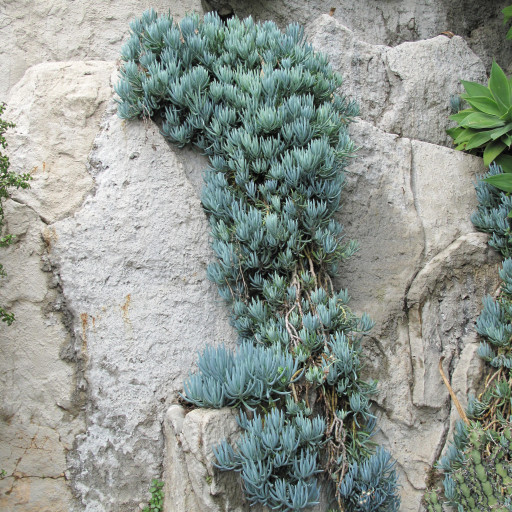
Plant Overview
Often called "Blue Fingers" or the "Mountain Skyscraper," Curio talinoides is a striking succulent from South Africa that looks like a collection of frozen, blue-grey flames. It is an architectural favorite for rock gardens and modern xeriscaping, providing a cool-toned contrast to the greens and reds of more common desert plants. In its native habitat, these "chalksticks" are admired for their ability to thrive in the harshest, driest mountain crevices where few other things can grow.
🔍 How to Identify
- 🎨 Foliage Color: Features stunning blue-green to silver-grey leaves that can look almost metallic or icy under bright light.
- 📏 Leaf Shape: Long, narrow, and cylindrical leaves that curve slightly and point straight upward like reaching fingers.
- ❄️ The "Chalk" Coating: The surface is covered in "farina," a delicate, powdery white wax that gives the plant its matte finish.
🏡 In Your Garden
- ☀️ Sun-Seeking Color: This plant relies on intense light to maintain its signature blue hue; if kept in too much shade, it will "green out" and stretch (etiolate), losing its compact, upright form.
- 🏜️ Drought Strategy: Because it evolved for rocky slopes, it hates "wet feet." It is best to use a gritty, fast-draining cactus mix and wait until the leaves look slightly wrinkled before watering again.
- 🌿 Growth Habit: While it starts as a small cluster, it can eventually form a dense, shrub-like mat, making it an excellent fire-resistant groundcover in warmer climates.
⚠️ Safety & Toxicity
- 🐾 Toxic to Pets: Like many members of the Asteraceae family, it contains pyrrolizidine alkaloids which can cause liver distress if ingested by cats, dogs, or horses.
- 👶 Human Caution: It is not meant for consumption and can cause stomach upset or vomiting. The sap may also cause mild skin irritation for those with sensitive skin—wearing gloves during pruning is a good idea.
✨ Fun Fact
That powdery white film on the leaves isn't dust—it is a biological "sunscreen" produced by the plant to reflect harsh UV rays and prevent precious internal moisture from evaporating!

Detailed Care Instructions
| Lighting | Full Sun |
| Hardiness Zones | Min 8B |
To grow Curio talinoides, also known as the weeping jade or the candle plant, follow these steps:
- Select a suitable container: Choose a pot with good drainage holes to prevent waterlogged soil. The size of the pot should be adequate for the size of the plant, allowing room for root growth.
- Soil: Use a well-draining succulent or cactus potting mix. You can also create your own mix by combining sandy soil with perlite or pumice for added drainage.
- Planting: Place the Curio talinoides plant in the pot, ensuring that the plant is centered. Gently pack the soil around the plant, leaving some space at the top to water.
- Light: These plants thrive in bright, indirect light. Place them near a window with filtered sunlight or provide them with artificial grow lights if natural light is limited.
- Watering: Water the plant deeply but infrequently. Allow the soil to dry out between waterings to avoid overwatering, which can cause root rot. Succulents are drought-tolerant and prefer underwatering to overwatering.
- Temperature and Humidity: Curio talinoides prefers average to warm temperatures ranging from 60-85°F (15-29°C). It can tolerate slightly higher or lower temperatures but should be protected from freezing temperatures. Maintain moderate humidity levels.
- Fertilizer: Feed the plant with a balanced, water-soluble fertilizer designed for succulents during the growing season (spring and summer). Follow the manufacturer's instructions for proper dilution and frequency of application.
- Pruning: Trim any dead or yellowing leaves to maintain a healthier appearance. You can also pinch back the tips of the plant to promote bushier growth.
- Propagation: Curio talinoides can be propagated through stem cuttings. Simply cut a healthy stem from the mother plant, allow it to dry for a day or two, and then plant it in moist cactus/succulent soil. Keep the cutting slightly moist until roots develop.
- Pests and diseases: Keep an eye out for common succulent pests like aphids, mealybugs, and spider mites. Treat any infestations promptly and keep the plant clean to avoid pest issues.
By following these guidelines, you can successfully grow Curio talinoides and enjoy its unique trailing appearance and vibrant green foliage.

Place in a bright room that is sun drenched almost all day. Or directly in a south-facing window.

1. Determine the watering needs of the plant. Curio Talinoides plants are native to dry regions and are drought-tolerant. Therefore, they do not require frequent watering. Overwatering can lead to root rot and other plant diseases.
2. Water the plant when the soil is dry. Before watering the plant, check the soil moisture level. Insert your finger about an inch into the soil and feel if it is dry. If the soil feels moist, wait a few days before watering.
3. Use the right watering technique. When watering, pour water directly onto the soil and avoid getting water on the leaves or stem. Curio Talinoides plants are susceptible to rot if the leaves or stems remain wet for too long.
4. Water thoroughly. When watering, water the entire root ball and allow the excess water to drain out of the bottom of the pot. This ensures that the roots absorb water evenly.
5. Adjust watering frequency based on the environment. The amount of water your plant needs will depend on the temperature, humidity, and light levels in your home. During the summer months, when temperatures are higher, your plant may require more frequent watering.
6. Use good quality water. Curio Talinoides plants prefer slightly acidic soil. Avoid using hard water or water that has a high pH level, as this can affect the soil acidity and the plant's ability to absorb nutrients.
7. Avoid sudden changes in watering frequency. It is best to water your plant on a regular basis to avoid sudden changes in soil moisture level. Sudden changes in moisture can cause stress and affect the plant's health.
To fertilize this plant, you should use a balanced fertilizer with equal amounts of nitrogen, phosphorus, and potassium. Dilute the fertilizer to half strength and apply it once every two weeks during the growing season (spring and summer). Avoid fertilizing after August as the plant enters its dormant period. Always water the plant before and after fertilization to prevent the roots from getting burned.
Curio Talinoides plant prefers well-draining soil that has good aeration and drainage. The soil should be slightly acidic to neutral, with a pH range of 6.0 to 7.0. A mixture of sand, perlite, and peat moss can be used to create the ideal soil conditions for this plant. The soil should also be rich in nutrients, with the addition of organic matter such as compost or well-rotted manure. It is important to avoid using soil that becomes compacted and soggy as it can lead to root rot. The plant also prefers a soil that dries out between waterings and does not like to sit in wet soil. Overall, a well-draining, slightly acidic soil with good nutrient content and aeration is ideal for Curio Talinoides plant.
To propagate the plant, you can start by collecting the plant seeds. Once you have the seeds, you can sow them in well-draining soil that is rich in organic matter. The soil should be kept moist, but not waterlogged, and placed in a warm and bright location. The seeds should start to germinate within 2-4 weeks.
Alternatively, you can propagate the plant through stem cuttings. Cut a healthy stem from the plant, ensuring that it is at least 10cm long and has several nodes. Remove the lower leaves from the stem and dip the cut end into a rooting hormone powder. Insert the stem cutting into a pot of well-draining soil and water it thoroughly. Keep the soil moist and place the cutting in a bright, warm location. Over time, the stem cutting will develop roots and grow into a new plant.
Common pests of the blue fingers include Mealybugs, thrips. Make a habit of checking your blue fingers frequently for pests so that any infestations can be caught and managed early.








