Plant Overview
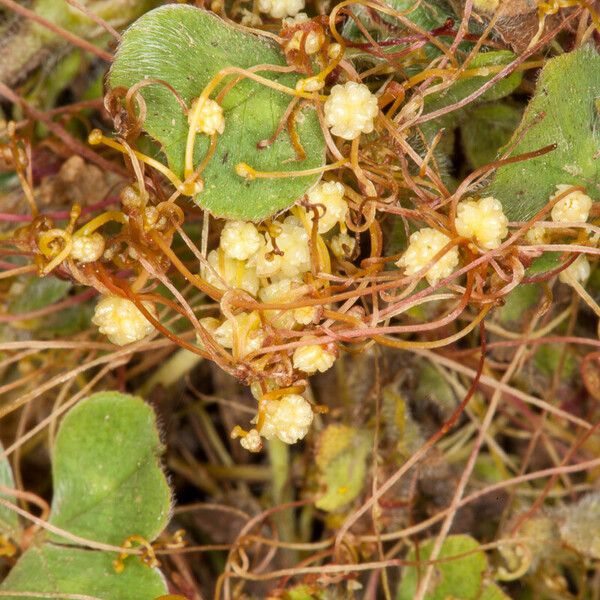
Often referred to as "Witch’s Hair," "Strangleweed," or the "Love Vine," Cuscuta scandens (and its close relatives) is one of nature’s most fascinating villains. This leafless, parasitic vine lacks chlorophyll, meaning it cannot produce its own food through photosynthesis. Instead, it lives a nomadic life, searching for a host plant to cling to and "vampirize" for nutrients, creating a tangled web of golden threads across gardens and wild meadows.
🔍 How to Identify
- 🧶 The Stems: Look for thin, leafless, wire-like strands that resemble orange or bright yellow spaghetti. They lack green pigment because they don't need it to survive.
- 🌸 The Flowers: In late summer, the vine produces tiny, bell-shaped clusters of white, cream, or pinkish flowers that seem to erupt directly from the orange "yarn."
- 🌀 The Attachment: You will notice small, sucker-like organs called haustoria that pierce the stem of the host plant. It doesn't just wrap around its victim; it physically plugs into its "veins" to steal water and sugar.
🏡 In Your Garden
- 🚫 A Unwelcome Guest: If you find this in your garden, it is rarely a "friend." It can weaken or even kill ornamental plants and vegetable crops by sucking away their energy. It is particularly fond of clover, alfalfa, and many common flowerbed species.
- ✂️ Difficult Removal: Because it is a parasite, simply pulling the "hair" off isn't enough. If even a small piece of the vine remains attached to the host, it can regrow. Often, the only way to save a garden from a heavy infestation is to prune the host plant back severely or remove the affected plant entirely before the Dodder sets seed.
⚠️ Safety & Toxicity
- 🟢 Non-Toxic to Humans: Cuscuta is generally not considered poisonous to humans or pets if touched or accidentally brushed against.
- 🐾 Lifestock Warning: While not "deadly" in a traditional sense, if it infests hay or grazing fields, it can be problematic for livestock because it can concentrate certain alkaloids from the host plants it is feeding upon, occasionally causing digestive upset.
✨ Fun Fact
- 👃 The Plant with a Nose: Scientists have discovered that Dodder can actually "smell" its prey. A young seedling will grow through the air toward the scent of a nearby tomato plant or other preferred hosts, moving with predatory intent until it makes contact!

Detailed Care Instructions








