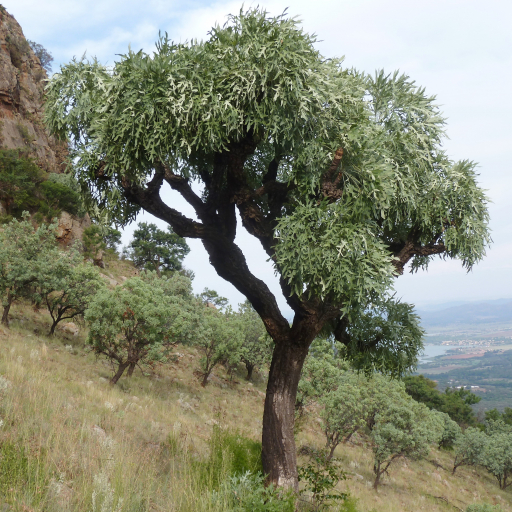
Plant Overview
Often called the Mountain Cabbage Tree, Cussonia paniculata is a striking architectural marvel from the rocky slopes of South Africa. With its silvery-blue foliage and prehistoric silhouette, it looks like something straight out of a fantasy novel. It is a favorite for "water-wise" gardens due to its incredible ability to store moisture in its massive, succulent root system.
🔍 How to Identify
- 🍃 Lacy Foliage: It features large, deeply lobed leaves that fan out like a hand (palmate), usually sporting a distinct blue-grey or glaucous hue that shimmers in the sun.
- 🪵 Corky Bark: The trunk is covered in thick, grey, deeply fissured bark that feels like cork, providing the tree with protection against both heat and cold.
- ⛲ Structural Growth: It typically grows with a thick, sturdy trunk topped by a dense, umbrella-shaped crown of leaves, giving it a palm-like appearance.
🏡 In Your Garden
- 💧 The Tuberous Root: This plant develops a massive underground "caudex" or tuber. Because of this, it is extremely drought-tolerant but absolutely hates "wet feet." Ensure your soil is sandy or gravelly to prevent root rot.
- ☀️ Light & Color: To maintain its iconic silvery-blue color, the tree requires full, direct sun. In shaded spots, the foliage will often turn a duller green as the plant loses its protective waxy coating.
- 🧊 Hardiness: Unlike many succulent-type trees, the Mountain Cabbage Tree is surprisingly frost-hardy once established, making it a rare "tropical-looking" choice for cooler temperate gardens.
⚠️ Safety & Toxicity
- 🐾 Safe Status: Cussonia paniculata is generally considered non-toxic to humans, cats, and dogs. It is a safe, structural choice for family-friendly landscapes.
- 🧴 Sticky Sap: The stems and trunk contain a watery, slightly sticky sap. While not dangerous, it can be a minor skin irritant for those with sensitive skin, so wearing gloves during pruning is recommended.
✨ Fun Fact
In its native habitat, the thick, succulent roots were historically used by travelers as an emergency water source during severe droughts. The roots are so efficient at storing water that they can swell to massive proportions beneath the soil!

Detailed Care Instructions
| Humidity | High |
| Lighting | Full Sun |
| Difficulty | Easy |
| Hibernation | Cold Period |
| Hardiness Zones | 8A - 11B |
To grow a Cussonia Paniculata plant, also known as the Mountain Cabbage Tree, follow these steps:
- Choose a suitable location: Find a sunny spot in your garden that receives at least six hours of direct sunlight each day. Ensure the soil is well-draining and relatively fertile.
- Prepare the soil: Loosen the soil in the chosen area and remove any weeds, rocks, or debris. You can also amend the soil with compost or well-rotted manure to improve its fertility and drainage.
- Choose the right time: The best time to plant Cussonia Paniculata is during the early spring or late summer. This allows the plant to establish its root system before extreme weather conditions occur.
- Dig a hole: Dig a hole that is slightly larger and deeper than the root ball of the plant. This will facilitate proper root growth.
- Plant the tree: Place the Cussonia Paniculata plant in the hole, ensuring that the top of the root ball is level with the soil surface. Backfill the hole with soil and firmly press it down to eliminate any air pockets.
- Water the plant: After planting, thoroughly water the Cussonia Paniculata plant to help it settle and establish in the soil. Water regularly, ensuring the soil remains evenly moist but not overly saturated.
- Mulch the base: Apply a layer of organic mulch, such as wood chips or bark, around the base of the plant. This will help retain moisture, suppress weeds, and regulate soil temperature.
- Prune as needed: Cussonia Paniculata generally requires minimal pruning. However, you can prune to remove dead or damaged branches, maintain a desired shape, or control its size. Pruning is best done during the dormant season.
- Provide care and maintenance: Regularly monitor the plant for any signs of pests or diseases. Water deeply during dry periods, especially in the first year after planting. Fertilize with a balanced slow-release fertilizer in early spring to promote healthy growth.
By following these steps, you should be able to successfully grow a Cussonia Paniculata plant in your garden.

Place in a bright room that is sun drenched almost all day. Or directly in a south-facing window.

This plant requires regular watering to maintain its health and growth. You should water the plant deeply and thoroughly, ensuring the water reaches the roots. However, you should avoid overwatering it, as this can lead to root rot. One way to test if the plant needs watering is to stick your finger about an inch into the soil. If the soil feels dry, it's time to water the plant. In hot and dry weather, the plant may need more frequent watering. It's recommended to water the plant early in the morning or late in the evening, as this is when the temperatures are cooler and the water is less likely to evaporate quickly.
To fertilize this plant, you should apply a balanced fertilizer in the spring before new growth begins. Repeat the application once or twice during the growing season. Avoid over-fertilizing as it can cause damage to the plant. Water the plant thoroughly after fertilizing to help the nutrients reach the roots.
Cussonia paniculata plant thrives in well-draining soil that is rich in nutrients and organic matter. It prefers a slightly acidic soil pH level between 5.5 and 6.5. The ideal soil for Cussonia paniculata plant should have good water-retaining capacity while still allowing excess water to drain away quickly. Sandy loamy soils are excellent for this plant species, although it can also grow well in clay soils with proper drainage. Adding compost or manure to the soil can improve its structure and fertility, which facilitates root growth, nutrient absorption, and moisture retention. It is essential to avoid using heavy, waterlogged soils or soils that contain a high concentration of salts, as it can harm the roots and lead to stunted growth or plant death.
To propagate this plant, select a healthy stem that is about 6 inches long and remove the lower leaves. Dip the cut end into rooting hormone to promote root growth. Plant the cuttings in a pot filled with a well-draining soil mix and place in a bright, warm location. Keep the soil consistently moist but not waterlogged. In about 4-6 weeks, the cuttings should begin to form roots and new growth. Once the new growth is established, they can be transferred to their permanent location in the garden or re-potted into a larger container.
Common pests of the mountain cabbage tree include Scale insect, mealybugs, spider mites, aphids. Make a habit of checking your mountain cabbage tree frequently for pests so that any infestations can be caught and managed early.








