Plant Overview
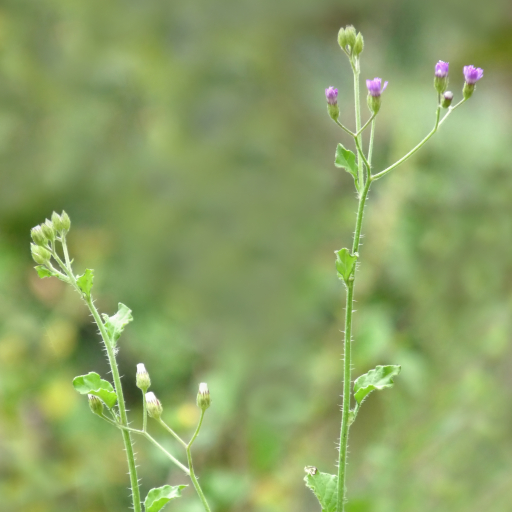
Known as "Little Ironweed" or "Ashy Fleabane," this modest wildflower is a global traveler found across tropical Asia, Africa, and the Americas. While it might look like a simple weed in your lawn, it holds a prestigious place in traditional Ayurvedic medicine, where it is known as "Sahadevi" and praised for its cooling properties. Its tiny, thistle-like purple blooms are a magnet for small butterflies, adding a splash of royal color to untamed garden corners.
🔍 How to Identify
- 🌸 The Blooms: Look for tiny, fluffy flower heads that resemble miniature thistles. They typically appear in clusters and range from a vibrant violet to a soft pinkish-purple.
- 🐘 The Texture: The stems and the undersides of the leaves are often covered in fine, silver-grey hairs, giving the plant a slightly "ashy" appearance (hence the name cinereum).
- 🍃 The Foliage: Leaves are generally oval or lance-shaped with slightly toothed edges. They grow in an alternating pattern up the stem and can vary significantly in size depending on how much water the plant receives.
🏡 In Your Garden
- 🦋 Wildlife Support: This plant is a fantastic "filler" for pollinator gardens. It is particularly beloved by small butterfly species, such as Blues and Hairstreaks, who rely on its nectar during the warmer months.
- 🌱 Tough as Nails: Little Ironweed earned its name for a reason; it is incredibly resilient. It thrives in poor, compacted soil where other plants might struggle, making it an excellent choice for stabilizing soil in neglected areas or rock gardens.
⚠️ Safety & Toxicity
- 🟢 General Safety: This plant is generally considered non-toxic to touch and is not known to cause skin irritation in most people.
- 🐾 Pet & Human Ingestion: While used in traditional herbal medicine, it contains pyrrolizidine alkaloids. Ingesting large quantities can be harmful to the liver, so it should be kept away from curious pets and children who might try to nibble on the leaves.
✨ Fun Fact
In Thailand and other parts of Southeast Asia, Cyanthillium cinereum is used as a natural aid to help people quit smoking! Extracts from the plant are often infused into tea or candies, as they are said to help reduce nicotine cravings.

Detailed Care Instructions
To grow Cyanthillium cinereum, also known as Centella asiatica or Brahmi, you can follow these steps:
- Obtain seeds or seedlings: You can purchase seeds or seedlings from local nurseries, online stores, or collect seeds from existing plants.
- Choose a suitable location: The plant prefers partial shade, so select a spot that receives a few hours of sunlight and has well-draining soil.
- Prepare the planting area: Clear the area of any weeds, rocks, or debris. Loosen the soil and mix in organic matter like compost to improve its fertility.
- Sow the seeds or plant the seedlings: If using seeds, sow them directly on the surface of the soil and lightly cover them with a thin layer of soil. If using seedlings, dig a hole large enough to accommodate the root ball and gently place the seedling in it.
- Water regularly: Keep the soil consistently moist but not waterlogged. Watering deeply once or twice a week should be sufficient, but adjust based on weather conditions.
- Mulch: Apply a layer of organic mulch around the plants to conserve moisture, suppress weed growth, and insulate the roots from temperature fluctuations.
- Fertilize sparingly: Centella asiatica is not a heavy feeder, but you can occasionally apply a balanced, slow-release fertilizer during the growing season following package instructions.
- Control weeds: Regularly remove any weeds that compete for nutrients and space with your plants. Be careful not to disturb the shallow roots of Cyanthillium cinereum.
- Prune as needed: If the plant becomes leggy or overgrown, you can trim the stems to encourage bushier growth. Pruning also helps to prevent the plant from taking over the garden.
- Harvest leaves as desired: You can start harvesting the leaves once the plant is established and has matured. Make sure to leave some leaves behind for the plant to continue growing.
Cyanthillium cinereum is a perennial herbaceous plant that spreads easily through runners, so it may require some management to prevent spreading beyond the desired area. It is also commonly grown as a groundcover or in containers.

Place in a bright room that is sun drenched almost all day. Or directly in a south-facing window.

To water the plant, you should first assess the soil moisture by feeling the top inch of soil. If it feels dry to the touch, it is time to water. Use a watering can or hose with a gentle flow to avoid disrupting the soil or damaging the foliage. Water the plant at the base/root zone rather than overhead to prevent fungal issues. Be careful not to overwater the plant as it can lead to root rot. Allow the soil to dry out slightly between waterings, and reduce watering during cooler months or periods of lower light.
To fertilize this plant, you can use a balanced fertilizer with equal amounts of nitrogen, phosphorus, and potassium. Apply the fertilizer once a month during the growing season, which is typically from spring to summer. Dilute the fertilizer according to the package instructions and apply it to the soil around the base of the plant. Avoid fertilizing during the dormant season, which is usually in the fall and winter. Over-fertilization can cause damage to the plant, so it's important to follow the recommended application rates.
For optimal growth and health, the Cyanthillium Cinereum plant requires a well-draining soil mix that is rich in organic matter. It is recommended to use a soil mix that consists of sand, perlite, and organic matter such as compost or peat moss. The soil pH should be slightly acidic to neutral, with a range of 6.0 to 7.0. It is important to avoid heavy soils that can cause waterlogging, as this can lead to root rot and other fungal diseases. In addition, adding a slow-release fertilizer to the soil mix can help provide the necessary nutrients for the plant to thrive.
To propagate this plant, select a healthy stem or branch with leaves and use a sharp, sterilized knife to make a clean cut at a 45-degree angle. Dip the cut end of the stem in rooting hormone powder, tap off any excess, and plant it in a pot filled with a moist, well-draining soil mix. Cover the pot with a plastic bag or wrap to create a humid environment and keep it in indirect sunlight. Water the soil regularly to keep it moist but not waterlogged. In a few weeks, the plant should start forming new roots. Once the roots are established, remove the plastic covering and gradually expose the plant to more light. When the young plant has grown enough, transplant it into a larger pot or into the garden.








