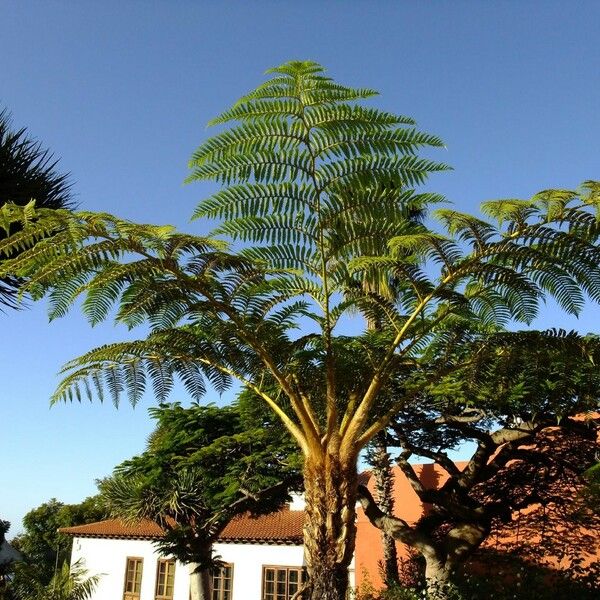
Plant Overview
Often called the "Rough Tree Fern," Cyathea australis is a living relic from the age of dinosaurs. Standing tall with its massive, textured trunk and an exploding canopy of lacy fronds, it brings an instant Jurassic atmosphere to any landscape. Native to the damp gullies of Australia, this hardy giant is one of the toughest and most adaptable tree ferns in the world.
🔍 How to Identify
- 🦔 The Trunk: Unlike the smooth or "hairy" trunks of other ferns, this one is covered in a dense mat of old frond bases and sharp, dark scales, giving it a distinctively rugged, "rough" texture.
- 🌿 The Fronds: Massive, multi-pinnate leaves that can reach up to 4 meters in length, arching gracefully from the crown in a vibrant shade of forest green.
- 🌀 The Fiddleheads: New growth emerges as tightly coiled, silver-brown spirals (croziers) that look like ornate carvings before they slowly unfurl.
🏡 In Your Garden
- ☀️ Sun Resilience: While most ferns shrivel at the sight of the sun, the Rough Tree Fern is surprisingly sun-tolerant. As long as its roots remain cool and moist, it can handle much more light than its cousins.
- 💧 Trunk Hydration: Because the "trunk" is actually a vertical rhizome covered in aerial roots, it loves being watered from the top down. Giving the trunk a "shower" during hot spells helps keep the entire plant hydrated.
⚠️ Safety & Toxicity
- ✅ Non-Toxic: This plant is generally considered safe and non-toxic for cats, dogs, and humans.
- 🌵 Physical Irritant: While not poisonous, the dark scales and hairs at the base of the fronds can be quite coarse and may cause mild skin irritation or "itchiness" if handled without gloves during pruning.
✨ Fun Fact
- 🦖 Ancient Architecture: Fossil records indicate that members of the Cyatheaceae family have remained largely unchanged for over 150 million years. When you stand under a Cyathea australis, you are looking at the exact same view a herbivorous dinosaur would have had!

Detailed Care Instructions
Growing Cyathea australis, commonly known as the Rough Tree Fern, can be a rewarding experience. This fern is native to Australia and is known for its attractive fronds and impressive growth. Here are some steps to help you grow a Cyathea australis plant:
Choosing a Location
- Light: Cyathea australis prefers partial shade. It can tolerate some direct morning or late afternoon sun, but it’s best to avoid the intense midday sun which can scorch the fronds.
- Temperature: This fern thrives in mild, temperate climates, ideally between 50-75°F (10-24°C). They can tolerate brief periods of light frost but extended freezing temperatures can cause damage.
- Humidity: High humidity is beneficial for this plant, so it’s ideal for more humid climates or a greenhouse setting. If growing indoors, consider using a misting bottle or a humidity tray.
Soil and Planting
- Soil: Use a well-draining, fertile, and slightly acidic soil mix. You can use a mixture of peat moss, pine bark, and sand or perlite.
- Planting Site: Plant your tree fern in a spot with good drainage. Ensure the site has room for growth, as Cyathea australis can reach heights of 20-30 feet under optimal conditions.
Watering
- Watering: Keep the soil consistently moist but not waterlogged. Water the plant regularly, especially during dry spells. The fronds may benefit from occasional misting to maintain humidity.
- Fern Trunk: The trunk of the tree fern can absorb water, so during dry periods, it’s helpful to water the trunk directly.
Feeding
- Fertilizing: Feed your Cyathea australis with a balanced, slow-release fertilizer during the growing season (spring and summer). Fertilize sparingly to avoid overfeeding, which can harm the plant.
- Mulching: Apply a layer of mulch around the base of the fern to help retain soil moisture and regulate temperature.
Maintenance
- Pruning: Remove dead or damaged fronds to encourage new growth and maintain the plant’s appearance.
- Pests and Diseases: Keep an eye out for common pests like scale insects or aphids. Treat infestations promptly with insecticidal soap or neem oil.
Growing from Spores
If you want to grow Cyathea australis from spores, here's a quick guide:
- Collect Spores: Spores are found on the undersides of mature fronds. Collect them and place them on a piece of paper to dry.
- Sowing Spores: Sow the spores on the surface of a sterilized, well-draining growing medium. Mist the surface and cover it with plastic or glass to maintain humidity.
- Germination: Place the container in a warm, shaded location. Spores can take several weeks to months to germinate.
- Transplanting: Once the young ferns have developed a few fronds and are large enough to handle, transplant them to individual pots before eventually planting them in their permanent location.
By following these guidelines and providing the right conditions, you can successfully grow a healthy and vibrant Cyathea australis. Enjoy the process and watch as your Rough Tree Fern thrives!
Cyathea australis, commonly known by another name, is a type of tree fern that requires consistent and thoughtful watering practices to thrive. Here are detailed instructions on how to water this plant properly:
- Soil Moisture: The soil should be kept evenly moist at all times. It’s crucial not to let the soil dry out completely, as this can stress the plant.
- Watering Frequency: During the growing season (typically spring and summer), you may need to water more frequently, potentially every day or every other day, depending on the climate and soil type. In cooler months, reduce the watering frequency, but ensure the soil doesn’t dry out.
- Watering Method: Water at the base of the plant, ensuring the water soaks deeply into the soil. It’s also beneficial to water the trunk/caudex, as this plant absorbs moisture through its trunk. You can gently spray or mist the trunk while avoiding waterlogging.
- Leaf Maintenance: Occasionally, mist the fronds (leaves) to maintain humidity, especially if the plant is kept indoors or in a dry environment. This helps mimic its natural rainforest habitat.
- Water Quality: Use clean, chlorine-free water if possible. Rainwater or distilled water is ideal, as these are free from the chemicals found in tap water that could harm the plant over time.
- Humidity: Maintaining high humidity is crucial. If the ambient air is dry, consider using a humidifier near the plant or setting it on a pebble tray filled with water, ensuring the pot doesn't sit directly in the water.
- Drainage: Ensure the soil has good drainage to prevent water from sitting since standing water can lead to root rot. The pot or ground should allow excess water to drain away easily.
- Mulching: Applying a layer of organic mulch around the base can help retain soil moisture and regulate soil temperature.
By following these detailed watering guidelines, you can provide the optimal conditions for your Cyathea australis to flourish.
Here are some fertilizing instructions for Cyathea australis:
- Growing Season: Focus on fertilizing primarily during the active growing season, which usually spans from spring to late summer.
- Type of Fertilizer: Use a balanced, slow-release fertilizer with an N-P-K ratio of around 10-10-10. Alternatively, a fertilizer formulated specifically for ferns can be beneficial.
- Frequency: Apply the slow-release fertilizer once at the beginning of the growing season. For liquid fertilizers, you can use them every 4-6 weeks during the growing period.
- Application: If you opt for a liquid fertilizer, dilute it to half the recommended strength to avoid over-fertilizing, which can damage the plant. For slow-release granules, follow the package instructions for dosing.
- Method: Gently work the fertilizer into the top layer of soil, or for liquid fertilizers, apply around the base of the plant, ensuring even distribution without over-saturating.
- Avoid Over-fertilizing: Too much fertilizer can lead to nutrient burn. It's better to under-fertilize than overdo it, as this plant prefers a more natural nutrient environment.
- Watering: Ensure consistent moisture levels, especially after fertilizing, to help distribute nutrients and support healthy growth.
By following these guidelines, you can effectively nourish your Cyathea australis and promote robust growth.
Cyathea australis, a species of tree fern, thrives best in soil conditions that mimic its natural environment. Here are the specifications for the ideal soil:
- Well-Draining Soil: This species requires soil that allows excess water to drain away quickly to prevent root rot. Avoid heavy clay soils that retain water.
- Rich in Organic Matter: Incorporate plenty of organic material such as compost, leaf mold, or well-rotted manure to enrich the soil. This not only supplies necessary nutrients but also aids in moisture retention without becoming waterlogged.
- Slightly Acidic to Neutral pH: Aim for a soil pH in the range of 5.5 to 6.5. You can achieve this with the addition of substances like peat moss if the soil is too alkaline.
- Loamy Texture: A loamy soil composition, which balances sand, silt, and clay, is ideal as it inherently offers good drainage while retaining adequate moisture and nutrients.
- Moist but Not Soggy: Maintain consistent moisture in the soil, mimicking the fern's natural habitat in damp forest floor conditions. However, ensure that the soil does not become waterlogged, as this can be detrimental to the roots.
- Mulching: Use mulch to help keep the soil moist, regulate temperature, and add organic matter as it decomposes. Pine bark, leaf litter, or hardwood mulch are good options.
By adhering to these soil requirements, you will provide an optimal growing environment for Cyathea australis, enabling it to flourish.
Propagating Cyathea australis, a species of tree fern, can be a rewarding yet intricate process. This species can be propagated through spores or division. Here’s a step-by-step guide for both methods:
Propagation by Spores
- Collection of Spores:
- Harvest the spores by choosing a mature frond with brown sori (spore-bearing structures) on its underside.
- Cut off the frond and place it in a paper bag. Over the next few days, the spores will fall out and collect in the bag.
- Harvest the spores by choosing a mature frond with brown sori (spore-bearing structures) on its underside.
- Preparation of Growing Medium:
- Prepare a sterile growing medium composed of peat moss and sand, or a commercially available seed-raising mix. Sterilize it by baking at 180°F (82°C) for 30 minutes or using boiling water.
- Fill a shallow container or tray with the prepared medium.
- Prepare a sterile growing medium composed of peat moss and sand, or a commercially available seed-raising mix. Sterilize it by baking at 180°F (82°C) for 30 minutes or using boiling water.
- Sowing the Spores:
- Evenly sprinkle the collected spores over the surface of the medium.
- Mist the surface lightly with water to ensure the medium is moist but not waterlogged.
- Evenly sprinkle the collected spores over the surface of the medium.
- Creating a Humid Environment:
- Cover the container with plastic wrap or a clear lid to maintain high humidity.
- Place the container in a warm, well-lit area, but out of direct sunlight. Indirect light is ideal.
- Cover the container with plastic wrap or a clear lid to maintain high humidity.
- Germination and Growth:
- Sporulation can take several weeks to months. Initially, a green film will appear on the soil surface, which is the protonema stage.
- Gradually, tiny fern fronds will start to develop.
- Sporulation can take several weeks to months. Initially, a green film will appear on the soil surface, which is the protonema stage.
- Transplanting:
- Once the young ferns are large enough to handle (several fronds have formed), they can be transplanted into individual pots filled with a suitable potting mix.
- Maintain high humidity and keep the soil moist as they continue to grow.
Propagation by Division
- Once the young ferns are large enough to handle (several fronds have formed), they can be transplanted into individual pots filled with a suitable potting mix.
- Selection of the Parent Plant:
- Choose a healthy, mature specimen with multiple crowns.
- Choose a healthy, mature specimen with multiple crowns.
- Preparation:
- Water the plant thoroughly a day before you plan to divide it. This makes the soil easier to work with and minimizes root damage.
- Water the plant thoroughly a day before you plan to divide it. This makes the soil easier to work with and minimizes root damage.
- Division Process:
- Carefully lift the plant out of its pot or dig it out from its growing site.
- Use a sharp, sterilized knife or spade to divide the root ball into sections. Ensure each section has at least one growing tip and an adequate portion of the root system.
- Carefully lift the plant out of its pot or dig it out from its growing site.
- Replanting:
- Plant each divided section into a individual pots filled with a mix of well-draining potting soil and organic matter.
- Firm the soil around the roots and water well.
- Plant each divided section into a individual pots filled with a mix of well-draining potting soil and organic matter.
- Aftercare:
- Keep the newly potted divisions in a shaded, humid environment to reduce transplant shock.
- Water regularly, making sure the soil stays moist but not waterlogged.
General Care for Young Plants
- Keep the newly potted divisions in a shaded, humid environment to reduce transplant shock.
- Light: Indirect sunlight or dappled shade is ideal to avoid scorch.
- Watering: Keep the soil consistently moist but not soaking wet. Water the plants regularly.
- Humidity: High humidity is crucial. Misting the plants can help, as can placing them on a tray of pebbles with water.
- Fertilizing: Use a balanced liquid fertilizer diluted to half-strength, applied every 4-6 weeks during the growing season.
Both propagation methods require patience and specific care conditions, but with the right approach, you'll be able to grow new Cyathea australis plants effectively.








