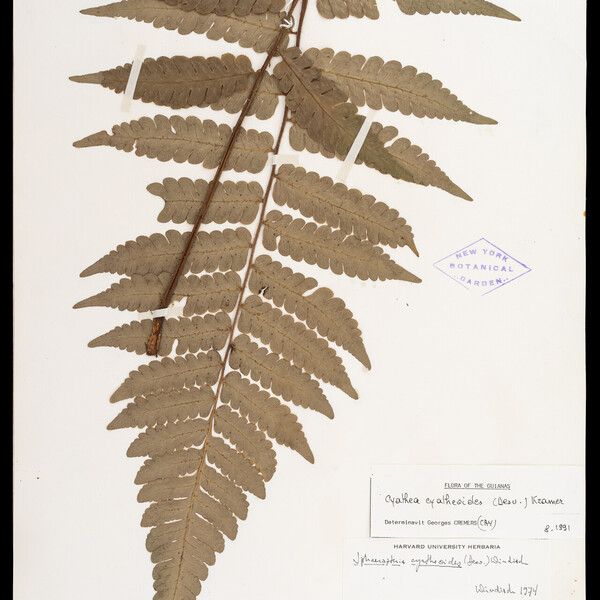
Plant Overview
Known as a relic of the ancient world, Cyathea cyatheoides is a graceful tree fern that brings a "Jurassic Park" aesthetic to any moist landscape. Often found in the lush mountain forests of the Caribbean, particularly Puerto Rico, this plant is admired for its slender, elegant silhouette. It’s a slow-growing masterpiece that transforms a simple garden corner into a prehistoric tropical escape.
🔍 How to Identify
- 🌴 The Trunk: Features a slender, woody "trunk" (actually a vertical rhizome) that is often textured with the scars of fallen fronds, giving it a rugged, patterned look.
- 🌿 The Crown: At the top, a dramatic umbrella of large, lacy, bipinnate fronds arches outward, catching the light with their vibrant green color.
- 🧶 Fiddleheads: New leaves emerge as "croziers" or fiddleheads, tightly coiled and covered in soft, protective brownish scales before they unfurl.
🏡 In Your Garden
- ☁️ The Humidity Factor: Coming from island cloud forests, this fern thrives on moisture in the air. In dry climates, it benefits greatly from regular misting or being placed near a water feature to prevent its delicate leaflets from crisping.
- 🍃 Shelter from the Storm: Because its fronds are so large and lacy, they can easily be shredded by high winds. It’s best to plant it in a "goldilocks" spot—bright indirect light but protected from harsh afternoon sun and heavy gusts.
⚠️ Safety & Toxicity
- ✅ Non-Toxic: Cyathea cyatheoides is generally considered non-toxic to humans, cats, and dogs, making it a safe choice for family gardens.
- 🧤 Prickly Texture: While not poisonous, the trunk and the base of the fronds are covered in tiny, hair-like scales. These can be mildly irritating to sensitive skin, so it’s a good idea to wear gloves when relocating or pruning the plant.
✨ Fun Fact
Tree ferns like the Cyathea are true "living fossils." They have remained largely unchanged for over 150 million years, meaning very similar plants once provided shade for roaming dinosaurs during the Jurassic period!

Detailed Care Instructions
Cyathea cyatheoides, commonly known as the tree fern, is a beautiful plant native to tropical regions. Growing this fern requires specific conditions to mimic its natural habitat. Here’s how you can successfully grow Cyathea cyatheoides:
1. Environment:
- Light: Cyathea cyatheoides prefers bright, indirect light. It can tolerate some shade, but avoid direct sunlight, as it can scorch the fronds.
- Temperature: This species thrives in warm temperatures. Ideally, keep it between 20-25°C (68-77°F). It may not tolerate temperatures below 10°C (50°F) for extended periods.
- Humidity: High humidity is essential. Aim for humidity levels of 60% or higher. You can increase humidity by misting the plant, using a humidity tray, or placing a humidifier nearby.
2. Soil:
- Use a well-draining, organic potting mix. You can create a suitable mix by combining equal parts of potting soil, peat moss, and perlite. This mimics the rich, leaf-littered forest floor where tree ferns naturally grow.
3. Watering:
- Keep the soil consistently moist, but not soggy. Water the plant regularly, allowing the top inch of soil to dry out between waterings. During the growing season, ensure that the plant does not dry out completely.
4. Fertilization:
- Fertilize sparingly during the growing season (spring and summer). Use a diluted liquid fertilizer, approximately once a month, that is balanced or slightly higher in potassium to promote frond development.
5. Repotting:
- Repot when the plant outgrows its container, typically every 2-3 years. Use fresh potting mix to replenish nutrients.
6. Pest Control:
- Keep an eye out for pests such as aphids and spider mites. If you notice any, treat the plant with insecticidal soap or neem oil.
7. Propagation:
- Cyathea cyatheoides can be propagated through spores or division. Spores can take a long time to germinate and grow, while division may be done during repotting, ensuring each division has a healthy root system.
8. General Care:
- Regularly remove any dead or damaged fronds to promote healthy growth. Provide enough space for the plant to grow freely.
By adhering to these guidelines, you should be able to cultivate a healthy and thriving Cyathea cyatheoides. Enjoy your beautiful tree fern!
When watering the plant scientifically known as Cyathea cyatheoides, consider the following guidelines to ensure it receives the proper hydration:
- Soil Moisture: Before watering, check the moisture content of the soil. The top inch (2.5 cm) should dry out slightly between waterings. This plant prefers consistently moist soil, but it should never be soggy. The roots can rot if waterlogged.
- Watering Technique: Water the plant thoroughly until you see excess water draining from the bottom of the pot. Ensure that the water reaches all parts of the root system. Using a watering can with a long spout can help direct the water to the base of the plant.
- Water Quality: Use rainwater, distilled water, or tap water that has been allowed to sit for 24 hours to allow chlorine to dissipate. This can prevent potential harm from chemicals commonly found in municipal water supplies.
- Humidity Requirement: This species thrives in high humidity. If you're in a drier environment, consider misting the leaves regularly or using a humidity tray filled with water and pebbles to elevate the humidity levels around the plant.
- Temperature Considerations: Water more frequently during the warmer months when the plant is actively growing, and reduce the frequency in the cooler seasons while ensuring it does not completely dry out.
- Signs of Under-Watering: If the fronds begin to wilt or turn brown at the tips, this may indicate that the plant needs more water. Adjust your watering schedule based on climatic conditions and plant response.
- Drainage: Ensure that the pot has adequate drainage holes. Proper drainage is crucial as stagnant water can lead to root diseases. If planting in the ground, choose a location with good drainage.
- Mulching: Consider adding a layer of organic mulch around the base of the plant to help retain soil moisture and regulate temperature.
By following these guidelines, you can effectively manage the watering of Cyathea cyatheoides, promoting its health and growth.
To fertilize Cyathea cyatheoides effectively, follow these guidelines:
- Type of Fertilizer: Use a balanced, slow-release fertilizer with an N-P-K ratio of approximately 10-10-10 or similar. Alternatively, you can opt for a fertilizer specifically designed for ferns, which often contains trace elements beneficial for their growth.
- Timing: Fertilize during the growing season, which typically spans from early spring to late summer. Avoid fertilizing during the dormant period in fall and winter.
- Application Rate: Follow the manufacturer's instructions for the recommended dosage. Generally, for a potted plant, apply about 1 teaspoon of slow-release fertilizer per gallon of soil. For garden specimens, use approximately 1-2 cups, depending on the size and age of the plant.
- Method of Application:
- Potted Plants: Mix the fertilizer into the top inch of soil. Water thoroughly afterwards to help the nutrients penetrate the soil.
- Garden Plants: Spread the fertilizer evenly around the base of the plant, keeping it a few inches away from the trunk to avoid root burn. Water well after application to activate the fertilizer.
- Potted Plants: Mix the fertilizer into the top inch of soil. Water thoroughly afterwards to help the nutrients penetrate the soil.
- Additional Care: Monitor the plant for signs of nutrient deficiency, such as yellowing fronds or stunted growth, and adjust your fertilization practices if necessary. During particularly dry conditions, ensure that the soil remains consistently moist, as this aids nutrient uptake.
- Frequency: If using slow-release fertilizers, a single application in spring should suffice. For liquid fertilizers, consider fertilizing every 4-6 weeks during the growing season, diluting it to half strength to avoid over-fertilization.
By following these guidelines, you will support the healthy growth and development of your Cyathea cyatheoides plant.
The Cyathea cyatheoides, a species of tree fern, thrives best in well-draining, organic-rich soil that can retain moisture while still allowing excess water to escape. Here are specific soil characteristics for optimal growth:
- Texture: A loamy or sandy loam texture is ideal, providing a balance between water retention and drainage. Avoid heavy clay soils, which can retain too much moisture.
- Organic Matter: Incorporate plenty of organic matter, such as compost or well-rotted leaf litter, to enhance nutrient content and improve soil structure. This also aids in moisture retention.
- pH Level: Aim for a slightly acidic to neutral pH, ideally between 5.5 and 7.0. Testing the soil pH can help you amend it appropriately.
- Aeration: Ensure the soil is loose and well-aerated to promote healthy root development. Compacted soils should be amended to improve drainage and aeration.
- Moisture Retention: Add materials like coconut coir or peat moss to help retain moisture without waterlogging the roots. This is critical as tree ferns prefer consistently moist conditions.
- Drainage: To prevent root rot, it is essential that the soil allows for good drainage. Mixing in perlite or bark chips can help achieve this balance.
- Supplementation: Depending on your local conditions, consider periodic applications of slow-release fertilizers that are low in phosphorus, as excessive phosphorus can be detrimental to ferns.
By following these guidelines, you can create an optimal soil environment for the thriving growth of the Cyathea cyatheoides plant.
Cyathea cyatheoides is a species of tree fern that can be propagated through several methods. Here are the detailed steps for propagating this particular plant:
1. Spore Propagation
Collecting Spores:
- Wait until the spores are mature. They can be found on the undersides of the fronds in structures called sporangia.
- Once the sporangia are brown and dry, carefully collect them by rubbing the frond over a piece of paper.
Preparing the Growing Medium: - Use a well-draining medium suitable for ferns, such as a mix of sphagnum moss and perlite or a specialized fern soil mix.
Sowing the Spores: - Moisten the growing medium thoroughly.
- Sprinkle the collected spores evenly over the surface of the medium.
- Do not cover the spores with soil, as they need light for germination.
Creating a Suitable Environment: - Place the container in a clear plastic bag or cover it with a transparent lid to maintain high humidity.
- Keep the container in a warm area with indirect light.
- Maintain humidity and check regularly for moisture, misting as needed.
Germination: - Germination can take several weeks to months. Once small gametophytes appear, ensure they receive bright, indirect light and continue to keep the medium moist.
2. Division of Offsets
Timing: - The best time to propagate via division is during the growing season, ideally in spring or early summer.
Selecting a Mature Plant: - Choose a healthy, mature specimen that has produced offsets or pups around its base.
Dividing Offsets: - Carefully remove the plant from its pot or the ground. This may require gently digging it out.
- Look for natural divisions where offsets are present, making sure each division has some roots attached.
- Use a sterile knife or garden shears to separate the offsets from the main plant.
Potting Divisions: - Prepare individual pots with a suitable growing medium as described earlier.
- Place the divisions in their pots, ensuring they are at the same depth they were growing before being divided.
- Water gently to settle the medium around the roots.
3. Tissue Culture (for more advanced horticulturists)
Preparation: - Start with healthy tissue samples from the plant, such as young fronds or meristematic tissue.
Culture Medium: - Use a sterile, nutrient-rich culture medium appropriate for ferns, often supplemented with hormones to encourage growth.
Sterilization: - Sterilize the tissue samples thoroughly to prevent contamination.
Incubation: - Place the samples in a controlled environment, maintaining the right temperature, humidity, and light conditions.
Planting: - Once the tissue has grown sufficiently and produced roots, transfer the healthy plantlets to pots with suitable growing medium.
Care After Propagation
Regardless of the propagation method, it is crucial to care for new plants properly:
- Humidity: Keep humidity high, especially for young plants. Use a humidity dome or plastic bag if necessary.
- Light: Provide bright, indirect light but avoid direct sunlight, which can scorch the leaves.
- Watering: Maintain consistent moisture in the growing medium without waterlogging. Allow the top layer to dry slightly between waterings.
- Temperature: Ensure a consistently warm environment, as these plants prefer temperatures typically found in their native habitats.
With the right conditions and care, you should be able to successfully propagate and grow Cyathea cyatheoides plants.







