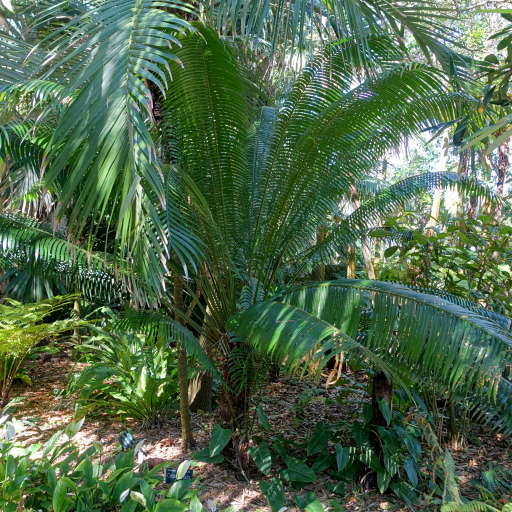
Plant Overview
Known as the "Coastal Cycad," Cycas edentata is a resilient sentinel of tropical shorelines across Southeast Asia. Often mistaken for a palm tree, this botanical "living fossil" has survived virtually unchanged since the age of the dinosaurs. Its specific name, edentata (meaning "toothless"), refers to the unusually smooth edges of its seed-bearing scales, distinguishing it from its pricklier cousins.
🔍 How to Identify
- 🌿 The Crown: Features a dense rosette of stiff, arching, dark green fronds. Each leaf is composed of narrow, leathery leaflets that taper to a point.
- 🪵 The Trunk: A stout, woody, cylindrical stem that is covered in the diamond-shaped scars of old leaf bases. In old age, the trunk may occasionally branch or lean.
- 🥥 The "Toothless" Scales: While many cycads have jagged, saw-like edges on their reproductive parts, this species has megasporophylls (seed leaves) with smooth or very shallowly notched margins.
🏡 In Your Garden
- 🌊 Coastal Resilience: Because it evolved on tropical beaches, it is incredibly tolerant of salt spray and sandy, nutrient-poor soils. It is the go-to choice for seaside landscapes where other plants might wither.
- ⏳ Patience Required: This is a slow-growing species that resents being moved. Because it develops a deep, sensitive taproot, you should choose its "forever home" carefully; transplanting an established specimen can lead to years of stunted growth.
- ☀️ Light & Drainage: It thrives in bright, direct light. The most common mistake is overwatering in heavy soil—it requires excellent drainage to prevent its prehistoric roots from rotting.
⚠️ Safety & Toxicity
- 🚫 Toxic Status: Highly Poisonous. Like all members of the Cycad family, every part of this plant contains potent neurotoxins and carcinogenic compounds.
- 🐾 Pet & Child Risk: The seeds are the most toxic part and can be fatal if ingested. They contain cycasin, which causes permanent liver failure in dogs and cats. Keep this plant well out of reach of curious pets and small children.
- 🧤 Physical Hazard: The tips of the leaflets are very sharp and can cause painful punctures or scratches during maintenance.
✨ Fun Fact
The seeds of Cycas edentata are natural sailors! Unlike many other cycads whose seeds sink, these seeds have a layer of spongy tissue that allows them to float. They can drift across the ocean for months, eventually washing up on distant islands to sprout and colonize new territory.

Detailed Care Instructions
To grow Cycas edentata plant, follow these steps:
- Cultivation: Choose a well-draining pot or container with drainage holes. Fill it with a mixture of sandy soil, perlite, and organic compost.
- Propagation: The cycad can be grown from seeds or through offsets, also known as suckers. Seeds should be soaked in warm water for a day or two before planting. Sow the seeds about 1 inch deep in the potting mix. Place them in a warm, sunny area or a greenhouse with temperatures around 80°F (26°C). Keep the soil moist but not waterlogged.
- Light: Provide the cycas plant with bright, indirect sunlight for at least 6-8 hours daily. Avoid exposure to direct sunlight, especially during the hottest parts of the day.
- Watering: Cycas edentata prefers slightly moist soil. Water the plant thoroughly when the top inch of soil feels dry. Ensure the pot has drainage holes to avoid waterlogging, which may lead to root rot.
- Temperature and Humidity: Maintain a warm environment with temperatures around 70-80°F (21-27°C). Cycas edentata can tolerate higher temperatures but not freezing temperatures. It prefers moderate humidity but can tolerate lower humidity levels.
- Fertilizer: Feed the plant with a balanced slow-release fertilizer during the growing season (spring to summer). Follow the manufacturer's instructions regarding the application rate. Avoid applying fertilizer during winter dormancy.
- Pruning and Maintenance: Remove any yellow, dead, or damaged leaves regularly. Cycas plants are slow-growing, so pruning should be minimal.
- Pest and Disease Control: Keep an eye out for common pests like scales, mealybugs, and aphids. If infested, use insecticidal soap or neem oil to control the pests. Ensure good air circulation and avoid overwatering to prevent fungal diseases.
Remember, Cycas edentata plants are protected and endangered in their natural habitat, so it is essential to ensure that you obtain plant material from a legitimate source and follow any legal guidelines.
Also, keep in mind that cycads are toxic to pets and humans if ingested, so take precautions to keep them out of reach of children and animals.
To water the Cycas Edentata plant, you should follow these steps:
- Monitor the moisture level: Before watering, make sure to check the soil's moisture level. One way to do this is by inserting your finger about two inches deep into the soil. If it feels dry at this depth, it is time to water.
- Choose the right water: Use room temperature water for watering the plant. Avoid using chlorinated or treated water, as it can be harmful to the plant. Alternatively, you can collect rainwater or allow tap water to sit out for a day to dissipate any chemicals.
- Watering technique: Slowly pour the water into the soil around the base of the plant. Avoid watering the leaves or crown directly, as this may lead to rot or fungal diseases. Be gentle to prevent waterlogging or soil erosion.
- Adequate water quantity: Ensure that you provide enough water to thoroughly moisten the root ball. The water should penetrate deep into the soil to reach the entire root system. However, avoid overwatering, as it can lead to root rot or suffocate the roots.
- Drainage: It is essential to have proper drainage for the plant. Make sure the pot or planting area has drainage holes to allow excess water to escape. This helps prevent waterlogging and ensures the roots have access to oxygen.
- Frequency of watering: The watering frequency will depend on various factors such as climate, temperature, season, and the plant's growth stage. As a general guideline, water the Cycas Edentata plant when the top layer of soil feels dry. It is better to underwater slightly than overwater.
- Adjusting watering during different seasons: During the growing season (spring and summer), the plant may require more frequent watering to support its growth. In contrast, in colder months or during a dormant period, reduce watering as the plant's water requirements decrease.
Remember, it's crucial to understand the specific watering needs of your plant, as environmental factors and individual plant characteristics can influence the watering routine.
To properly fertilize Cycas Edentata plant, follow these instructions:
- Choose a well-balanced fertilizer specifically formulated for cycads or palm trees. Look for a fertilizer with a nutrient ratio such as 10-10-10 or 20-20-20.
- Dilute the fertilizer according to the package instructions. Generally, a tablespoon of fertilizer per gallon of water is a good ratio.
- Apply the fertilizer during the plant's active growing season, which typically occurs in spring and summer.
- Slowly pour the diluted fertilizer mixture around the base of the plant, avoiding direct contact with the plant's leaves or crown.
- Ensure the soil is fully saturated with the fertilizer mixture but avoid over-saturating to prevent root rot.
- Repeat the fertilization process every 4-6 weeks during the active growing season.
Note: Always read and follow the instructions provided on the fertilizer packaging as different brands may have specific guidelines for application. Additionally, it's important to understand your specific plant's needs and adjust the fertilizer application accordingly.
Cycas edentata is a type of cycad plant that requires specific soil conditions to thrive. The ideal soil for Cycas edentata is well-draining and allows water to pass through easily. It should have a slightly acidic to neutral pH level, ranging from 6.0 to 7.5.
A suitable soil mixture for Cycas edentata is typically a combination of organic matter, sand, and a small amount of clay. The organic matter helps to retain moisture and nutrients, while the sand improves drainage and prevents water from becoming stagnant around the plant's roots. Clay can help provide some additional nutrients and moisture retention capabilities.
It is generally recommended to avoid heavy, compacted soils or those with a high clay content, as they can cause waterlogging and hinder root growth. Additionally, overly sandy soils may not retain enough moisture for the plant.
To prepare the soil, you can mix equal parts of organic matter such as well-rotted compost or peat moss, with coarse sand and loamy soil. This combination helps to create a well-balanced soil structure that allows for both water drainage and retention.
Although Cycas edentata can tolerate a range of soil conditions, providing it with an appropriate soil mixture will ensure optimal growth and health. Regular monitoring of the soil moisture level and drainage is also recommended to prevent overwatering or under-watering of the plant.
To propagate Cycas Edentata plants, follow these steps:
- Select a mature and healthy Cycas Edentata plant with well-developed stems and foliage.
- Prepare a clean and sharp pruning tool such as gardening shears or a knife. Ensure that the tool is sterile to prevent the spread of diseases.
- Identify suitable plant segments for propagation. Look for segments with multiple stems, as these are more likely to establish roots successfully.
- Make clean cuts by slicing through the stem below the cluster of leaves or at the base of the stem.
- Allow the cut segments to callus for a few days at room temperature. This process promotes the formation of a protective layer over the wound, preventing infections during rooting.
- Choose a well-draining potting mixture for the newly propagated plants. A mixture of peat moss, sand, and perlite or vermiculite works well.
- Fill small pots or seed trays with the potting mixture and water thoroughly. Allow excess water to drain before proceeding.
- Create planting holes in the pots or trays and insert the prepared Cycas Edentata segments, ensuring they are held upright and stable.
- Gently cover the segments' bases or lower stems with the potting mixture, making sure they are firmly in place without being buried too deeply.
- Provide a warm and humid environment to encourage root development. Consider placing the newly potted segments inside a transparent plastic bag or using a propagation dome to retain moisture.
- Place the potted segments in bright, indirect light. Avoid direct sunlight, as it can cause excessive heat or sunburn.
- Check the soil moisture regularly and water when the top inch of the mixture feels dry. Be careful not to overwater, as excessive moisture may lead to rotting.
- Over the next few weeks, monitor the progress of the propagated segments. New growth or roots may become visible after several weeks or months, depending on the conditions.
- Once a sufficient root system has developed, carefully transplant the Cycas Edentata segments into larger pots or a suitable planting location in the garden.
- Maintain proper care for the newly propagated plants, including regular watering, appropriate light exposure, and protection from extreme temperatures or adverse weather conditions.
Remember, successful propagation may vary depending on environmental factors, plant health, and personal gardening practices. It is always beneficial to research and understand the specific requirements of Cycas Edentata for the best results.








