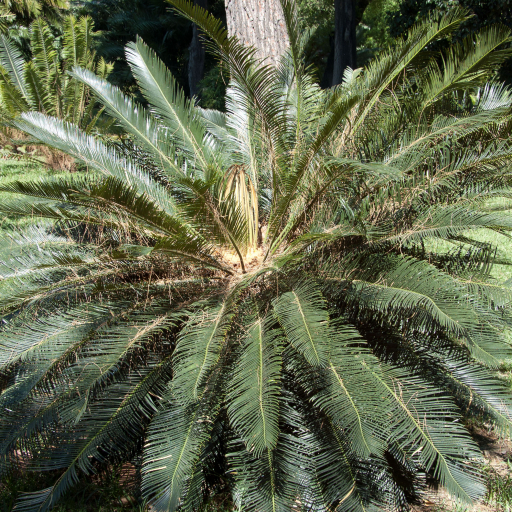
Plant Overview
Often mistaken for a palm tree, the Cycas taiwaniana—commonly known as the Taiwan Cycad—is actually a "living fossil" that shared the Earth with dinosaurs. While it brings a prehistoric, architectural elegance to any landscape, this plant is a slow-burning masterpiece that demands patience and respect. Though native to the rugged, rocky hillsides of Taiwan, it has become a prized jewel for collectors of rare and exotic greenery.
🔍 How to Identify
- 🌿 The Fronds: Deep green, glossy leaves that grow in a stiff, feather-like (pinnate) pattern. Unlike palms, these leaflets are rigid and can be quite sharp at the tips.
- 🪵 The Trunk: A thick, woody, and scarred stem known as a "caudex." It acts as a storage tank for nutrients, giving the plant a rugged, ancient appearance even when young.
- 🌀 The "Flush": New leaves don't grow one by one; they emerge all at once in a dramatic "flush," uncoiling like silver-green fern fronds before hardening into their permanent shape.
🏡 In Your Garden
- 🏜️ The Drainage Demand: This plant is a survivor of rocky terrains and absolutely loathes "wet feet." In a garden setting, it requires gritty, well-draining soil. If the roots sit in water for too long, the ancient caudex will rot from the inside out.
- 🐢 A Lesson in Slow Living: The Taiwan Cycad is exceptionally slow-growing, often producing only one set of new leaves per year. Because of this, it is perfect for large containers on patios where it won't outgrow its space for a decade or more.
⚠️ Safety & Toxicity
- 🚫 High Toxicity: All parts of the Cycas taiwaniana contain cycasin, a powerful toxin. It is one of the most dangerous ornamental plants if ingested.
- 🐾 Extreme Risk to Pets: The seeds (which often look like bright, attractive nuts) are particularly lethal to dogs and cats. Ingestion can lead to permanent liver damage or death, so it should be placed where pets cannot reach it.
✨ Fun Fact
Cycads are unique because they have specialized "coralloid roots" that grow upward toward the soil surface. These roots host blue-green algae (cyanobacteria) that "fix" nitrogen from the air, essentially allowing the plant to create its own fertilizer in nutrient-poor environments!

Detailed Care Instructions
Cycas Taiwaniana, also known as the Taiwan cycad, is a beautiful and unique plant that can be grown both indoors and outdoors. Here are some tips on how to successfully grow Cycas Taiwaniana:
- Light: Cycas Taiwaniana requires bright, indirect sunlight to thrive. Place your plant near a window where it can receive plenty of natural light but avoid direct sunlight as it can scorch the leaves.
- Temperature: This plant prefers warm temperatures ranging from 60-85°F (15-29°C). Avoid exposing it to temperatures below 50°F (10°C) as it can suffer from cold damage.
- Watering: Water your Cycas Taiwaniana regularly, keeping the soil evenly moist but not waterlogged. Allow the top inch of soil to dry out before watering again. In winter, reduce watering frequency as the plant's growth slows down.
- Soil: Plant your Cycas Taiwaniana in well-draining, sandy soil with a pH level of 6-6.5. You can also mix in some perlite or sand to improve drainage.
- Fertilizing: Feed your Cycas Taiwaniana with a balanced, slow-release fertilizer every 6-8 weeks during the growing season (spring and summer). Avoid fertilizing in fall and winter when the plant is dormant.
- Humidity: Cycas Taiwaniana prefers moderate to high humidity levels. You can increase humidity around the plant by misting it regularly or placing a humidifier nearby.
- Repotting: Repot your Cycas Taiwaniana every 2-3 years as it outgrows its container. Use a slightly larger pot with fresh, well-draining soil.
- Pests and diseases: Keep an eye out for pests like scale insects, mealybugs, and spider mites which can infest Cycas plants. Treat infestations promptly with insecticidal soap or neem oil. Watch out for root rot caused by overwatering and ensure good air circulation around the plant.
By following these care tips, you can successfully grow and enjoy the beauty of Cycas Taiwaniana in your home or garden.
Cycas Taiwaniana is a plant that requires moderate watering. It is important to keep the soil moist, but not too wet, as this can cause the roots to rot. To water the plant, use a watering can with a long spout so that water can be delivered directly to the base of the plant.
When watering, it is important not to splash water on the foliage as this can cause fungal diseases. Avoid using tap water if possible as the chemicals in it can harm the plant. Instead, use rainwater or distilled water.
It is recommended to water Cycas Taiwaniana once a week, or more frequently during periods of high heat or dryness. However, it is important to monitor the soil moisture level regularly and adjust watering frequency as needed. During the winter months, the plant may require less frequent watering.
Remember to always allow excess water to drain from the pot or container to prevent waterlogging. Overwatering can be just as harmful as under watering.
To fertilize Cycas Taiwaniana plant, apply a balanced fertilizer with an N-P-K ratio of 10-10-10 in the spring and summer months. Dilute the fertilizer to half or quarter strength and apply to the soil around the plant, avoiding direct contact with the leaves. Water the plant after fertilizing to help the nutrients penetrate the soil. Avoid over-fertilizing as it can harm the plant. Fertilize every 4-6 weeks during the growing season.
Cycas Taiwaniana is a tropical plant that prefers well-drained soil with good aeration. A mixture of sandy loam and perlite can be used for this plant, with a pH range of 5.5-6.5. Avoid heavy clay soils as they can become waterlogged and cause root rot. It is also important to ensure the soil is not too compacted as this can hinder root growth and uptake of nutrients. Adding organic matter such as compost or leaf litter can improve soil structure and fertility. The soil should be kept moist but not waterlogged, and regular fertilization with a balanced fertilizer can promote healthy growth.
To propagate Cycas Taiwaniana plants, one can use seeds or offsets. To propagate using seeds, one should collect ripe seeds from a mature plant. These seeds should be cleaned and soaked in warm water for 24 hours to soften the seed coat. Then, the seeds can be planted in a well-draining potting mix and kept in a warm, humid environment until germination occurs.
Alternatively, one can propagate Cycas Taiwaniana plants by dividing offsets from the base of a mature plant. Carefully remove the offset with a sharp, clean knife, ensuring that each division has its own roots attached. Plant the offset in a well-draining potting mix and water thoroughly. Keep the newly propagated plant in a warm, humid environment to encourage growth.
Both methods of propagation require consistent watering and regular feeding to ensure successful growth. It is also important to choose a well-draining potting mix and provide adequate sunlight for optimal growth.








