Plant Overview
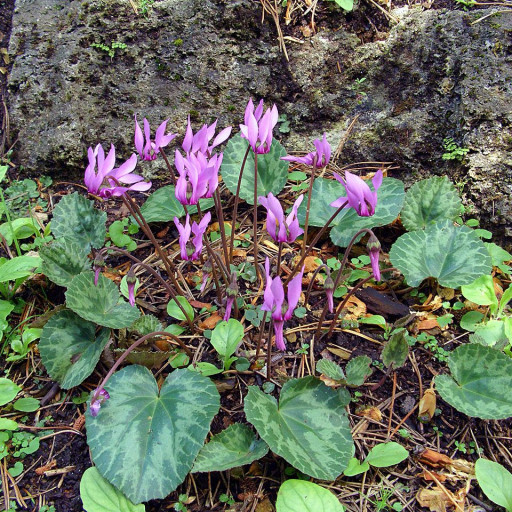
Often referred to as the European Cyclamen or the Alpine Violet, this charming perennial is the hidden gem of the mountain forests. Unlike its flashier florist cousins, Cyclamen purpurascens is beloved for its intoxicating, lily-of-the-valley-like fragrance and its heart-shaped, silver-marbled leaves that often remain evergreen through the winter. In folklore, it was once believed to protect against storms and evil spells when planted near the home.
🔍 How to Identify
- 🍃 Leaf Pattern: The dark green, kidney or heart-shaped leaves feature distinct silvery-white marbling on the top and a surprising, deep beetroot-purple color on the underside.
- 🌸 The "Upside-Down" Flower: The delicate flowers have five petals that reflex (flip) backwards, pointing toward the sky, while the flower head nods toward the ground.
- 👃 Scent Profile: One of the few cyclamens with a powerful fragrance, it emits a sweet, spicy perfume that can fill a small garden nook on a warm afternoon.
🏡 In Your Garden
- 🌳 The Woodland Niche: This plant craves a "forest floor" environment. It thrives in dappled shade under deciduous trees where it can enjoy leaf mold and consistent moisture without ever sitting in soggy soil.
- 🌱 Tuber Sensitivity: Unlike other species that like their "shoulders" exposed, this cyclamen prefers its tuber to be planted slightly deeper (about 2-3 inches). It is slow to establish but incredibly long-lived once it finds its happy place.
- ❄️ Cooler Temphs: It is far hardier than the common indoor cyclamen, actually preferring the cool humidity of autumn and spring over the baking heat of summer.
⚠️ Safety & Toxicity
- 🐾 Pet Warning: Like all members of the Cyclamen genus, the tubers contain terpenoid saponins which are toxic to cats and dogs if ingested.
- 🤢 Human Consumption: While the flowers were historically used in very small amounts in herbalism, the tubers are highly purgative and can cause severe stomach upset, vomiting, or skin irritation if handled excessively by those with sensitive skin.
✨ Fun Fact
After the flower is pollinated, the flower stalk (pedicel) doesn't just wilt; it begins to coil tightly like a metallic spring, pulling the developing seed pod down toward the soil to protect it until it’s ready to release!

Detailed Care Instructions
| Humidity | High |
| Lighting | Part Sun |
| Difficulty | Hard |
| Temperature | 15°C - 20°C |
| Hardiness Zones | 9A - 11B |
To grow Cyclamen purpurascens, follow these steps:
- Choose the right location: These plants prefer partial shade and cool temperatures. Select a spot that receives indirect sunlight or morning sun and afternoon shade.
- Prepare the soil: Cyclamen purpurascens thrives in well-draining soil that is rich in organic matter. Use a mixture of equal parts potting soil, peat moss, and perlite or sand.
- Planting: Place the corm (bulb-like structure) just below the soil surface. Make sure the top of the corm is level with the soil. Space multiple corms about 4-6 inches apart.
- Watering: Water the plant thoroughly after planting and maintain moist soil throughout its growth. Avoid overwatering as it can lead to root rot.
- Temperature and humidity: Maintain a cool environment, preferably between 50-60°F (10-15°C). High humidity is also beneficial for Cyclamen purpurascens. Place a tray of water near the plant or use a humidifier.
- Fertilizer: Use a balanced, slow-release fertilizer during the growing season. Follow the instructions on the packaging and apply sparingly to avoid burning the plant.
- Maintenance: Remove faded flowers and leaves regularly to promote new growth. This will also prevent the plant from putting energy into seed production.
- Dormancy period: Cyclamen purpurascens naturally goes dormant during summer. Reduce watering during this time and allow the plant to rest.
- Pests and diseases: Watch out for pests like aphids and spider mites. Treat infestations promptly with organic or chemical insecticides. Avoid wetting the leaves while watering to prevent fungal diseases.
- Propagation: Cyclamen purpurascens can be propagated from seeds or by division. Seeds should be sown in a well-draining potting mix and kept moist until germination. Division should be done during the dormant period.
Remember to research and cater to any specific requirements for Cyclamen purpurascens, as different varieties may have slightly different needs.

Place in a window with dappled sun or a spot in the middle of a room. Or directly in a window facing west or east.

To water this plant, you should first check the soil regularly to make sure it is not too dry or overly moist. When watering, pour water into the soil around the base of the plant, being careful not to splash water onto the leaves or flowers. It is important not to overwater the plant, as it can lead to root rot. Allow the top layer of soil to dry out slightly before watering again. It is recommended to use room temperature water, as cold water can shock the plant.
Cyclamen Purpurascens plant requires regular fertilization during its active growing phase. Use a slow-release fertilizer with a balanced ratio of nitrogen, phosphorous, and potassium. Apply the fertilizer according to the package instructions, taking care not to over-fertilize as this can damage the plant. Fertilize every two to three weeks during the growing season and reduce the frequency during the dormant period. Water the plant thoroughly before and after fertilization to help the nutrients penetrate the soil and reach the roots.
The best type of soil for Cyclamen Purpurascens is a well-draining soil mix that is high in organic matter. This type of soil should be able to retain moisture and nutrients while also allowing excess water to drain away from the plant's roots.
Additionally, it is important to choose a soil that is slightly acidic with a pH range between 5.5 to 6.5. This range will help to ensure that the plant is able to absorb essential nutrients from the soil.
Some recommended ingredients to use in the soil mix for Cyclamen Purpurascens include peat moss, perlite or vermiculite, and sand. These ingredients will help to improve drainage and aeration.
It is also worth noting that Cyclamen Purpurascens prefers to grow in cool, shady locations with high humidity. Therefore, it is important to choose a location for the plant that provides this type of environment.
To propagate this plant, take a healthy leaf with a short stem from the mother plant. Remove any flowers or buds from the leaf stem. Prepare a pot by filling it with a well-draining soil mix. Make a hole in the soil and insert the leaf stem, burying it about a third of the way into the soil mix. Water the plant well and keep it in a warm area with bright, indirect light. Mist the plant regularly to keep the soil moist, but not saturated. Over time, the leaf will develop roots and new leaves will grow from the base of the stem. Once the new plant has established itself, it can be transplanted to a larger pot or into the ground.
Common pests of the purple cyclamen include Spider mites, aphids. Make a habit of checking your purple cyclamen frequently for pests so that any infestations can be caught and managed early.








