Plant Overview
Often called the Golden Leaf-edge Orchid or the Honeybee Orchid, this elegant species is a jewel of East Asian forests. Unlike the massive, showy orchids found in floral shops, this Cymbidium charms with its sheer volume of petite, mahogany-hued blossoms and its legendary status in traditional Chinese orchid culture. It is a hardy survivor that brings a touch of wild mountain air into the home.
🔍 How to Identify
- 🍃 Golden Margins: True to its name, the long, sword-shaped leaves often feature a subtle yellow or pale-green edge that provides visual interest even when the plant isn't blooming.
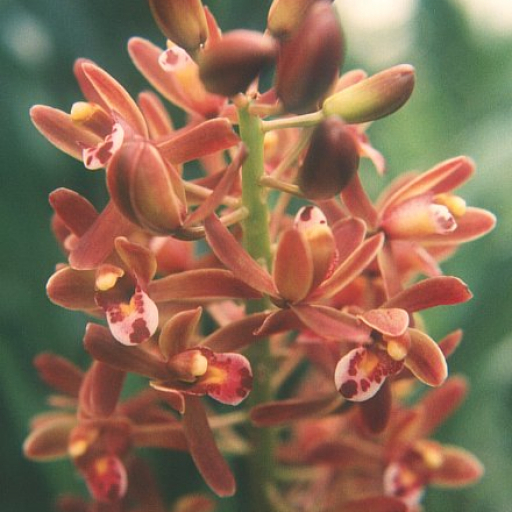
- 🌸 Crowded Spikes: It produces upright or gracefully arching flower spikes that can hold 30 to 40 individual blossoms, each usually a deep reddish-brown with a white and purple-spotted "lip."
- 📏 Compact Growth: This is a miniature to medium-sized orchid; it stays much smaller and more manageable than the giant "Standard" Cymbidiums, making it perfect for windowsills.
🏡 In Your Garden
- 🌡️ The Autumn Chill: This orchid is a "cool grower." To trigger its beautiful flower spikes, it requires a significant drop in temperature during the autumn nights. If kept in a perfectly climate-controlled, warm room year-round, it may stubbornly refuse to bloom.
- 🌤️ Dappled Sunlight: In the wild, it lives on rocky slopes or in trees. It loves bright, filtered light—think of the sun peeking through forest leaves. Avoid direct midday sun, which can scorch those "golden" leaf edges.
- 🌬️ Breathable Roots: It hates "wet feet." Use a chunky orchid bark mix rather than potting soil to ensure the roots get plenty of oxygen and the water drains away instantly.
⚠️ Safety & Toxicity
- 🐾 Pet Safety: Good news for pet parents! The Cymbidium genus is generally considered non-toxic to cats and dogs.
- 👶 Gentle Nature: It is safe for children’s rooms, though the long, leathery leaves can sometimes have slightly sharp edges if brushed against quickly.
- 🧤 Handling: While not toxic, some sensitive individuals might experience mild skin irritation from the sap if a leaf is broken.
✨ Fun Fact
This orchid is a master of biological trickery! It produces a scent that perfectly mimics the "alarm pheromone" of the Asian honeybee (Apis cerana). Honeybees are so convinced they’ve found a hive or a mate that they swarm the flowers, inadvertently pollinating the plant while searching for a nectar reward that isn't actually there.

Detailed Care Instructions
To successfully grow a Cymbidium floribundum plant, follow these steps:
- Lighting: Cymbidiums prefer bright, indirect light. Place the plant near a window with filtered sunlight or use artificial grow lights.
- Temperature: Cymbidiums thrive in temperatures between 60-80°F (15-27°C) during the day and slightly cooler at night. Avoid extreme temperature fluctuations.
- Humidity: These orchids require high humidity levels, ideally between 50-70%. Increase humidity by using a humidifier, placing the pot on a tray filled with water and pebbles, or misting the leaves regularly.
- Potting medium: Use a well-draining orchid mix consisting of bark, sphagnum moss, and perlite. Repot the plant every 2-3 years when the pot becomes crowded.
- Watering: Water the plant thoroughly once a week, allowing the water to drain completely. Avoid letting the plant sit in standing water, as this can lead to root rot. In winter, reduce watering frequency.
- Fertilization: Feed the orchid with a balanced orchid fertilizer every three to four weeks during the growing season (spring and summer). Reduce or stop fertilizing during the dormant period (fall and winter).
- Air circulation: Ensure good air circulation around the plant by placing it in a well-ventilated area. This helps prevent fungal and bacterial diseases.
- Flowering: Cymbidium floribundum typically blooms in late winter to spring. However, flowering seasons can vary depending on the specific cultivar. Provide a cool (50-55°F or 10-13°C), dry period for 4-6 weeks during the winter to stimulate blooming.
- Pests and diseases: Monitor the plant regularly for common orchid pests like scale insects, mealybugs, and spider mites. Treat infestations accordingly. Also, watch out for signs of root rot or bacterial/fungal diseases and take immediate action if needed.
Remember, Cymbidiums can be quite large, so make sure you have enough space for the plant to grow and spread out. With proper care and attention, your Cymbidium floribundum should thrive and reward you with beautiful blooms.

Place in a window with dappled sun or a spot in the middle of a room. Or directly in a window facing west or east.

To water this plant, it is important to use room temperature or tepid water, as cold water can shock the roots and damage the plant. It is best to water the plant in the early morning hours, to allow any excess water to evaporate during the day. The soil should be moistened evenly, taking care not to overwater or saturate the soil. Once the water has been added, allow any excess to drain away, avoiding standing water around the plant. This plant should be watered regularly, but take care not to let it sit in wet soil for extended periods of time.
- Use a balanced, water-soluble fertilizer with equal amounts of nitrogen, phosphorus, and potassium.
- Dilute the fertilizer to half the recommended strength.
- Apply the fertilizer every two weeks during the growing season (spring and summer).
- Avoid fertilizing during the dormant season (fall and winter).
- Apply the fertilizer to the soil around the base of the plant and avoid getting it on the leaves or flowers.
- Water the plant thoroughly after fertilizing to help distribute the nutrients.
For optimum growth of the Cymbidium Floribundum plant, it is important to use a well-draining, porous soil mixture with a pH between 5.5 to 6.5. A mixture of bark, perlite, and sphagnum moss is ideal as it provides good aeration and drainage, while also retaining moisture to prevent the roots from drying out. This plant prefers to grow in slightly acidic, loose, and nutrient-rich soil. It is important to avoid using heavy, compact, or clay-like soils as they can prevent proper drainage and damage the roots. Additionally, adding organic matter like compost can help improve the soil structure and provide essential nutrients to the plant.
To propagate this plant, you will need to take a healthy stem cutting from the parent plant. Ensure that the stem is at least 6 inches long and has a few leaves attached. Using a sharp and sterile blade, make a clean cut right below a node on the stem. Remove any leaves or flowers from the lower half of the stem.
Next, fill a small pot or container with well-draining soil and make a hole in the center. Dip the cut end of the stem in rooting hormone powder and then insert it into the hole. Gently press the soil around the stem to secure it in place.
Water the newly planted stem cutting and cover it with a plastic bag or dome to create a humid environment. Place the pot in a warm and bright spot, but away from direct sunlight. Check the soil moisture regularly and water as needed to keep it moist but not wet.
After a few weeks, you should see new roots and growth emerging from the stem cutting. Once the plant has developed a sturdy root system and has grown several leaves, you can transplant it into a larger pot or into your garden.
Propagation can also be done through division, where the parent plant is carefully separated into individual sections with their own roots and stems. This method is typically done when the plant has become too large for its current pot or location.








