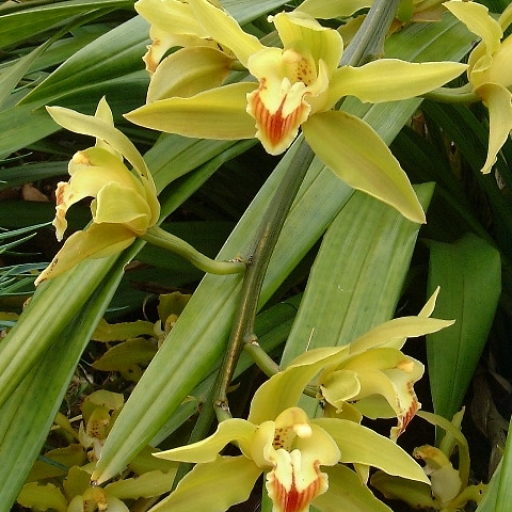
Plant Overview
Known as "Low's Cymbidium," this majestic orchid is a cool-climate treasure originating from the high-altitude forests of Myanmar, Thailand, and China. It is famous for its dramatic, arching sprays of flowers that can reach over a meter in length, creating a waterfall effect of greenery and crimson. In the world of orchid enthusiasts, it is considered a classic "legacy" plant because of its longevity and spectacular winter displays.
🔍 How to Identify
- 🌸 The Flowers: Large, waxy blooms featuring apple-green to chartreuse petals with a striking, velvety dark red "V" or "U" shape marked clearly on the white lip.
- 🍃 The Foliage: Long, elegant, strap-like leaves that are leathery to the touch and grow in a fan-like arrangement.
- 🧅 The Pseudobulbs: It possesses large, swollen, and slightly flattened green bulbs at the base, which act as water reservoirs for the plant.
🏡 In Your Garden
- ❄️ The Cooling Trick: This orchid is a "cool grower," meaning it requires a significant drop in nighttime temperatures (down to 50°F/10°C) during the autumn months. Without this "chill," the plant may grow beautiful leaves but will stubbornly refuse to produce flowers.
- 🌬️ Breathable Roots: In the wild, it grows on mossy trees or rocky cliffs. In a home setting, it hates "wet feet." It thrives best in a chunky bark-based orchid mix that allows plenty of oxygen to reach the roots while draining excess water instantly.
⚠️ Safety & Toxicity
- ✅ Safe Status: Cymbidium lowianum is generally considered non-toxic to humans and common household pets like cats and dogs.
- 🌱 Minor Irritation: While not poisonous, the sap from a broken stem might cause very mild skin irritation for those with sensitive skin, and as with any ornamental plant, it should not be ingested to avoid digestive upset.
✨ Fun Fact
The flowers of Cymbidium lowianum are incredibly hardy; a single flower spike can stay in perfect bloom for up to 10 weeks, making it one of the longest-lasting floral displays in the entire plant kingdom!

Detailed Care Instructions
To grow Cymbidium Lowianum plants, follow these steps:
- Light and temperature: Place the plant in a spot with bright, indirect light. Cymbidiums prefer light but avoid direct sunlight as it can damage the leaves. Maintain a temperature range between 60-80°F (15-27°C) during the day and a cooler temperature of 50-65°F (10-18°C) at night.
- Watering: Water the plant thoroughly when the top inch of the potting mix feels dry. Ensure good drainage and avoid overwatering, as it can lead to root rot. During summer, increase watering, but reduce it during the winter months.
- Humidity: Cymbidiums appreciate higher humidity levels, especially during the growing season. You can increase humidity by placing a tray with water near the plant or using a humidifier.
- Fertilization: Feed the plant with a balanced orchid fertilizer during the growing season. Dilute the fertilizer according to the manufacturer's instructions and apply it every 2-4 weeks. Reduce or stop fertilizing during the winter months.
- Potting: Use a well-draining potting mix specifically designed for orchids. Repot the plant every 2-3 years or when the pot becomes crowded with roots. Wait until after flowering to repot.
- Air circulation: Good air circulation is important to prevent the buildup of fungal diseases. Avoid placing the plant in stagnant air or in a drafty area.
- Flowering: Cymbidiums usually flower during the winter or early spring. To encourage blooming, provide a cooler temperature (around 50-65°F or 10-18°C) for about 4-6 weeks. During this time, reduce watering and fertilization.
- Pest control: Keep an eye out for common orchid pests such as scale, mealybugs, and spider mites. Regularly inspect the leaves and pseudobulbs for any signs of infestation and treat them immediately with appropriate insecticides if necessary.
By following these guidelines, you should be able to successfully grow your Cymbidium Lowianum plant.

Place in a window with dappled sun or a spot in the middle of a room. Or directly in a window facing west or east.

Watering the plant will require you to avoid wetting the leaves, which can cause unnecessary moisture buildup. It's best to water the soil slowly and allow it to absorb the water before applying more. Make sure the water is free of chlorine or other chemicals, as they can harm the plant. Additionally, ensure that the pot has suitable drainage so that the roots don't become waterlogged or develop root rot. Finally, it's essential to monitor the plant's water requirements and adjust watering frequency as needed, depending on the temperature, humidity, and light conditions of the environment.
To fertilize your Cymbidium Lowianum plant, apply a balanced, water-soluble fertilizer once every two weeks during the growing season, which is typically spring and summer. Use a fertilizer with a ratio of 20-20-20 or 30-10-10 and dilute it to half the recommended strength. Avoid fertilizing during the dormant season, which is usually in fall and winter. Apply the fertilizer to the soil around the base of the plant and water well. Additionally, make sure to provide adequate sunlight, temperature, and humidity for optimal growth.
The best soil for a particular orchid plant is determined by several factors. In general, this orchid species prefers a soil mixture that is well balanced in terms of water retention and drainage capacity. Typically, a soil mix composed of bark, sphagnum moss, and perlite is suitable for this plant; the proportions of each of these ingredients may differ depending on the specific needs of the species. The soil should be moist but not water-logged, and should allow sufficient air flow to the roots to prevent rotting. Additionally, it is recommended that a layer of rocks or broken clay pots be placed at the bottom of the pot to enhance drainage and prevent root rot.
One way to propagate this plant is through division. This involves carefully separating the plant into smaller sections, each with its own roots and growth points. To do this, gently remove the plant from its pot and carefully separate the sections, making sure to keep as many roots intact as possible. Each section can then be potted up individually in fresh potting mix.
Another way to propagate Cymbidium Lowianum is through backbulbs. Backbulbs are the older, smaller bulbs that develop at the base of the main bulb. These can be carefully removed and potted up individually, ensuring each has its own roots and growth point. These smaller bulbs will then grow into new plants over time.
Lastly, stem cuttings can be taken to propagate this plant. This involves taking a cutting of the stem, typically with a node or two, and placing it into rooting hormone. The cutting is then potted up in fresh potting mix and kept moist until roots develop. However, this method requires more skill and experience to be successful.








