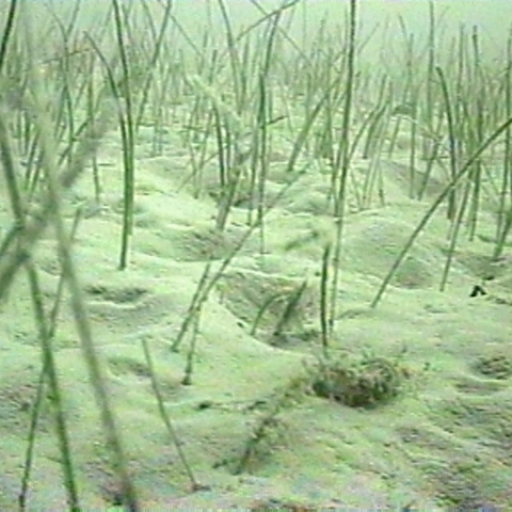
Plant Overview
Often called "Little Neptune Grass," Cymodocea nodosa is a vibrant marine architect of the Mediterranean and North Atlantic coasts. Unlike seaweed (which are algae), this is a true flowering plant that has adapted to life entirely underwater, creating lush "meadows" that serve as underwater forests. In Mediterranean coastal lore, these seagrass beds are often viewed as the hidden pastures of the sea, providing a nursery for countless fish and seahorses.
🔍 How to Identify
- 🌱 Leaf Structure: Features thin, ribbon-like leaves that are typically 10–30 cm long, usually growing in clusters of 2 to 5 from a single shoot.
- 🪵 The Rhizome: Look for a thick, creeping horizontal stem (rhizome) buried in the sand. It has distinct "nodes" or scars where old leaves once grew, which is how it earned its name "nodosa."
- 🎨 Coloration: While the leaves are a bright, grassy green, the stems and leaf sheaths often exhibit a distinct reddish or brownish tint, distinguishing it from other seagrasses like Posidonia.
🏡 Habitat & Ecology
- 🌊 Coastal Architect: This plant thrives in shallow, sandy, or muddy sea floors. It acts as a "pioneer species," stabilizing the shifting sands with its intricate root system so that other marine life can move in and settle.
- 🌡️ Environmental Indicator: It is a biological "canary in a coal mine." It requires exceptionally clear water to photosynthesize; if the water becomes too murky from pollution or coastal construction, these meadows are the first to disappear.
⚠️ Safety & Toxicity
- 🟢 Status: Completely non-toxic.
- 🐠 Details: This plant is a primary food source for green sea turtles and various herbivorous fish. While safe for humans to touch, it is a protected species in many regions. Removing it from its natural habitat is often illegal because it is vital for preventing coastal erosion.
✨ Fun Fact
Despite living entirely submerged in salt water, Cymodocea nodosa actually produces tiny flowers! It practices "hydrophilous pollination," where its pollen is released into the ocean currents to be carried like underwater dust to neighboring plants.

Detailed Care Instructions
To grow Cymodocea nodosa (also known as "nodose seagrass"), you will typically need to follow these steps:
- Choose a suitable location: Cymodocea nodosa is a marine plant that thrives in clear, shallow water areas with moderate wave action. It requires a sandy or silty substrate, as well as sufficient sunlight for photosynthesis.
- Obtain seeds or transplants: Cymodocea nodosa can be propagated from seeds or transplants. Seeds can be collected from mature plants if you have access to them. Alternatively, you can purchase seedlings or transplants from a reputable supplier or obtain them through conservation programs.
- Prepare the planting area: Clear the area of any debris or competing vegetation. Ensure that the substrate is suitable and stable. Avoid areas with strong currents or excessive sedimentation.
- Plant the seeds or transplants: If using seeds, scatter them evenly over the planting area. Cover them lightly with a thin layer of sediment to promote germination. If using transplants, dig small holes in the substrate and place the plants carefully, ensuring their roots are well-covered and stabilized.
- Water and light requirements: Ensure that the planted area is in a location where it will receive ample sunlight for photosynthesis. The water should be clear and have moderate wave action to provide adequate oxygenation. Cymodocea nodosa can tolerate brackish water but prefers marine environments.
- Maintain proper conditions: Regularly monitor water quality, temperature, salinity, and other relevant parameters to ensure healthy growth. Avoid any pollution or sedimentation that may inhibit the growth of Cymodocea nodosa. Periodically remove any debris or competing vegetation that could affect the plant.
Overall, growing Cymodocea nodosa can be challenging as it requires specific marine conditions. It is advised to consult with local marine experts or organizations to ensure the suitability of your chosen location and to obtain the necessary permits or approvals for seagrass restoration or cultivation efforts.

Place in a bright room that is sun drenched almost all day. Or directly in a south-facing window.
Cymodocea nodosa is an aquatic plant that requires specific watering techniques to thrive. Here are some details on how to water it:
- Watering frequency: Cymodocea nodosa should be watered periodically, depending on the size of the plant, its location, and the weather conditions. As a general rule, the plant should be watered once or twice a week, ensuring that the soil around the roots is kept moist but not waterlogged.
- Watering method: Cymodocea nodosa can be watered using a watering can or a hose, making sure to avoid watering the leaves and allowing the water to reach the root system. The water should be poured slowly to allow it to soak into the soil.
- Soil type: Cymodocea nodosa prefers well-draining soil that is rich in nutrients. It is recommended to use a sandy soil mix or a specific aquatic plant soil, which will help maintain the proper moisture level.
- Water quality: The quality of the water used to irrigate Cymodocea nodosa is essential. The water should be free of any contaminants or pollutants and have a moderate salinity level, which is comparable to that of seawater. If tap water is used, it should be treated with dechlorinating agents.
- Container size: Cymodocea nodosa can be grown in containers or directly in the ground. If grown in a container, it should have adequate drainage holes to prevent waterlogging. The size of the container should be appropriate for the size of the plant and the root system.
Overall, Cymodocea nodosa is relatively easy to care for, and as long as the watering and soil requirements are met, it should thrive and add a unique touch to any aquatic garden.
For optimal growth and health, provide the Cymodocea Nodosa plant with a balanced fertilizer that contains equal amounts of nitrogen, phosphorus, and potassium. Apply the fertilizer every two to four weeks during the growing season, following the manufacturer's instructions for dosage and application method. Avoid applying fertilizer during dormant periods or in extreme temperatures. Water the plant thoroughly after fertilizing to help distribute the nutrients evenly throughout the soil. Monitor the plant for any signs of over-fertilization, such as yellowing leaves or stunted growth, and adjust the fertilizer application accordingly.
Cymodocea Nodosa is a marine aquatic plant that belongs to the family of seagrasses. It requires a specific type of soil for optimal growth and development. The soil should be sandy and nutrient-rich with a pH range of 7.5 to 8.5. This type of soil is commonly found in sandy beaches and shallow coastal waters. The soil should also have good drainage properties to prevent waterlogging, which can lead to root rot and plant death. It is important to note that Cymodocea Nodosa is a salt-tolerant plant, and therefore, the soil should have a salinity level of between 30 to 35 parts per thousand. The soil should also have adequate sunlight to facilitate photosynthesis, which is crucial for the growth and development of the plant.
Cymodocea Nodosa can be propagated through vegetative reproduction. The process involves taking a cutting of the plant's rhizome, which is the underground stem that produces roots and shoots. The cutting should be about 10 cm long and should include a few leaves.
The cutting is then planted in a container with sand or gravel as the substrate. The container should be filled with seawater and placed in a location with access to sunlight. The cutting should be kept moist until roots and new shoots begin to appear.
Once the new shoots have reached a suitable size, they can be separated from the parent plant and planted in their own containers. The new plants should be placed in a suitable location with access to sunlight and regularly watered with seawater.
Propagation of Cymodocea Nodosa should only be done under appropriate conditions and regulations, as it is a protected species in some areas.








