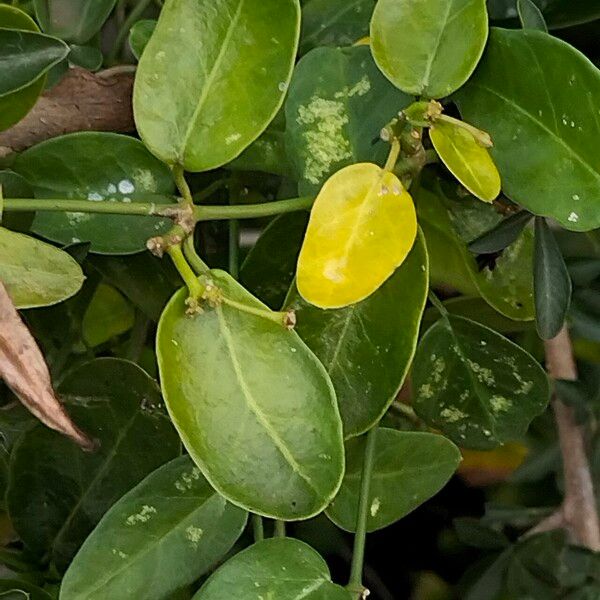
Plant Overview
Often called the Climbing Milkweed or sometimes "Monkey-rope" in its native Southern Africa, this vigorous vine is a master of the vertical world. It weaves its way through coastal forests and scrublands, creating a lush green tapestry that hides a complex chemical defense system. While it may appear as a simple garden creeper, it is a vital cornerstone for local biodiversity, serving as both a fortress and a feast for specific butterfly species.
🔍 How to Identify
- 🍃 The Foliage: The leaves are deep green, smooth, and—as the name suggests—distinctly elliptic or oval, often featuring a tiny, sharp point at the very tip.
- 🌸 The Bloom: During flowering season, it produces small, dense clusters of cream-to-white star-shaped flowers that tucked away in the leaf axils.
- 🧶 The Stem: The stems are slender, flexible, and twining; they lack tendrils but stay upright by tightly spiraling around any available support.
- 💧 Milky Sap: If a leaf or stem is broken, the plant immediately leaks a thick, sticky white latex, a classic hallmark of the Milkweed family.
🏡 In Your Garden
- 🧗 Support System: This plant is a born scrambler. It doesn't do well trailing on the flat ground; it thrives best when provided with a trellis, fence, or a "sacrificial" sturdy shrub to climb over.
- 🌗 Light & Edge Logic: It naturally inhabits forest edges. In a home setting, this means it craves bright, indirect light or morning sun, but its "feet" (roots) prefer to stay cool and shaded.
- 🌍 Soil Preference: It is highly adaptable but hates "wet feet." Ensure your soil is well-draining, as it is used to the rocky or sandy substrates of the South African coast.
⚠️ Safety & Toxicity
- 🧪 Ingestion Warning: The entire plant contains cardiac glycosides. These compounds are highly toxic to humans and animals if swallowed, affecting heart rhythm.
- 🐾 Pet Safety: This is not a pet-friendly plant. Keep it out of reach of dogs, cats, and livestock, as consuming the foliage can be fatal in large quantities.
- 🧤 Skin Irritant: The milky latex can cause skin irritation or "latex dermatitis" in sensitive individuals. Always wear gloves when pruning or taking cuttings to avoid itchy rashes.
✨ Fun Fact
🦋 Chemical Warfare: The African Monarch butterfly specifically seeks out Cynanchum ellipticum to lay its eggs. The caterpillars eat the leaves and store the plant's toxins in their own bodies, making them—and the eventual butterflies—completely poisonous (and foul-tasting) to hungry birds!

Detailed Care Instructions

Place in a window with dappled sun or a spot in the middle of a room. Or directly in a window facing west or east.

Water-loving plants flourish in wet or sloppy soil and near ponds. The extensive root system enables these plants to absorb plenty of water. The surface of the soil should be kept moist at all times. Place your pot in a container filled with water to guarantee that plants get enough water. If the ground becomes dry, it is recommended that you water it well. Plants in smaller pots will need to be watered more frequently. Water the soil in which the plant is standing thoroughly using a watering can.







