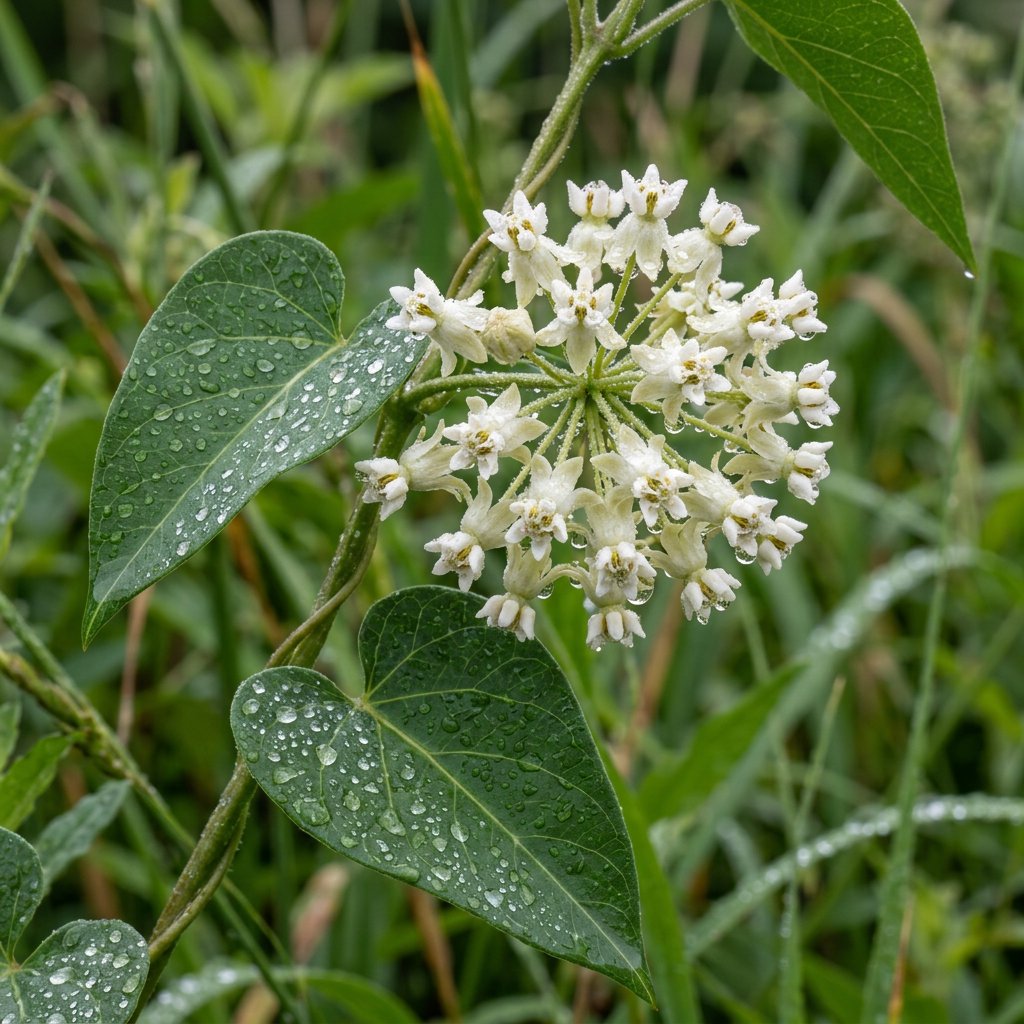
Plant Overview
Often called the Honeyvine Milkweed or Sand Vine, this plant is a master of disguise. While it mimics the climbing habit of troublesome bindweeds, it is actually a vital member of the dogbane family and a secret ally to pollinators. It’s the perfect choice for nature lovers who want to support butterflies but only have vertical space to spare.
🔍 How to Identify
- 🍃 The Leaves: Look for distinct, heart-shaped leaves that grow in opposite pairs along the stem. They often feature prominent, pale green or white veins.
- 🌸 The Blooms: Small, fragrant, creamy-white flowers appear in clusters. Each flower is shaped like a tiny star with five delicate petals.
- 🥒 The Seed Pods: In late summer, it produces smooth, green, teardrop-shaped pods. Unlike the "warty" pods of Common Milkweed, these are sleek and look somewhat like small peppers.
🏡 In Your Garden
- 🧗 The Climbing Habit: This isn't your average upright milkweed; it is a vigorous perennial vine. It uses its stems to twine tightly around fences, trellises, or even other plants. If you aren't careful, it can quickly "shroud" smaller shrubs.
- 🦋 A Hidden Nursery: While many gardeners mistake it for a weed, it is a critical host plant for Monarch butterflies. If you see striped caterpillars on a vine, don't pull it—you're hosting a future generation of butterflies!
- 🌱 Root Resilience: It grows from a deep, fleshy taproot that stores energy for winter. This makes the plant very drought-tolerant but also difficult to move once it has settled into its favorite spot.
⚠️ Safety & Toxicity
- 🐾 Toxic to Animals: Like most milkweed relatives, the Honeyvine contains cardiac glycosides. It is considered toxic to horses, cattle, and household pets if consumed in large quantities.
- 🧤 Sticky Sap: When a leaf or stem is broken, the plant leaks a milky white latex sap. This can be a skin irritant for some people, so it's a good idea to wear gloves when pruning or weeding around it.
✨ Fun Fact
Despite its plain white flowers, the Honeyvine is one of the most fragrant members of the milkweed family. On warm summer evenings, the "honey" in its name becomes literal, as the vines release a heavy, sweet perfume that can be smelled from several yards away.

Detailed Care Instructions
To grow a Cynanchum Laeve plant, also known as sand vine or honeyvine milkweed, you can follow these steps:
- Obtaining seeds: You can either collect seeds from a mature plant or purchase them from a reputable seed supplier. Make sure the seeds are fresh for higher germination rates.
- Preparing the seeds: Before planting, you can scarify the seeds by gently rubbing them with sandpaper or soaking them in warm water for a few hours. This process helps to break the seed coat and promote germination.
- Germination process: Start by filling small pots or seed trays with a well-draining soil mixture, preferably a mix of potting soil and perlite or vermiculite. Moisten the soil lightly and sow the scarified seeds on the surface, pressing them gently into the soil or lightly covering them with a thin layer of soil.
- Provide suitable conditions: Place the pots or trays in a warm and sunny location, such as a greenhouse or a sunny windowsill with temperatures around 70-80°F (21-27°C). Water the seeds regularly, keeping the soil moist but not waterlogged.
- Transplanting seedlings: Once the seedlings have grown a few sets of true leaves and are around 2-3 inches tall, they can be transplanted into their permanent location. Select a sunny area in your garden with well-draining soil.
- Soil preparation: Prepare the planting area by loosening the soil and removing any weeds or grass. You can enrich the soil with compost or organic matter to provide essential nutrients.
- Planting outdoors: Dig a small hole that is slightly larger than the root ball of the seedling. Gently remove the seedling from its pot, being careful not to disturb the roots too much, and place it in the hole. Backfill the hole with soil, firming it gently around the roots.
- Watering: After planting, water the newly transplanted seedlings thoroughly to settle the soil and ensure good root-to-soil contact. Keep the soil evenly moist during the growing season. However, avoid overwatering, as these plants prefer slightly drier conditions.
- Maintenance: As the plant grows, you may need to provide support such as a trellis or fence for it to climb on. Control weeds around the plant by mulching or regular hand weeding. Prune any dead or damaged branches to maintain plant health.
- Harvesting and seed collection: In late summer or early fall, the plant may produce seed pods. Allow the pods to mature and dry on the vine until they turn brown and split open. Collect the seeds for future propagation or share them with other gardeners.
Remember, Cynanchum Laeve plants are native to North America and provide an important food source for bees and butterflies. Additionally, they host monarch butterfly caterpillars. It's always beneficial to include native plants in your garden to support local wildlife populations.

Place in a window with dappled sun or a spot in the middle of a room. Or directly in a window facing west or east.

Cynanchum Laeve is a type of plant that requires proper watering to ensure its growth. The first step to watering this plant is to determine the soil moisture level. The soil should be moist but not saturated. Use your finger to gauge the soil moisture level by sticking it about one inch deep into the soil.
It is recommended to water the plant deeply but infrequently. This means that you should water the plant thoroughly but not too often. Watering the plant deeply helps the roots establish a solid foundation and grow deep into the soil.
During the summer months, when the plant is actively growing, you should water it once a week. In the winter, when the plant goes dormant, you can water it every two to three weeks. Be sure to adjust the watering frequency based on the plant's needs and the climate conditions in your area.
When watering, avoid getting the leaves wet as this can lead to fungal growth and other pest problems. Water the soil directly around the plant's base and let it soak in. Avoid overwatering as this can lead to root rot and other problems.
Lastly, it’s important to plant Cynanchum Laeve in well-draining soil. This ensures that water doesn't sit and cause the roots to rot. If you follow these watering tips, your Cynanchum Laeve plant should thrive and grow strong.
To properly fertilize this plant, you should provide it with a balanced, all-purpose fertilizer once per month during the growing season. Be careful not to over-fertilize as this can damage the plant. Additionally, make sure to water the plant thoroughly before and after fertilizing to prevent burn.
Cynanchum Laeve plant will thrive in well-draining soil that is rich in organic matter. It prefers a slightly acidic to neutral pH level. A soil mix that includes a blend of peat moss, perlite or vermiculite, and sand will provide good drainage and aeration for the plant's root system. Additionally, adding some compost or aged manure to the soil mix can provide the necessary nutrients for optimal growth. It is important to avoid using heavy clay soils or soils that retain too much moisture, which can cause root rot and other issues. Regularly checking the moisture levels and adjusting the watering schedule as needed is also important to prevent waterlogging or drought stress.
Cynanchum Laeve plant can be propagated through stem cuttings. Here are the steps to propagate it:
- Choose a healthy stem from the plant and cut a section that is 3-4 inches long.
- Remove the leaves from the bottom half of the stem.
- Dip the cut end of the stem in rooting hormone powder.
- Plant the stem cutting in a well-draining potting mix.
- Water the cutting thoroughly and place it in a bright location but out of direct sunlight.
- Cover the pot with a plastic bag or a clear plastic container to create a humid environment.
- Keep the soil moist but not waterlogged.
- After a few weeks, the plant should start producing new growth, which indicates that it has rooted.
- Once the root system is well-established, remove the plastic cover and care for the plant as usual.
Propagation through stem cuttings is a simple and effective method to propagate Cynanchum Laeve plant and you can grow multiple plants from a single stem.
Common pests of the honeyvine include Aphids, larvae. Make a habit of checking your honeyvine frequently for pests so that any infestations can be caught and managed early.








