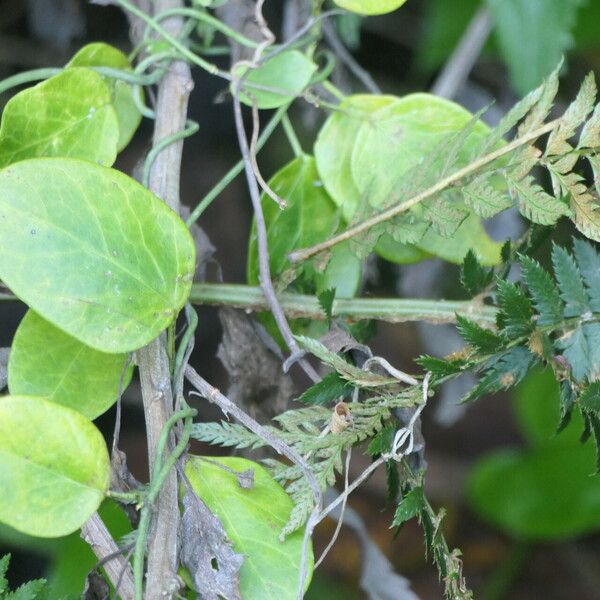
Plant Overview
Known affectionately as the Coast Milkvine or Seashore Vine, this resilient scrambler hails from the rugged, salt-sprayed coastlines of South Africa. It is a member of the Apocynaceae family, making it a distant relative of the famous Milkweed plants. Whether it’s draping over coastal dunes or climbing up garden trellises, this vine is a master of survival in harsh, sandy environments where other plants would wither.
🔍 How to Identify
- 🍃 The Leaves: The foliage is succulent-like and "obtuse" (rounded or blunt at the tips), which gives the plant its name. They are typically a deep, waxy green to help retain moisture.
- 🌸 Starry Blooms: It produces clusters of small, star-shaped flowers that range from creamy white to pale greenish-yellow. While tiny, they emit a subtle, sweet fragrance to attract pollinators.
- 💧 Milky Latex: If a stem or leaf is broken, the plant immediately bleeds a thick, white milky sap—a classic hallmark of the Cynanchum genus.
🏡 In Your Garden
- 🌊 Coastal Specialist: This plant is incredibly salt-tolerant. If you live near the ocean where salty winds kill most ornamental plants, the Coast Milkvine will thrive where others fail.
- 🧗 The Twiner: It is a natural climber that uses its stems to "twine" around supports. Because it lacks tendrils, it prefers thin structures like wire fences or mesh rather than thick walls.
- 🏜️ Soil & Drainage: In a garden setting, it hates "wet feet." It requires very sandy, well-draining soil to mimic its natural dune habitat. Overwatering is the fastest way to stress this hardy vine.
⚠️ Safety & Toxicity
- 🚫 Toxic Status: Highly Toxic / Irritant.
- 🐾 The Danger: Like many milkweeds, the sap contains cardiac glycosides. If ingested, it can be dangerous to pets, livestock, and humans, affecting heart rhythm. The milky latex can also cause significant skin irritation or "dermatitis" upon contact, so always wear gloves when pruning.
✨ Fun Fact
The genus name Cynanchum comes from the Greek words kynos (dog) and anchein (to strangle). This dramatic name refers to ancient historical accounts where the plant's toxic sap was used in baits to protect livestock from predators!

Detailed Care Instructions

Place in a window with dappled sun or a spot in the middle of a room. Or directly in a window facing west or east.

Some plants require more regular watering than others, which should be done every few days. It's critical to maintain the soil moist all of the time. The water requirements of the same plant placed in pots with varying sizes will differ. Because the water in the smaller pot evaporates faster than the water in the larger pot, it will require more watering. Regardless of pot size, the surface should constantly be maintained moist.








