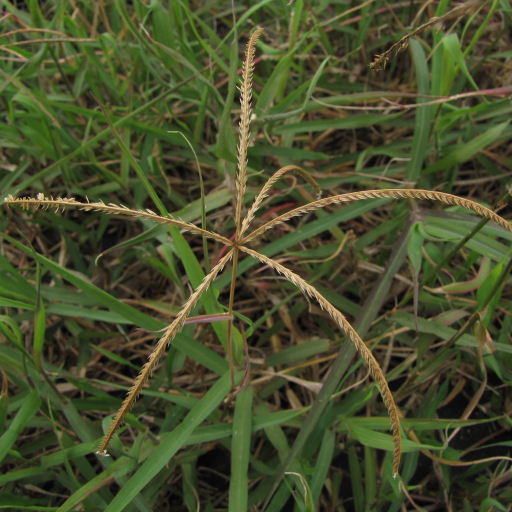
Plant Overview
Often called African Bermudagrass or Star Grass, this resilient traveler from East Africa has conquered warm climates across the globe. It acts like a living green lace, knitting together loose soil with its vigorous, sprawling stems. While it is a hero in wide-open pastures and for erosion control, it is a plant that definitely knows how to take up space and hold its ground!
🔍 How to Identify
- 🌱 The Surface Runners: Unlike some grasses that hide underground, this species spreads via "stolons"—creeping stems that run across the surface, rooting at the joints to create a thick, dense mat.
- ⭐ Starry Seed Heads: Its name comes from the flowering tops, which feature 4 to 9 slender spikes radiating from a single point, resembling a delicate green star or a bird's foot.
- 🍃 Leaf Texture: The blades are narrow, typically hairless, and possess a distinct grayish-green hue, tapering to a sharp, fine point.
🏡 In Your Garden
- ☀️ Sun Seeker: This grass is a dedicated sun-worshipper; it thrives in bright, open spaces and will quickly thin out or "bolt" if forced into the shade of large trees or buildings.
- 🧱 Boundary Issues: Because it lacks underground rhizomes, it is slightly easier to pull up than common Bermudagrass, but its surface runners are incredibly fast—you’ll need a sturdy edge or border to keep it from "leaping" into your flower beds.
- 💧 Drought Warrior: Once established, it is remarkably tough. It prefers well-drained soil and can survive long dry spells by going dormant, turning brown, and then "greening up" almost overnight after a heavy rain.
⚠️ Safety & Toxicity
- ✅ General Safety: Cynodon nlemfuensis is considered non-toxic to humans and common household pets like dogs and cats.
- 🐕 Grazing Habits: While safe, if your pet obsessively eats large quantities of the coarse blades, it may cause minor mechanical irritation to the throat or an upset stomach.
- 🌾 Agricultural Note: In specific agricultural settings under extreme stress (like sudden frost or severe drought), some varieties can accumulate prussic acid, but this is almost never a concern for the casual home gardener or hobbyist.
✨ Fun Fact
Because of its incredibly rapid growth and deep-reaching root system, this grass is frequently used as "ecological stitches" to heal landscapes after heavy construction or mining, preventing precious topsoil from washing away during tropical storms.

Detailed Care Instructions
To grow Cynodon nlemfuensis, also known as African Bermuda grass, you can follow these steps:
- Choose the right location: Cynodon nlemfuensis prefers full sun, so choose a location that receives at least 6 hours of direct sunlight per day.
- Soil preparation: Prepare the soil by removing any weeds, rocks, or debris. Loosen the soil with a garden fork or tiller to a depth of 4-6 inches. Cynodon nlemfuensis thrives in well-draining soil, so you may need to amend heavy clay or compacted soil with organic matter to improve drainage.
- Seed sowing: Spread the Cynodon nlemfuensis seeds evenly over the prepared soil. Mix the seeds with sand to make them easier to distribute. The recommended sowing rate is 2-3 pounds of seeds per 1,000 square feet.
- Raking and pressing: Use a rake to lightly rake the seeds into the soil. Then, press the seeds into the soil using a roller or by walking over the area. This ensures good seed-to-soil contact.
- Watering: Water the seeded area thoroughly immediately after sowing. Keep the soil moist but not waterlogged during the germination period, which usually takes around 10-14 days.
- Fertilization: Once the seedlings have established, apply a balanced fertilizer according to the manufacturer's instructions. Cynodon nlemfuensis is typically fertilized every 6-8 weeks during the growing season.
- Mowing: When the grass reaches a height of around 3-4 inches, mow it to a height of 2-3 inches. Regular mowing promotes denser growth and helps control weeds.
- Watering and maintenance: Water the lawn deeply and infrequently, allowing the soil to dry out slightly between waterings. Avoid overwatering, as it can lead to shallow root growth. Remove weeds and debris regularly to prevent competition for nutrients and space.
- Pest and disease control: Monitor the grass for pests like armyworms, chinch bugs, or diseases like brown patch. Use appropriate insecticides or fungicides if necessary, following the labeled instructions.
- Overseeding: Over time, you may need to overseed sparse areas to maintain a healthy and dense lawn. Repeat the process of raking, pressing, and watering for overseeding.
Remember to consult local gardening resources or a professional for specific guidance on growing Cynodon nlemfuensis in your specific region, as optimal practices may vary based on climate and soil conditions.
To water this plant, ensure that the soil is sufficiently dry before watering. You can do this by checking the soil's moisture level with a moisture meter or by sticking your finger into the soil about two inches deep. If the soil feels dry at this depth, it's time to water. When watering, make sure to water deeply, saturating the soil at the plant's root level. Allow the water to seep into the soil before adding more to ensure that it reaches the plant's roots effectively. It's best to avoid watering too frequently as it can lead to root rot and other problems. Instead, water thoroughly but less frequently. Finally, make sure that the plant is not sitting in standing water as this can also lead to root rot.
To fertilize this plant, apply a balanced fertilizer with equal parts nitrogen, phosphorus, and potassium. Use a low dose of fertilizer and apply it evenly throughout the growing area. Water the plant well after fertilization to ensure the nutrients are evenly distributed. Avoid over-fertilizing as this can damage the plant and cause it to grow too quickly, leading to weak stems and disease susceptibility.
The recommended type of soil to use for the Cynodon Nlemfuensis plant should be well-draining and fertile, with a pH level ranging from neutral to slightly acidic. It should also be rich in organic matter, such as compost or well-rotted manure. The soil should retain moisture well, but not be so compacted that it hinders root growth and water penetration. It is also important to note that the Cynodon Nlemfuensis plant prefers full sun and warm temperatures, so the soil should be able to support these conditions. Additionally, regular fertilization and watering may be required to ensure optimal growth and development.
Cynodon Nlemfuensis can be propagated through various methods such as dividing the mature clumps, through stem cuttings, or through seeds. Here's how to propagate it:
- Dividing the mature clumps: This method is best for already established plants. Carefully dig up the plant and separate the mature clumps, ensuring that each clump has sufficient roots attached. Replant the clumps in separate pots or directly in the ground.
- Stem cuttings: Take a stem cutting from the parent plant that is about 4-6 inches long. Remove the lower leaves and dip the cut end in rooting hormone powder. Plant the cutting in moist soil and cover it with plastic or a glass jar to create a humid environment. Keep the soil moist and place the pot in bright indirect light. After a few weeks, the cutting should have formed roots and can be transplanted.
- Seeds: Collect mature seed heads from the parent plant and remove the seeds. Soak the seeds in water for a few hours to soften the outer coating. Plant the seeds in a well-draining soil mix, covering them lightly with soil. Keep the soil moist and place the pot in a sunny location. After a few weeks, the seeds should germinate and can be transplanted.
It's important to note that Cynodon Nlemfuensis is a warm-season grass and grows best in tropical and subtropical regions. It requires plenty of sunlight, moderate watering, and well-draining soil.








