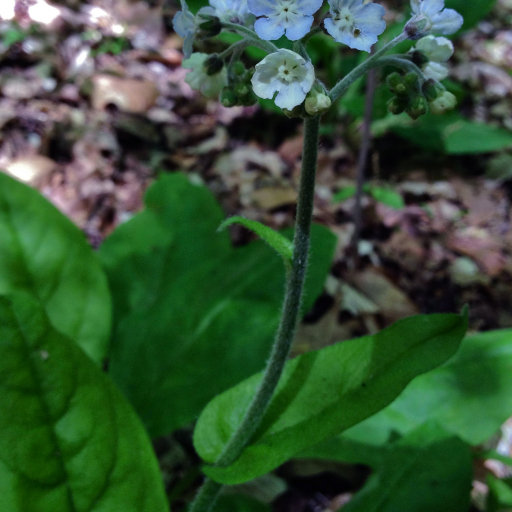
Plant Overview
Often called "Wild Comfrey," this Appalachian native is a quiet star of the eastern North American woodland floor. It is most famous for its prehistoric-looking, oversized leaves and delicate, ice-blue flowers that emerge in late spring. While it shares a common name with the medicinal Comfrey, this giant belongs to the Borage family and carries a rugged, wild charm that makes it a favorite for naturalized shade gardens.
🔍 How to Identify
- 🌿 Oversized Bristly Leaves: The most striking feature is the large, oval-shaped leaves that can reach 8 inches in length. They are covered in stiff, sandpapery hairs that give the plant a coarse texture.
- 🩵 Cylindrical Flower Clusters: Small, pale blue or lavender flowers grow on leafless stalks. They are bell-shaped and usually appear in "cymes" (uncoiling clusters) that resemble a scorpion's tail.
- 🧶 Velcro-like Seeds: After the flowers fade, the plant produces four prickly "nutlets." These seeds are designed to hitchhike by clinging tightly to the fur of passing animals or the fabric of your hiking pants.
🏡 In Your Garden
- 🌳 Woodland Context: This plant is an "understory" specialist. It thrives in the dappled light beneath deciduous trees and requires rich, loamy soil filled with organic leaf mold.
- 🌱 Taproot Sensitivity: Wild Comfrey develops a deep, thick taproot that helps it survive occasional dry spells in the woods. Because of this, it hates being moved; choose its forever home carefully to avoid transplant shock.
- 🐝 Early Pollinator Support: It is one of the first substantial nectar sources available for native long-tongued bees as they emerge in the spring.
⚠️ Safety & Toxicity
- 🚫 Toxic Assessment: Wild Comfrey contains pyrrolizidine alkaloids, which are known to cause liver damage if ingested by humans or livestock.
- 🐾 Keep Away from Pets: While the bristly texture usually discourages animals from snacking, it should be kept away from curious dogs or cats.
- 🧤 Skin Sensitivity: The stiff hairs on the stems and leaves can cause mechanical irritation or a mild itchy rash on people with sensitive skin.
✨ Fun Fact
In traditional folklore, the "stick-tight" seeds were sometimes used in "love charms"—the idea being that if you could sneak a seed onto someone’s clothing without them noticing, they would "stick" to you forever!

Detailed Care Instructions
| Humidity | Normal |
| Lighting | Part Sun |
| Difficulty | Medium |
| Temperature | 21°C - 30°C |
| Hardiness Zones | 6 - 11 |
To grow Cynoglossum Virginianum, also known as wild comfrey or wild hound's tongue, you can follow these steps:
- Obtain seeds or young plants: You can purchase seeds or seedlings from a nursery or online store specializing in native plants. Alternatively, if you know someone who already has this plant, you may be able to collect seeds from them.
- Choose a suitable location: Cynoglossum Virginianum prefers well-drained soil and partial shade. It can tolerate full sun but may benefit from some shade during the hottest part of the day.
- Prepare the soil: Loosen the soil in the chosen location and remove any weeds or grass. Wild comfrey prefers slightly acidic to neutral soil but can tolerate a wide range of soil conditions.
- Plant the seeds or seedlings: If using seeds, sow them directly into the prepared soil, following the recommended planting depth and spacing. If using seedlings, dig holes slightly larger than the root ball and gently place the plants in them, firming the soil around them.
- Water regularly: Keep the soil consistently moist but not waterlogged. Watering once or twice a week, depending on rainfall, should be sufficient. During dry spells, increase the frequency of watering.
- Mulch: Apply a layer of organic mulch, such as straw or wood chips, around the base of the plants. This will help retain moisture, suppress weeds, and maintain a cool root environment.
- Prune and deadhead: Once the plant establishes itself, you can trim back any dead or damaged foliage and flowers. Deadheading (removing spent flowers) can also encourage continuous blooming.
- Monitor for pests and diseases: While Cynoglossum Virginianum is generally resistant to pests and diseases, occasionally, issues may arise. Keep an eye out for any signs of damage or disease, and address them promptly using appropriate treatments or methods.
- Propagation: If you want to propagate more Cynoglossum Virginianum plants, you can collect seeds when the flowers fade and dry. Sow these seeds in containers or directly in the garden during the appropriate season.
- Enjoy the blooms: With proper care, you should soon have a beautiful patch of Cynoglossum Virginianum plants, known for their attractive blue flowers. Enjoy the blooms and the potential wildlife benefits they may offer.
To water this plant, first ensure that its soil is dry to the touch before watering it. When watering, pour water at the base of the plant and avoid getting water on its leaves. Water slowly and allow it to soak in. The plant should not sit in standing water as this can lead to root rot. Depending on the environment, the frequency of watering may vary. It is recommended to water when the soil is dry to the touch, but not completely dry. Overwatering or underwatering can harm this plant.
- Choose a balanced all-purpose fertilizer that is low in nitrogen.
- Apply the fertilizer to the soil around the base of the plant in early spring.
- Use a granular or slow-release fertilizer to ensure even and consistent feeding.
- Water the plant deeply after fertilizing to help distribute the nutrients throughout the roots.
- Repeat fertilization once or twice per growing season, following the same application method each time.
- Avoid over-fertilizing, as this can lead to excessive leafy growth at the expense of blooms.
For Cynoglossum Virginianum plant, it is recommended to use a soil that is well-draining, moist, and rich in organic matter. The soil should have a pH level between 5.5 and 7.5, which is slightly acidic to slightly alkaline. A mix of peat moss, compost, and regular garden soil can be used. It is also important to ensure that the soil is free of any weeds or pests, as these can negatively impact the growth of the plant. Additionally, regular fertilization with a balanced fertilizer can help to keep the plant healthy and promote growth.
To propagate this plant, you will need to collect seeds from mature plants or take stem cuttings. To collect seeds, wait until the plant has finished blooming and the seed heads have formed. Carefully remove the seed heads and allow them to dry completely. Once dry, gently crack open the seed pods and collect the seeds. To take stem cuttings, choose a healthy stem with at least two sets of leaves. Cut the stem at a 45-degree angle and remove the lower set of leaves. Dip the cut end of the stem in rooting hormone and plant it in a well-draining soil mix. Water the cutting regularly and keep it in a warm, bright location. Within a few weeks, you should see new growth indicating that the cutting has successfully rooted.








