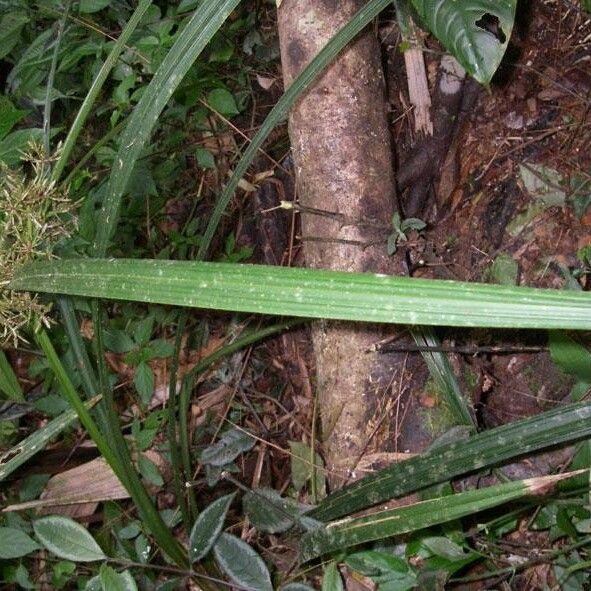
Plant Overview
Known as the Costa Rican Sedge, this plant looks like a collection of tiny green umbrellas dancing in the tropical wind. Native to the lush wetlands of Central America, it is a favorite for water gardeners who want to add an architectural, prehistoric vibe to their landscapes. Whether lining a pond or sitting in a damp pot, its geometric silhouette is instantly recognizable.
🔍 How to Identify
- 📐 Triangular Stems: Like most members of the Sedge family, if you feel the stem, you’ll notice it has three distinct sides—remember the botanist's rhyme: "Sedges have edges!"
- ⛱️ Umbrella Bracts: The "leaves" at the very top of the stalk aren't actually leaves, but leaf-like bracts that radiate outward like the ribs of an umbrella.
- 🌾 Cluster Spikelets: The flowers appear as dense, brownish-green clusters of spikelets that sit right in the center of the "umbrella," adding a fuzzy texture to the plant's crown.
🏡 In Your Garden
- 💧 Thirst for Moisture: This plant is a "hydrophile," meaning it loves water. It thrives with "wet feet" and is one of the few plants that can be partially submerged in a pond or kept in a pot without drainage holes.
- ☀️ Humidity is Key: While it enjoys bright light, it hates dry air. If you keep it as a houseplant, it needs frequent misting or a pebble tray to prevent the leaf tips from turning brown and crispy.
- 🧱 Rhizome Control: It spreads via underground rhizomes. If planted directly in the ground in a tropical climate, it can be quite enthusiastic; keeping it in a container is the best way to manage its footprint.
⚠️ Safety & Toxicity
- ✅ Pet & Human Safe: Cyperus costaricensis is generally considered non-toxic to cats, dogs, and humans. It is a much safer alternative for cat owners than many other tropical ornamental plants.
- 🧤 Sharp Foliage: Be cautious when handling the plant with bare hands. The edges of the long bracts can be surprisingly sharp and may cause minor skin nicks similar to a paper cut.
✨ Fun Fact
📜 Ancient Heritage: This plant is a close relative of Cyperus papyrus, the plant that ancient Egyptians used to create the world’s first paper! While the Costa Rican Sedge is smaller, it shares the same resilient, fibrous structure that made its cousin a historical legend.

Detailed Care Instructions








