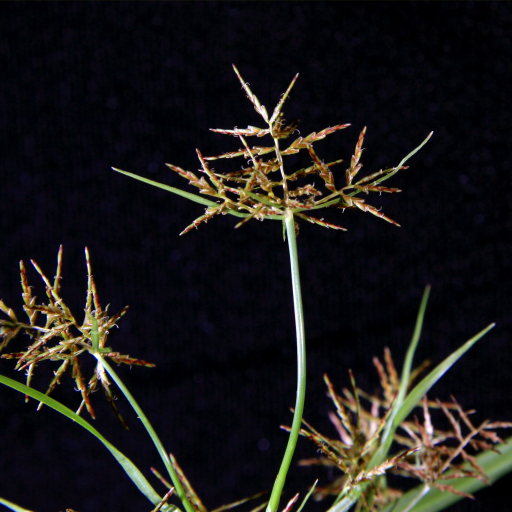
Plant Overview
Often called the Slender Sedge, Cyperus distans is the graceful, wispy relative of the ancient Egyptian Papyrus. Thriving in marshes and along riverbanks across the tropics, it brings an airy, architectural texture to any water feature or damp corner of a garden. Its name, distans, refers to the spaced-out, delicate arrangement of its flower spikes that seem to float like golden mist above the foliage.
🔍 How to Identify
- 📐 Triangular Stems: True to the rule that "sedges have edges," this plant features a distinct three-sided stem that is sturdy, smooth, and solid rather than hollow.
- 🎆 Fringed Spikelets: The flower clusters are reddish-brown or golden, appearing in loose, spreading branches that look like a frozen firework display.
- 🍃 Star-Shaped Bracts: At the very top of the stem, just below the flowers, long leaf-like structures (bracts) radiate outward like the rays of a green sun.
🏡 In Your Garden
- 💧 The "Wet Feet" Rule: This plant is a specialist for soggy soil. It is a star performer in rain gardens or the "marginal" zone of a backyard pond where most common garden plants would suffer from root rot.
- 🌾 Natural Filter: Beyond its beauty, it acts as a mini-filtration system. In a pond environment, its roots help absorb excess nutrients, which can keep your water clearer and prevent algae blooms.
⚠️ Safety & Toxicity
- ✅ Non-Toxic Status: Cyperus distans is generally considered safe and non-toxic for humans, cats, and dogs. It lacks the sharp, "saw-tooth" leaf edges found in some of its more aggressive sedge cousins.
- 🌊 Environmental Note: While the plant itself is safe, wild specimens are excellent at "bioremediation" (absorbing pollutants from water). Avoid letting pets graze on plants growing in stagnant or potentially contaminated runoff areas.
✨ Fun Fact
Botanists use a famous rhyme to tell wetland plants apart: "Sedges have edges, rushes are round, and grasses are hollow right up from the ground." If you roll the stem of Cyperus distans between your fingers, you will clearly feel the three sharp corners that prove it’s a true sedge!

Detailed Care Instructions
To grow Cyperus Distans, also known as the umbrella sedge, you can follow these steps:
- Obtaining seeds: Cyperus Distans produces small seeds, which you can collect from mature plants or purchase from a nursery or online supplier.
- Germination: Fill a small pot with a well-draining soil mixture consisting of equal parts of potting soil, perlite, and sand. Moisten the soil.
- Sowing seeds: Spread the seeds evenly over the soil surface, gently pressing them into the soil. Do not cover the seeds with soil as they require light to germinate.
- Optimal conditions: Place the pot in a warm location that receives bright, indirect light. The ideal temperature for germination is around 70-85°F (21-29°C). Maintain a warm and humid environment by covering the pot with a plastic wrap or using a propagator.
- Watering: Keep the soil consistently moist but not overly soaked. Watering lightly once or twice a day is usually sufficient. Avoid allowing the soil to dry out completely.
- Growth and transplanting: Once the seeds germinate and seedlings start to grow, remove the plastic wrap and provide good air circulation. As the plants grow, transplant the seedlings into larger pots or plant them outdoors in well-draining soil.
- Outdoor planting: If you plan to grow Cyperus Distans in the garden, choose a sunny to partly shaded location with moist soil. The soil should remain consistently moist but not waterlogged. It tolerates both shallow water and drought, so it can be planted near water features but also works in regular garden beds.
- Maintenance: Regularly water the plant to keep the soil consistently moist. However, be careful not to overwater, as waterlogged soil can lead to root rot. Fertilize the plant with a balanced liquid fertilizer once a month during the growing season.
By following these steps and providing the proper care, you should be able to successfully grow Cyperus Distans plants.

Place in a bright room that is sun drenched almost all day. Or directly in a south-facing window.

To water this plant, ensure that you moisten the soil and never let it dry out completely, as this can result in the plant's death. The frequency of watering will depend on the temperature and humidity levels in the room, as well as the size of the plant and its pot. It is best to keep the soil consistently damp without allowing it to become waterlogged. You can check the moisture level of the soil by pressing your finger into it, and if it feels dry, it is time to water the plant. It is recommended to water the plant from the bottom by setting the pot in a shallow dish of water and allowing the soil to absorb it. Be sure to empty the excess water from the dish to avoid waterlogging the roots.
To fertilize this plant, mix a balanced fertilizer according to the package instructions, then apply it to the soil around the plant's base. Water the plant thoroughly after fertilizing to ensure that the nutrients reach the roots. Avoid over-fertilizing, as this can lead to damage or even the death of the plant. Instead, fertilize once every 3-4 weeks during the growing season, which typically runs from spring to fall.
The Cyperus Distans plant is best grown in a well-draining soil that is rich in organic matter. It requires a soil that is consistently moist, but not waterlogged. A sandy loam soil is recommended, with a pH between 6 to 7.5. It is important to avoid using heavy clay soils or soils with high levels of salinity. A mix of equal parts peat moss, vermiculite, and perlite can be used as a good growing medium. The soil should be kept damp throughout the growing season, but not waterlogged. The plant also benefits from regular fertilization with a balanced liquid fertilizer.
To propagate this plant, you will need to first locate the rhizomes (underground runners) of the plant. Once you have located them, gently separate them from the main plant using a small gardening tool like a spade or trowel. Be sure to keep the rhizomes intact and undamaged.
Next, prepare a pot or container with well-draining soil that has been moistened beforehand. The container should be large enough to accommodate the rhizomes without overcrowding them.
Plant the separated rhizomes in the soil, making sure they are just below the surface and not completely covered. Water the soil well and place the container in a warm, bright spot with indirect sunlight.
Keep the soil moist but avoid overwatering as this can cause the rhizomes to rot. After a few weeks, you should start to see new growth emerging from the rhizomes.
Once the new plants have matured and have established their own roots, you can transplant them into their permanent location.








