Plant Overview
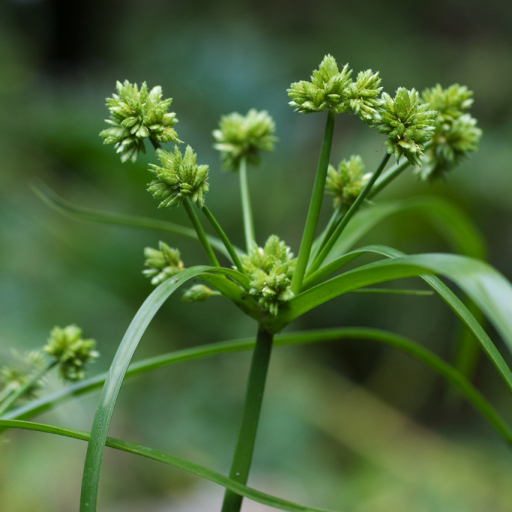
Often called the Tall Flatsedge or Umbrella Sedge, this plant looks like a miniature palm tree that has decided to live in a swamp. Native to the West Coast of the Americas but now a world traveler, it is the ultimate survivor of soggy soils. Whether it’s gracing the edge of a pond or popping up in a damp ditch, its geometric beauty makes it a favorite for architectural interest in water-heavy landscapes.
🔍 How to Identify
- 📐 Triangular Stems: Like most members of its family, this sedge follows the rule "sedges have edges." If you roll the stem between your fingers, you will feel three distinct flat sides.
- ⛱️ Umbrella Bracts: At the very top of the tall stems, several long, leaf-like "bracts" radiate outward, creating a green starburst or umbrella shape that protects the flowers.
- 🌾 Flattened Spikelets: The flower clusters are dense, pale green to golden-brown, and look like tiny, flattened scales stacked together. They give the plant a textured, "woven" appearance.
🏡 In Your Garden
- 💧 The Bog Specialist: This plant is your best friend for "problem" wet spots. It thrives where other plants rot, making it a perfect choice for rain gardens, pond margins, or areas with heavy clay that stays damp.
- 🌱 Resilient Spreader: While it provides excellent erosion control for banks and slopes, it is a prolific self-seeder. In a garden setting, you may want to "deadhead" the brown flower clusters before they drop seeds if you want to keep it from taking over the neighborhood.
⚠️ Safety & Toxicity
- 🐾 Pet Safe: Cyperus eragrostis is generally considered non-toxic to cats, dogs, and horses. It’s a "worry-free" addition to a pet-friendly backyard.
- ✂️ Sharp Texture: While not chemically toxic, the leaves and stems are quite fibrous and can have slightly rough edges. Small children should be taught not to run through them to avoid minor "grass cuts."
✨ Fun Fact
The species name eragrostis is derived from the Greek words eros (love) and agrostis (grass). This refers to the resemblance of its flower clusters to "Lovegrass," giving this rugged wetland survivor a surprisingly romantic scientific name!

Detailed Care Instructions
To grow Cyperus eragrostis successfully, follow these steps:
- Choosing the right location: Cyperus eragrostis prefers full sun to partial shade. Select a location that gets at least 6 hours of direct sunlight daily.
- Soil preparation: The plant thrives in moist, fertile soil. Prepare the soil by adding compost or organic matter to improve its fertility and drainage.
- Planting: Propagate Cyperus eragrostis by using seeds or rhizomes. If using seeds, sow them in the prepared soil following the recommended depth. For rhizomes, plant them about 1-2 inches deep with the bud facing upwards.
- Watering: Keep the soil consistently moist but not waterlogged. Water regularly, especially during dry spells or periods of intense heat. The plant loves moisture, so consider keeping a saucer of water beneath the pot if you are growing it indoors.
- Fertilization: Feed the plant with a balanced, slow-release fertilizer during the growing season, following the package instructions. This will provide the necessary nutrients for healthy growth.
- Pruning: Cyperus eragrostis doesn't require regular pruning. However, you can remove dead or yellowing leaves to maintain its appearance.
- Pests and diseases: Keep an eye out for pests such as aphids or spider mites. If necessary, treat with appropriate organic insecticides. Cyperus eragrostis is generally resistant to diseases but may develop root rot if overwatered.
- Propagation: The plant can be propagated by dividing rhizomes. Lift the plant out of the soil, separate the rhizomes carefully, and replant them in new pots or areas.
- Overwintering: Cyperus eragrostis is not cold-hardy and may not survive in very low temperatures. If you live in an area with freezing winters, consider bringing it indoors or protecting it with a layer of mulch.
By following these guidelines, you can successfully grow and enjoy your Cyperus eragrostis plant.

Place in a bright room that is sun drenched almost all day. Or directly in a south-facing window.

Cyperus Eragrostis plant should be watered regularly but not excessively. It prefers slightly moist soil and should not be allowed to dry out completely, but it also doesn't like standing in water. It is important to monitor the soil moisture level and adjust watering frequency accordingly, especially during hot and dry weather.
To water the plant, slowly pour water at the base of the plant until the soil is moist but not waterlogged. It is best to water in the morning or evening when the sun is not too strong to prevent water evaporation and allow the plant to absorb the water properly.
If the plant is potted, make sure there are drainage holes at the bottom of the pot to prevent waterlogging, and remove any excess water that accumulates in the saucer or tray beneath the pot.
Overall, the key is to maintain consistent moisture levels and avoid overwatering to prevent root rot or other issues.
To fertilize this plant, use a balanced fertilizer with equal amounts of nitrogen, phosphorus, and potassium. Apply the fertilizer during the growing season at a rate of one tablespoon per square foot of soil. Water the plant deeply before and after fertilizing to ensure that the nutrients are absorbed properly. Do not over-fertilize, as this can lead to salt buildup in the soil and damage the roots. Instead, follow a regular fertilization schedule to promote healthy growth and development.
The best type of soil to use for the Cyperus Eragrostis plant is a mixture of loamy and well-draining soil. The soil should be slightly acidic with a pH level between 5.5 to 7.5. It is also recommended to add organic matter such as compost or peat moss to improve the soil's fertility and drainage. The plant prefers a moist environment, so it is important to ensure that the soil remains consistently moist but not waterlogged. Overwatering can lead to root rot and damage to the plant's health. The soil should be able to hold water but also allow excess water to drain away. It is also recommended to add a layer of mulch around the base of the plant to retain moisture in the soil.
To propagate this plant, take a sharp knife or scissors and cut off a healthy stem with at least one node. Make sure to sanitize your cutting tools with rubbing alcohol before making the cut. Remove any leaves from the lower two-thirds of the stem, leaving only a few leaves at the top. Dip the cut end in rooting hormone powder. Plant the cuttings in a container filled with moist sand or a well-draining soil mixture. Cover the container with plastic wrap to create a greenhouse effect, and keep it in a warm, bright place but out of direct sunlight. Keep the soil moist but not waterlogged, and within a few weeks, new roots will begin to grow. After a few more weeks, small plants will emerge, and they can be transplanted into their own pots once they are large enough.








