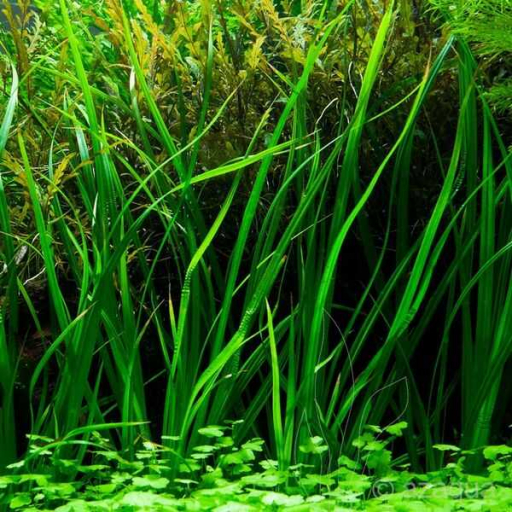
Plant Overview
Often called the "Thai Sedge," Cyperus helferi is a true trailblazer in the world of aquascaping. While most of its relatives in the Cyperus genus are giant "Umbrella Palms" that tower over marshes, this elegant species is one of the only members of its family that can live completely submerged. It is beloved by hobbyists for creating a "flowing meadow" effect that mimics the current of a tropical stream.
🔍 How to Identify
- 🌿 Leaf Structure: It grows in a dense rosette with long, ribbon-like leaves that are significantly stiffer than common aquatic grasses like Valisneria.
- 🟢 Vibrant Color: The leaves maintain a bright, lime-to-forest green hue that doesn't fade easily under proper lighting.
- 📏 Growth Habit: It features a distinct "V-shape" or fountain-like silhouette as the leaves arch gracefully from the center of the plant.
🏡 In Your Garden (Aquarium Context)
- ⏳ The "Slow Starter" Rule: Be patient! This plant is notorious for a slow acclimation period. It may look stagnant for the first few weeks after planting as it focuses on establishing its root system before producing new leaves.
- 🌊 Flow Lovers: In its native Thailand, it grows in fast-moving water. In your tank, it thrives best when placed in areas with moderate water movement, which keeps the leaves clean of debris and algae.
- 📍 Placement Nuance: Because it develops a deep and complex root system, it hates being moved. Choose its "forever home" in the mid-ground or background of your tank carefully to avoid transplant shock.
⚠️ Safety & Toxicity
- ✅ Safe for All: Cyperus helferi is completely non-toxic. It is a favorite for tanks with delicate long-finned fish, like Bettas or Fancy Guppies, because its leaves are smooth and won't snag fins.
- 🐾 Pet Friendly: If you grow it in an open-top tank or emersed (with roots in water and leaves in air), it is safe for curious cats or dogs who might try to nibble the grass-like foliage.
✨ Fun Fact
Most Cyperus plants—including the famous Papyrus used by ancient Egyptians to make the first paper—will rot if fully submerged. Cyperus helferi is the rare "rebel" of the family that evolved specifically to handle the rising and falling monsoon waters of Southeast Asia!

Detailed Care Instructions
Growing Cyperus Helferi, also known as the "umbrella plant," can be quite rewarding. Here are some steps to help you grow and care for it:
- Lighting: Provide bright, indirect light for about 10-12 hours each day. If you are using artificial lighting, a combination of fluorescent and LED lights can be ideal.
- Temperature: Maintain a temperature range of 72-82°F (22-28°C). Avoid extreme temperature fluctuations.
- Water conditions: The Cyperus Helferi plant thrives in moderately soft to moderately hard water. Maintain a pH level of 6.0-7.5. However, it is adaptable and can tolerate slightly different water conditions.
- Substrate: Use a nutrient-rich substrate like aquarium soil or a nutrient-rich gravel substrate. It should provide good anchorage and nutrition for the plant.
- CO2 and fertilization: Supplying CO2 can enhance growth, but it is not always necessary. Regularly dose the tank with a comprehensive aquarium plant fertilizer to provide essential nutrients.
- Planting: Plant the Cyperus Helferi plant by gently inserting the roots into the substrate. Ensure that the crown of the plant is above the substrate. Avoid burying the crown as it may cause rotting.
- Water maintenance: Keep the plant's base submerged in water, but avoid covering the leaves with water. This plant prefers shallow water or moist conditions, rather than fully submerged conditions.
- Pruning and propagation: Trim any yellow or dying leaves regularly to maintain plant health. Cyperus Helferi can be propagated by splitting mature plants into smaller sections and replanting them.
- Tank mates and aquascape: Consider the plant's growth and height when planning the aquarium layout. It pairs well with other foreground plants, such as carpeting plants or mosses. Choose tank mates that do not overshadow its growth or compete for light.
- Regular maintenance: Perform regular water changes and check water parameters to ensure optimum growth conditions. Monitor the plant for any signs of nutrient deficiencies or diseases.
By following these steps and providing suitable conditions, you can successfully grow and enjoy a thriving Cyperus Helferi plant in your aquarium.
Cyperus Helferi is a freshwater aquatic plant native to Southeast Asia. When it comes to watering this plant, it is important to replicate its natural aquatic environment.
To water Cyperus Helferi, it should be submerged in a freshwater aquarium or placed in a container with at least an inch of water covering its roots. The water should be changed regularly, at least once a week, to prevent the build-up of harmful nutrients and waste products that can harm the plant. The pH level of the water should be maintained between 6.5 and 7.5, which is the optimal range for this plant.
It is important to note that this plant is sensitive to water temperature, and its growth rate will vary based on the water temperature. Water temperatures between 68-82°F (20-28°C) are ideal for this plant. The intensity and duration of the lighting also play a crucial role in the plant's growth. The plant requires moderate to high lighting levels and should be placed in a well-lit area, with a photoperiod of at least 8 hours per day.
Overall, careful monitoring of the plant's water, temperature, and lighting conditions is essential to ensure its healthy growth and development.
- Prepare a suitable aquatic substrate for the plant to be planted in.
- Place the plant in the substrate and ensure that the roots are covered with the substrate.
- Apply a liquid fertilizer specifically formulated for aquatic plants according to the manufacturer's instructions.
- Fertilize the plant once every two weeks to promote healthy growth.
- Ensure that the water conditions are suitable for the plant's growth, including proper lighting and appropriate pH levels.
- Regularly monitor the plant's growth and adjust fertilization as needed to promote healthy growth.
The ideal soil for Cyperus Helferi should have high nutrient content and a slightly acidic to neutral pH. The soil should be well-draining and not too compact, as the plant prefers a loose, porous growing medium. Cyperus Helferi also requires a substrate that is rich in iron, as this essential mineral is crucial for healthy development and growth. Additionally, the soil should not contain any harmful chemicals or toxins, as this can potentially harm the plant's roots and cause it to wither or die. It is recommended to use a specialized aquatic plant soil or a soil mix that has been specifically formulated for Cyperus Helferi to ensure the best possible growing conditions.
To propagate this plant, gently remove its small daughter plants from the base of the parent plant. Carefully separate the daughter plants with scissors or your fingers, making sure each one has roots. Plant the daughter plants in a suitable substrate and cover their roots with soil. Keep the substrate moist and place the plants under moderate light. Over time, the daughter plants will develop into healthy, mature plants that can be fertilized and cared for like their parent plant.








