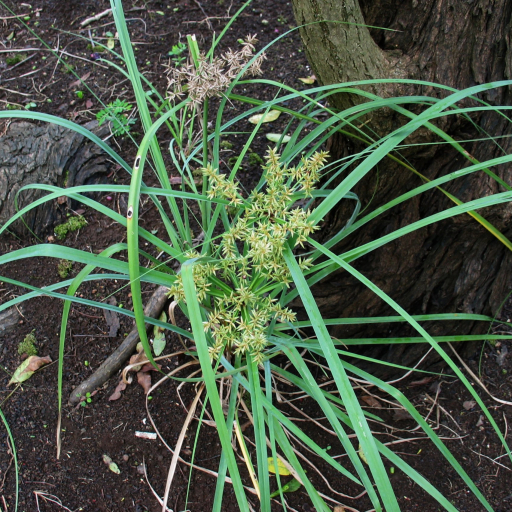
Plant Overview
Often called the Javanese Flatsedge or Marsh Cypress, this resilient plant looks like a miniature explosion of greenery frozen in time. Native to the tropical shorelines and wetlands of Africa, Asia, and the Pacific, it is a master of the "soggy bottom," thriving in mud and marshes where most plants would simply give up. In many coastal cultures, its tough fibers have been used for centuries in weaving and traditional medicine.
🔍 How to Identify
- 🌿 The "Sedge" Stem: Like most sedges, it follows the rule "sedges have edges"—its sturdy stems are distinctly triangular if you feel them between your fingers.
- 🎨 Glaucous Foliage: The leaves have a unique dusty, bluish-green hue (glaucous) and a waxy coating that helps the plant shed excess salt and water.
- 🎆 Umbrella Blooms: At the top of the tall stems, it produces a dramatic cluster of brownish-gold flower spikes that radiate outward like a firework display.
🏡 In Your Garden
- 💧 A Thirst for Wetlands: This isn't a plant for a dry rockery. It thrives best in "wet feet" conditions, making it the perfect candidate for the edge of a garden pond, a rain garden, or a consistently boggy patch of soil.
- 🌊 Salt Warrior: Because it evolved on tropical coastlines, it is incredibly tolerant of salt spray. If you live near the ocean where salty winds kill off your roses, the Javanese Flatsedge will stand tall and unfazed.
- 🌱 Root Resilience: It spreads via a thick rhizome system. While this makes it excellent for preventing soil erosion on slopes, be mindful that it can become quite "enthusiastic" in a small garden space if not contained.
⚠️ Safety & Toxicity
- 🟢 Non-Toxic: This plant is generally considered non-toxic to humans, cats, and dogs. It does not contain the harmful alkaloids found in some other marsh plants.
- 🔪 Physical Hazard: While not poisonous, the leaf margins are extremely sharp and serrated. They can easily cause "grass cuts" on curious hands or paws, so it is best planted away from high-traffic walkways or children's play areas.
✨ Fun Fact
In Hawaii, where it is known as ’Ahu’awa, the plant was traditionally used by practitioners to strain the ceremonial drink Awa (Kava). The stems were pounded and shredded to create a natural, effective filter for the woody root fibers.

Detailed Care Instructions
To grow Cyperus Javanicus, also known as Java Fern, follow these steps:
- Light: Place the plant in a location that receives medium to bright indirect light. Avoid direct sunlight, as it can scorch the leaves.
- Water: Keep the soil consistently moist but not waterlogged. Ensure the pot has drainage holes, and water when the top inch of soil feels dry. Avoid letting the plant sit in standing water.
- Temperature and humidity: Cyperus Javanicus prefers average room temperatures around 65-75°F (18-24°C). It also thrives in high humidity. If your home is dry, consider using a humidifier or placing the pot on a tray filled with water and pebbles.
- Soil: Use a well-draining potting mix that retains moisture without becoming waterlogged. A mixture of potting soil, peat moss, and perlite or sand works well.
- Fertilizer: Feed the plant with a balanced houseplant fertilizer once a month during the growing season (spring to summer). Follow the instructions on the fertilizer package for dosage instructions.
- Propagation: You can propagate Java Fern through division. Gently remove the plant from the pot, separate the rhizomes, and replant them in individual pots with fresh soil. Ensure each division has healthy roots.
- Pruning: Trim off any dead or yellowing leaves regularly to maintain the plant's health and appearance.
- Pests and diseases: Cyperus Javanicus is generally pest-resistant, but it can occasionally face problems with scale insects or spider mites. If you notice any signs of pests, treat them accordingly with an appropriate insecticide or by wiping the leaves with a damp cloth.
Remember to provide consistent care and monitor the plant's health regularly. With proper attention, your Cyperus Javanicus should grow well and thrive.

Place in a bright room that is sun drenched almost all day. Or directly in a south-facing window.

1. Begin by assessing the soil moisture level: Before watering the plant, it’s always best to check the soil’s moisture level. Insert your finger into the soil up to your first knuckle; if the soil feels dry, it's time to water the plant.
2. Time of day: Watering your plants in the early morning or late evening when the temperature is cooler is the best time. Avoid watering during the hottest parts of the day as the water can evaporate before reaching the roots.
3. Watering frequency: Cyperus Javanicus plants thrive in wet or moist environments. Ensure that the soil remains consistently moist, but not waterlogged. Watering once a week should be sufficient, but if you live in a warmer climate, you may need to water more frequently.
4. Watering method: Place the potted plant in a shallow tray with an inch of water. Wait until the soil absorbs the water and the top layer is moist to the touch. You can also water from above with a watering can to ensure the soil is evenly moist, but be careful not to apply too much water that it floods the plant.
5. Drainage: Ensure your planting container has proper drainage holes so that excess water can drain out. Don't allow the plant to sit in standing water for long periods as it can cause root rot.
6. Adjusting watering: Assess the plant's response to watering by observing its foliage. If you notice the tips of the leaves are turning brown, then it could be a sign of overwatering, while yellow tips could be a sign of underwatering. Adjust the watering schedule accordingly.
7. Humidity: Cyperus Javanicus plant prefers high humidity levels. You can increase the humidity levels by placing a pebble tray filled with water under the plant or using a room humidifier.
8. Water quality: Use clean, filtered water when watering cyperus javanicus plant. Chlorinated water can harm the plant and disrupt the beneficial microorganisms in the soil.
To fertilize this plant, use a balanced water-soluble fertilizer every two weeks during the growing season. Dilute the fertilizer to half strength when applying it to the soil. Avoid applying fertilizer directly to the leaves or stems of the plant. Water the plant thoroughly before and after fertilizing to prevent root burn. As the plant grows, reduce the frequency of fertilization to once a month during the dormant season.
The ideal soil for the plant should be well-draining and clayey, with a slightly acidic pH between 5.5 and 6.5. The soil should be rich in organic matter and nutrients, such as nitrogen, phosphorus, and potassium, to support healthy growth. The plant prefers moist soil but can also tolerate periods of drought. It is important to avoid waterlogged conditions as these can cause root rot. Adding sand or perlite to the soil can improve drainage and prevent waterlogging.
Cyperus Javanicus can be propagated through the division of its rhizomes. First, select a healthy parent plant with well-established rhizomes. Using a sharp and sterilized knife, cut through the rhizomes, ensuring each division has at least one healthy shoot and a good root system.
Plant each division in a well-draining potting mix and keep the soil moist but not waterlogged. Place the pots in a brightly lit area, but avoid direct sunlight. If kept in ideal conditions, new shoots should appear within a few weeks, indicating successful propagation.
It is important to note that Cyperus Javanicus can become invasive if not properly contained. Therefore, it is recommended to propagate this plant only when necessary and to exercise caution when planting it in garden beds or outdoor areas.








